


Monaco is THE race. Full stop. Established in 1929, it's the most glamorous, most prestigious, most legendary event on the calendar.
The Principality's Belle Époque architecture, royal attendance, and yacht-lined harbor create an atmosphere nothing else matches. Monte Carlo streets are basically Monaco's daily commute, and once F1 rolls in, everything changes.
The Grand Prix de Monaco is impossibly tight—literally, there's zero margin for error. Barriers define your racing line, and one wrong apex ends your race instantly.
Drivers dream about winning here; championships are decided here; legends are made here.
The prestige, the history, the pure difficulty—Monaco remains motorsport's holy grail.
The Circuit de Monaco has a rich history beginning with its first race in 1929, organized by Antony Noghès and supported by Prince Louis II through the Automobile Club de Monaco. The inaugural race was held on 14 April 1929, won by William Grover-Williams in a Bugatti 35B after 100 laps and almost four hours of racing.
Monaco became part of the Formula 1 World Championship in 1950 when Juan Manuel Fangio secured his first World Championship victory on the streets of Monte Carlo.
Since 1955, the race has been a constant fixture on the Formula 1 calendar, and the circuit has remained remarkably similar to its original layout since its inception in 1929.
The circuit takes six weeks to set up and an additional three weeks to dismantle, with infrastructure and stands requiring significant construction and removal efforts due to the circuit's unique characteristics as a street circuit.
The circuit is narrow, with many elevation shifts and tight corners, making it perhaps the most demanding track in Formula One racing. The circuit features both the slowest corner in Formula One (the Fairmont Hairpin, taken at just 48 km/h or 30 mph) and one of the quickest (the flat out kink in the tunnel, taken at 260 km/h or 160 mph).
Due to the tight and twisty nature of the circuit, it favours the skill of the drivers over the power of the cars, with very little overtaking as the course is so narrow and dangerous.
Memorably described by Nelson Piquet as "like riding a bicycle around your living room", the street circuit may not always provide the best racing, but it certainly has lots of spectacle.
During the 1960s and 1970s, drivers like Graham Hill, nicknamed "Mr Monaco," and Ayrton Senna, who holds the record for most wins at Monaco with six victories, dominated the event. Graham Hill secured five victories at Monaco, with his 1965 win particularly memorable when after an off-track excursion, he rejoined in fifth, surged through the field, and reclaimed the lead to win.
A notable moment was the 1984 race, where Ayrton Senna showcased his skill in wet conditions driving a less competitive Toleman car, marking a significant point in his career.
Ayrton Senna holds the record for most wins at Monaco with six victories. Michael Schumacher equalled Graham Hill's five wins, while Lewis Hamilton has won three times at the principality.
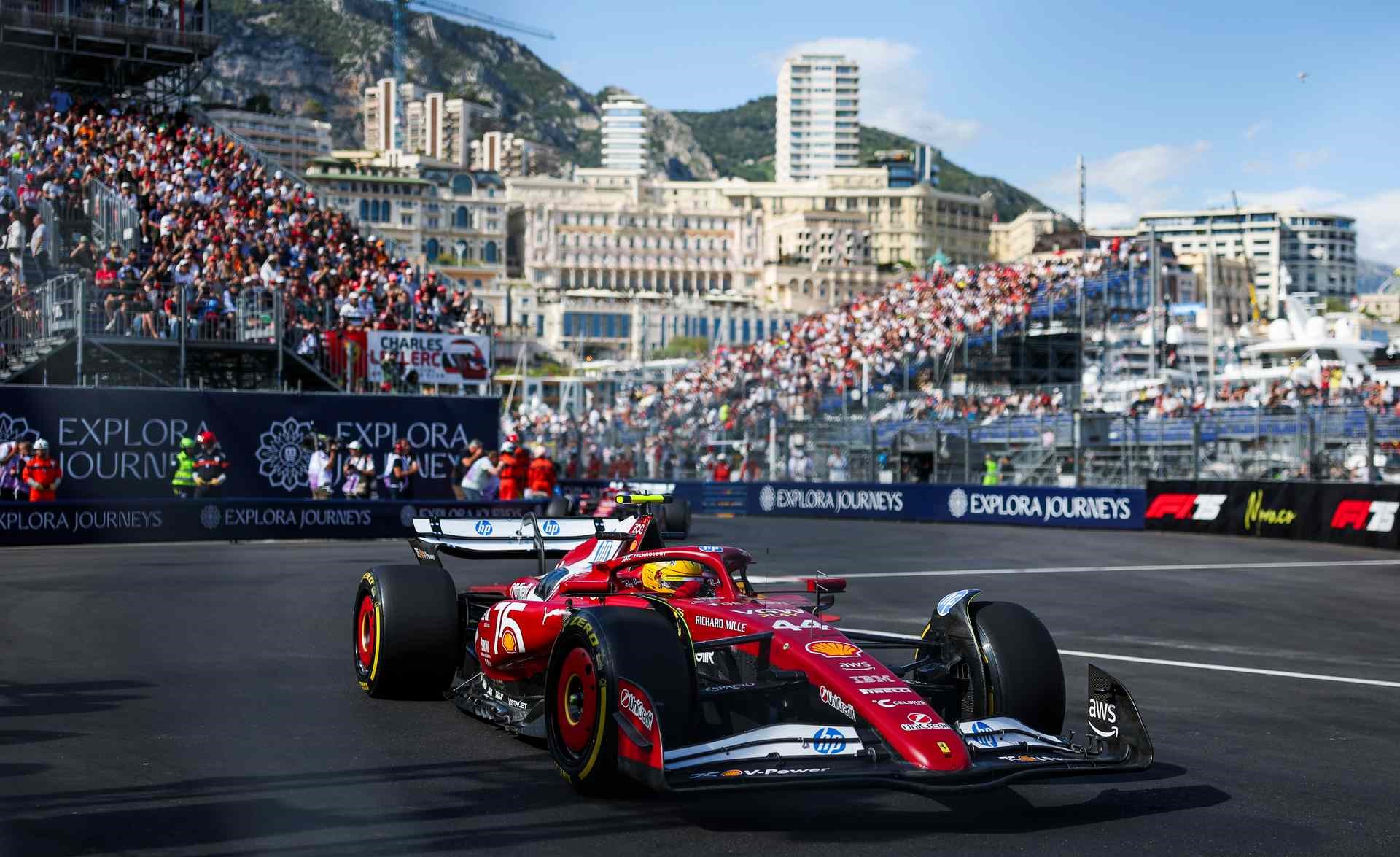
In 1933, Monaco earned the status of Grande Épreuve, placing it alongside the French, Belgian, Italian, and Spanish Grands Prix as one of the premier events. In 1996, Olivier Panis secured a surprising victory in a Ligier, one of the most unexpected wins in F1 history, as only three cars finished the race.
The 2006 Monaco Grand Prix saw one of the most suspicious manoeuvres in recent Formula One history when Michael Schumacher appeared to deliberately stop his car during qualifying at La Rascasse to prevent Fernando Alonso and Mark Webber from out-qualifying him.
In recent years, Charles Leclerc secured pole positions in 2021 and 2022, though strategic missteps denied him victory.
The Monaco circuit is widely considered to be one of the most important and prestigious automobile races in the world, and is one of the races—along with the Indianapolis 500 and the 24 Hours of Le Mans—that form the Triple Crown of Motorsport.
Monaco remains one of the last circuits where the talent of the pilot can still make the difference, with drivers often touching the track walls to achieve a fast lap time.
A win at Monaco is considered one of the highest achievements in Formula One, regarded as one of the most important and prestigious victories in motorsport.

The Monaco Grand Prix is more than just a race; it is a major social event where the rich and famous gather on yachts and in luxury hotels to witness the spectacle. The event features world-class hospitality, with glamorous venues overlooking the Mediterranean Sea and Monaco's famous harbor.
The race is held on a narrow course laid out in the streets of Monaco, with many elevation changes and tight corners as well as the tunnel, making it one of the most demanding circuits in Formula One.
Spectators enjoy viewing from grandstands positioned throughout the circuit with excellent sightlines of the racing action.
The Grand Prix takes place on the Circuit de Monaco which traverses the narrow city streets of Monte Carlo and La Condamine alongside Monaco's harbour, Port Hercules. Located in the Principality of Monaco, the circuit's stunning backdrop of the Mediterranean Sea enhances its charm and beauty.
Monaco is a tax haven and home to many millionaires, including several Formula One drivers, with its warm climate and famous casino attracting tourists from around the world.
The principality offers luxury shopping, Michelin-starred restaurants, beaches, and world-class entertainment. Because of the small size of the principality and the circuit's location, visitors can easily access Monaco's attractions, casinos, and nightlife during Grand Prix weekend.
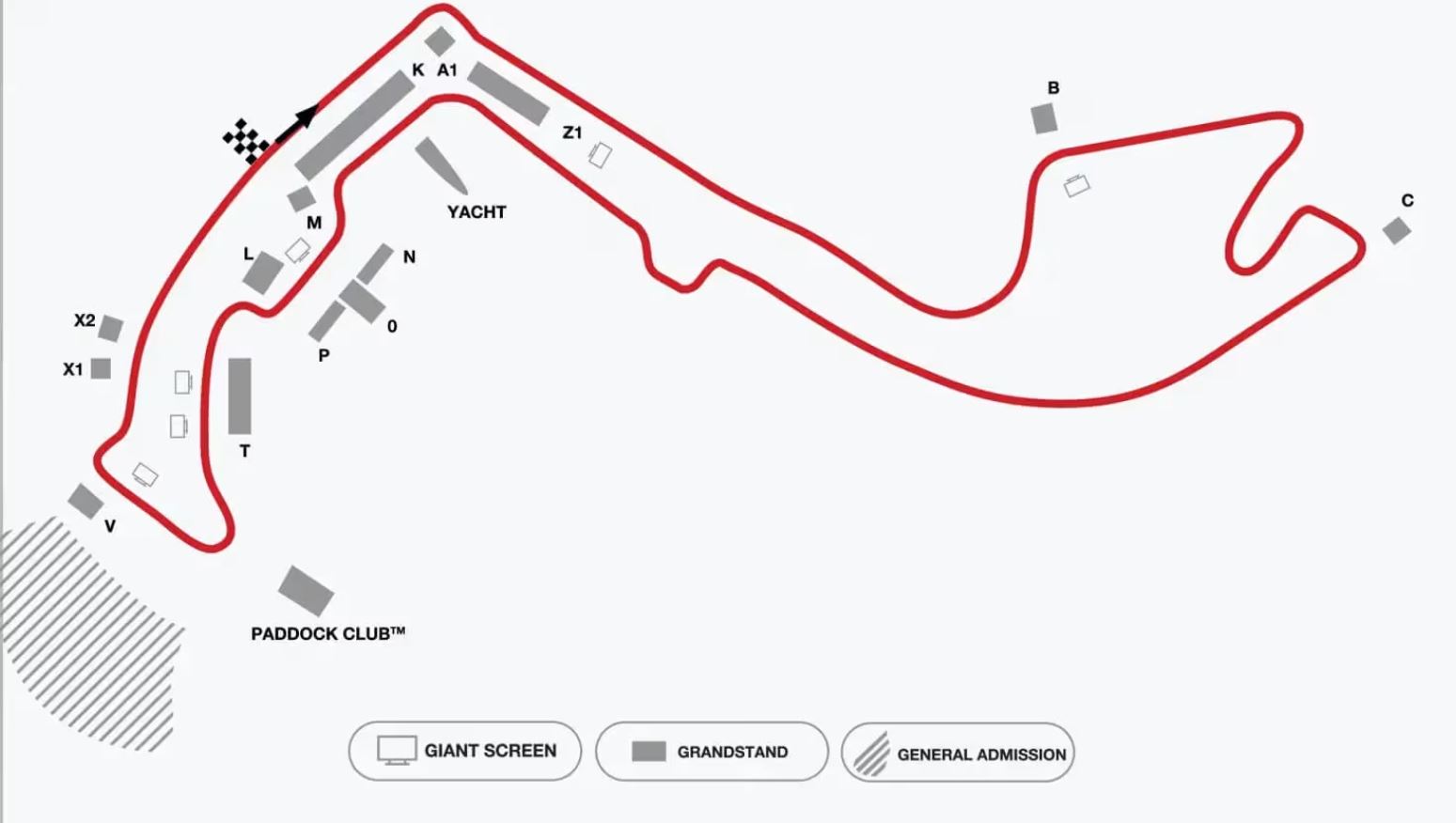
If you want to see all the action of the run down to the start, Sainte Devote is the place to be. A tricky uphill right-hander that heads towards the winding, flat out run up to Massenet before the cars arrive at Casino Square.
The entry to, and exit from, Sainte Devote make it one of the few genuine overtaking spots on the Monaco F1 circuit. Romain Grosjean and Max Verstappen have both ended up on top of the barriers here, and Fernando Alonso go it so wrong at Massenet in practice that he required a new chassis to be flown in from Maranello.
There are few places as quintessentially “Monaco” as the Casino Square Grandstand. With views over the Monte Carlo Casino and the Café de Paris, if you’re lucky enough to be sitting here then you’re in for a treat.
Located at the exit of Massenet, Casino Square might as well be a chicane. With only one racing-line through, you’re unlikely to see much overtaking, but you will be treated to stunning views at this high speed section of the circuit.
Grandstand B is also located very close to the train station, making access to-and-from Nice very simple.
If you want to see F1 cars disappearing into a tunnel, then Portier is the place to be. While it may be a slower section of the Monaco GP Track, Portier makes up for that with the aural assault that follows.
Overtaking is not unheard of, but when Jenson Button last tried it here, poor Pascal Wehrlein wound up shiny-side down. It is also the location of Ayrton Senna's crash while leading by a country mile.
Portier is a small and intimate grandstand, and is ideal if you prefer a less crowded location.
‘Tabac’ asks the age-old question – does size matter? Well, if you like incredible atmosphere, harbour views, and one of the best views of the Monaco F1 Track, then Tabac is the place to be.
The Monaco harbourfront is one of the most iconic views in world sport, and from Tabac you can see almost all of it.
Located at the run down from the tunnel, the left hander entering the harbourfront is one of the fastest parts of the circuit, and also one of the best overtaking areas. This is why it’s one of our favourite places to be.
The Swimming Pool may not have the stunning harbour views, but it makes up for that in terms of the action it delivers.
As the cars and drivers exit Tabac they are then faced with two very tricky chicanes. They might not be fast, but the demand a lot from the drivers, and have caught many of them out.
Charles Leclerc crashed here in 2021 during qualifying (after already securing pole), and Max Verstappen did the same thing in 2017 and 2018!
The Swimming Pool Grandstands are larger than most, meaning a fantastic atmosphere is almost assured.
For anyone lucky enough to know Monaco in the off-season, The Rascasse is the place where live music plays, rose wine flows, and you’re almost guaranteed to wake up the next day with a sore head. However, if you’re here at Grand Prix weekend, you’ll mostly care about the racing.
Grandstand T is located at the exit of the swimming pool complex, curving left as the cars head towards the tight double-right-hander that the actual Rascasse overlooks. From the upper section you get a fantastic view of the cars approaching from the swimming pool.
The lower section gives you the perfect position to get as close to the track as is possible. Not only that, but Grandstand T is also the best vantage point to see what’s going on in the pits.
Given the direct views over the Rascasse Bar’s upper terrace, you might be forgiven for thinking this grandstand is the Rascasse Grandstand. But it’s not. It’s Anthony Noghes. Names after the famous Monegasque that founded the Grand Prix.
Aside from high-spirited evenings, this corner is infamous for a variety of other reasons. Michael Schumacher parked his Ferrari here in 2006 in an attempt to stop Fernando Alonso getting pole position.
Its has also been the scene of dozens of failed over-takes as drivers ambition turns out to be bigger than the gap they try to get their cars through.
A smaller grandstand, it is not short of action!
For those that are desperate to see the start-line action, Grandstands X1 & X2 are as close as you can get. This is also a fantastic spot for seeing the teams and drivers prepare for the race, as well as seeing the post-race celebrations.
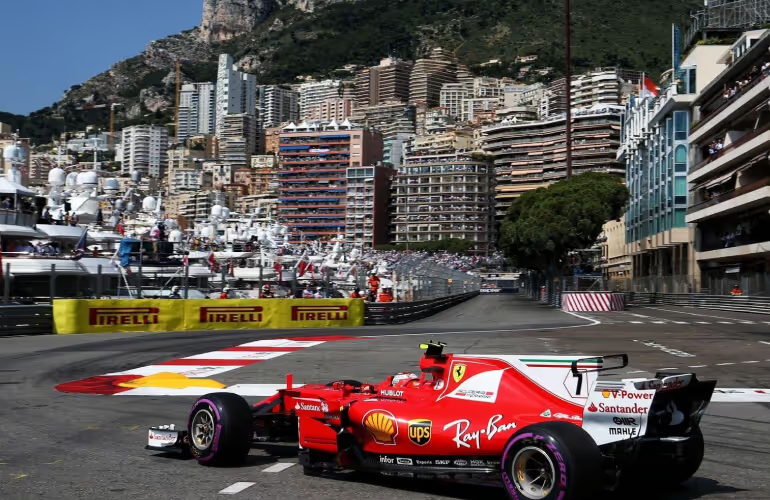
The most prestigious and glamourous automobile race in the world


Travel to the most popular locations on the calendar to experience an F1 race





Leave a Comment