


It's a Sunday evening in Mumbai, and sports bars that were once exclusively reserved for cricket highlights are suddenly buzzing with something different. The sound of screaming V6 hybrid engines. Carbon-fiber machines flying at 300 km/h. Fans with the same intensity they reserve for India vs Pakistan matches are now glued to their screens watching little red cars go around in circles.
Yes, Formula 1 has genuinely arrived in India.
And honestly? Nobody saw this coming. In a country where cricket is practically a religion, Formula 1, traditionally seen as a sport for European elites and billionaires has somehow become the coolest thing to talk about at office coffee breaks and college campuses. It's like watching a Ferrari suddenly decide to take the slower lane on the Mumbai-Pune highway. Unexpected, but absolutely thrilling.
Let's talk facts, because the growth numbers for Formula 1 in India are more shocking than a Vettel overtake.
When Liberty Media took over Formula 1 in 2017, they had a radical idea: strip away the snobbery. No more treating the sport like it's exclusive to people who can pronounce "Bahrain" correctly or understand what a "downforce" is. Instead, they went all-in on digital storytelling, compelling narratives, and making the sport human.
The strategy? Absolutely genius. The results? Mind-blowing.
But here's where it gets interesting for India specifically. From just 31 million fans in 2020 we're talking about potentially 78 million F1 fans in India right now. That's not just a sports trend, that's a cultural shift happening in real-time.
And those 15 million YouTube views from India in 2024? That's just the beginning.
Let's rewind to 2011. India got a taste of Formula 1 fever when the Buddh International Circuit hosted the Indian Grand Prix. The inaugural race? A massive 95,000 fans showed up. 95,000. In a country where people still had to look up what F1 even was!
Then Sebastian Vettel did what Sebastian Vettel does best—he won. That victory planted seeds. Important seeds. The kind that would eventually grow into a forest of F1 fans across India.
But here's the thing: it didn't last. Financial realities and regulatory headwinds killed the Indian Grand Prix after just three years (2011-2013). The circuit closed. F1 left India. Case closed.
Or so everyone thought.
While the Indian Grand Prix was fading into history, something more powerful was happening: Netflix.
"Drive to Survive" didn't just show Formula 1. It reinvented it.
Instead of focusing on tire pressures and DRS systems (honestly, who cares?), Netflix focused on what actually matters—the humans. The rivalries. The drama. The politics. The triumphs and heartbreaks. It turned a technical sport into a psychological thriller about high-stakes competition and personal ambition.
The demand numbers in India? 8.7 times higher than average TV series. Think about that. In a country obsessed with everything from cricket documentaries to true crime shows, Formula 1 outperforms them all.
Suddenly, drivers became genuine celebrities—not just racing legends, but cultural icons:
These guys aren't just drivers anymore.
Here's where it gets interesting for brands and marketers: F1's Indian audience is exactly the demographic everyone wants to reach.
We're talking about:
These are the people who wear premium watches, drive high-end cars, and actually care about cutting-edge technology. Traditional brands have always struggled to reach this audience. But F1? It attracts them like a pit crew to a car that needs servicing.
The demographic shift is real. F1 isn't just growing—it's growing among the right people from a marketing perspective.
Let's be honest: Formula 1 still carries an air of exclusivity that would make even premium airlines jealous.
During the Indian Grand Prix years, tickets ranged from Rs 30,000 to Rs 1,00,000—a significant barrier for middle-class fans. For comparison, the Singapore Grand Prix starts at Rs 40,000, while European races? Even pricier.
The sport's elite reputation hasn't completely disappeared. The paddock still smells of privilege. The VIP sections still feel untouchable to regular fans. This exclusivity has been both F1's allure and its biggest challenge in India.
But here's the thing: digital access has changed the game entirely.
You don't need Rs 50,000 to enjoy F1 anymore. You just need a smartphone and internet connection. That democratization of access is absolutely revolutionary, especially in India where smartphone penetration has exploded.
F1's audience alignment creates organic marketing opportunities that don't exist anywhere else in sports. Here's why brands are absolutely obsessed with F1 in India:
Luxury and Automotive Brands
High-end timepieces, fashion houses, and performance vehicles find a natural home in F1. The sport perfectly blends technical excellence with glamour—basically, every luxury brand's dream audience.
Technology Companies
AWS, Google, and Oracle use F1 as a platform to showcase innovations in AI, cloud computing, and data analytics. When you're watching cars that run on millions of data points, it's easy to talk about cutting-edge tech.
Financial Services
Fintech platforms and investment apps target an audience already comfortable with complex financial products. F1 fans are sophisticated thinkers—they get it.
Lifestyle Brands
Monster Energy, Heineken, and KitKat leverage F1's global excitement and sheer coolness factor.
The Unconventional Players
Red Bull's 2023 demonstration run in Mumbai attracted 20,000 spectators—not by sponsoring a team, but by creating an immersive experience. That's next-level marketing.
Today, the smartest brands aren't just slapping logos on cars. They're creating localized content, digital campaigns, and exclusive events that actually resonate with Indian audiences.
Let's not pretend everything is smooth sailing. F1 faces some pretty serious obstacles in India:
Cricket's cultural dominance is absolutely real. For most Indians, cricket isn't just a sport—it's woven into the national identity. F1 isn't competing directly with cricket; it's more like fighting for attention in an already crowded sporting calendar.
Financial barriers persist. Between premium subscriptions, team merchandise, and the astronomical cost of attending races, F1 fandom still requires commitment. Not everyone can drop Rs 5,000 on a McLaren team kit or subscribe to F1 TV Pro.
Geographic concentration is another issue. Most F1 fans are clustered in metro cities. Tier II and Tier III cities remain largely untapped.
The lack of Indian representation at the top level is a problem. When there's no Indian driver in F1, the emotional connection weakens significantly.
But here's the silver lining: things are changing.
Enter Jehan Daruvala—a name that could change everything.
A Red Bull Junior Program graduate with multiple Formula 2 podiums and reserve driver experience in both Formula E and F1, Daruvala represents something massive for India: homegrown talent. His journey has ignited national interest in motorsport and inspired a new generation of Indian racers to dream bigger.
When Indians see one of their own on the global stage, competing alongside international drivers, something shifts. It's personal. It's relatable. It's inspiring.
Opportunities are beginning to emerge:
The infrastructure for F1's growth in India is there. It just needs the right push.
Here's the thing people often miss: technology is the real hero of F1's India story.
A decade ago, if you were an Indian F1 fan, your options were limited. Maybe a premium cable subscription (if you could afford it). Maybe catching highlights on YouTube days later. International races? Forget about it unless you were traveling or had connections.
Today? You literally have access to everything:
An 18-year-old from Bangalore can follow every session, every race, every piece of drama from their bedroom. That wasn't possible five years ago.
This technology boom has accomplished something that seemed impossible a decade ago: it transformed an elite European motorsport into must-watch entertainment for millions of Indians across socioeconomic boundaries.
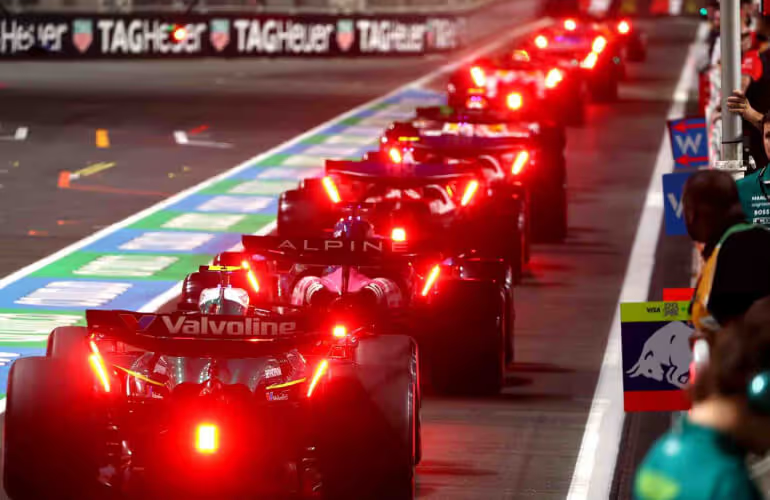
One of the most exciting and high-profile events of the F1 season


Here's the truth: Cricket isn't going anywhere. Virat Kohli will always draw larger crowds than Lewis Hamilton. The IPL will always command more national attention than the F1 championship.
But Formula 1 has quietly claimed its own territory in India's sporting consciousness.
It's not a challenger to cricket's dominance. It's a complement that speaks to India's evolving global tastes and aspirations. It represents sophistication, cutting-edge technology, international glamour, and aspirational lifestyle choices.
Formula 1 in India isn't just a sports trend. It's a cultural shift. And honestly? The best part is that we're only at the beginning.
The checkered flag hasn't been waved yet. The race is still on.


Travel to the most popular locations on the calendar to experience an F1 race





Leave a Comment