

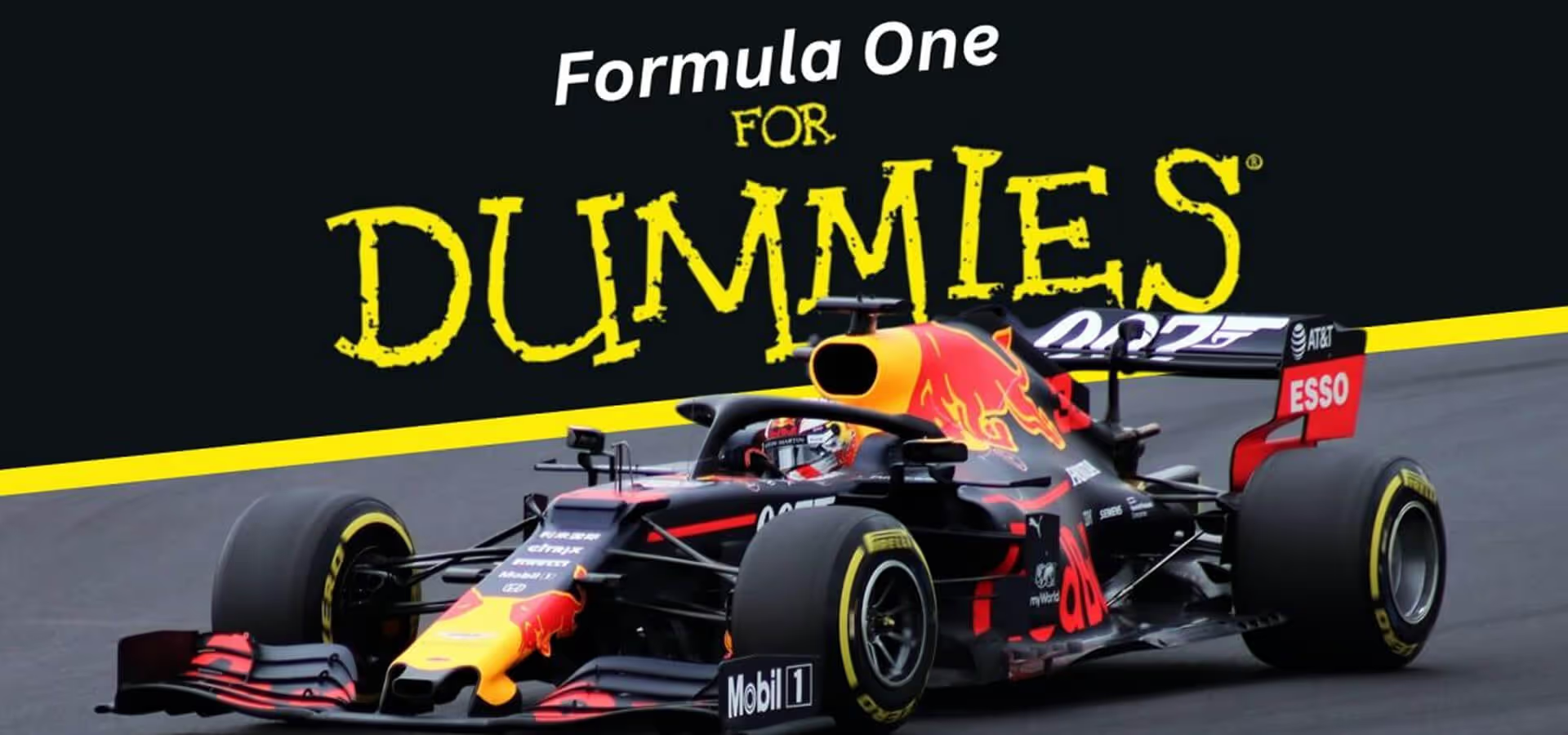
You want to understand Formula 1, but the sport feels more complicated than your tax returns? Don't worry—I'll break down the world's most glamorous automotive chaos into digestible pieces. Whether you're catching the latest Grand Prix on your commute or trying to impress someone at a dinner party, this guide will make you sound like an absolute pro.
And yes, India has a spicy history with F1. More on that later!
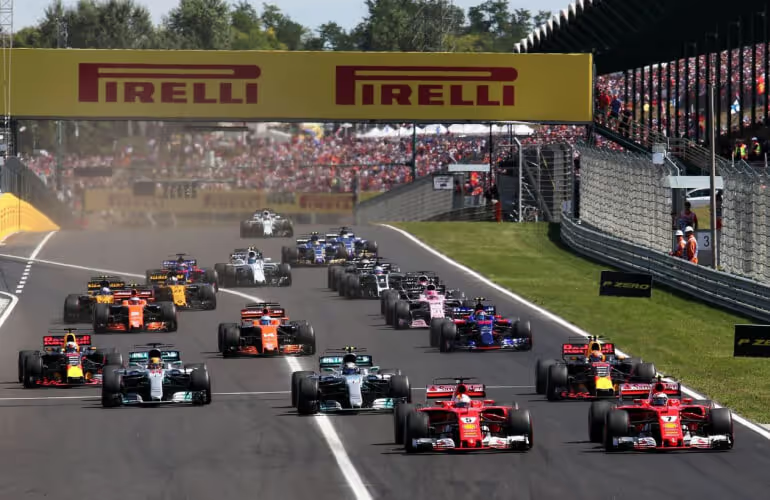
Formula 1, or F1, is basically the Olympics of motorsport—except the athletes sit down, the stadium travels to 24 different countries, and a pit stop that takes two seconds can change your entire life. It's the highest level of global motorsport, blending cutting-edge engineering, superhuman fitness, and enough drama to rival your favorite Netflix series.
Think of it as a fast, high-stakes chess game played on tarmac at speeds that would make your highway speed governor weep. F1 uses open-wheel, single-seat cars approved by the Fédération Internationale de l'Automobile (FIA)—basically, the international referee of all things four-wheeled and absurdly fast.
The "formula" isn't some secret sauce locked in a vault. It's simply a clear set of rules that every team must follow. These rules keep racing fair (sort of) while pushing teams to innovate within strict limits, turning engineering creativity into a competitive sport.
F1 is absolutely a sport—and a massively respected one at that. Drivers aren't just steers incredibly fast cars; they're elite athletes in peak physical condition. We're talking about handling gravitational forces (G-forces) that would make a fighter jet pilot nod in respect, all while sitting in a cockpit that feels like a microwave set to "volcanic."
F1 drivers undergo rigorous training programs that rival Olympic athletes. They have to:
Plus, F1 is a team effort, not just individual heroics. Each team, called a "constructor," invests billions in research and development. They employ engineers, strategists, mechanics, and scientists working together like a finely-tuned (pun intended) machine to eke out tenths of a second.
An F1 race is called a Grand Prix, French for "Grand Prize"—because the French basically invented racing and decided to give it a fancy name. The term dates back to 1906 (the French Grand Prix at Le Mans), carrying with it decades of prestige and tradition.
Each Grand Prix stands on its own, but also contributes to the season's championship battle—kind of like how each episode of your favorite series matters, but it's the overall season arc that really counts.
The FIA Formula One World Championship officially kicked off on May 13, 1950, at Silverstone in Britain. The first winner? Italy's Giuseppe Farina, beating his teammate Juan Manuel Fangio, who would go on to become an absolute legend.
But here's where it gets interesting for Indian fans: the rules for F1 were set in 1946 and became official in 1947—years before the championship even began. The sport grew out of the European Grand Prix scene of the 1920s and 1930s, featuring wild open-cockpit cars and endurance driving.
India's Love (and Heartbreak) Affair with Formula 1
If there's one thing that makes Indian F1 fans emotional, it's the story of the Indian Grand Prix.
India finally got its Grand Prix in 2011 at the Buddh International Circuit in Greater Noida, about 40 km from Delhi. The circuit was designed by German architect Hermann Tilke and was nothing short of magnificent. It had fast, flowing corners, beautiful elevation changes, and the potential to be a world-class venue.
And oh, did F1 arrive in style! The inaugural race drew 100,000+ passionate Indian fans. The circuit had everything—grandstands, hospitality suites, and that undeniable energy you only get when a global sport finally comes home.
Here's the catch: Sebastian Vettel won all three editions of the Indian Grand Prix (2011, 2012, 2013), making Red Bull absolutely unstoppable. While Vettel celebrated his hattrick, the real story unfolding behind the scenes was turning into a bureaucratic nightmare.
This is where it gets grimly interesting. The Uttar Pradesh government classified Formula 1 as "entertainment rather than sport," which excluded it from tax exemptions. This single sentence cost India its F1 race.
The circuit was technically in Uttar Pradesh (near Greater Noida), but was branded as "New Delhi." The state government levied entertainment taxes on the event, and the dispute between Jaypee Sports International (the race organizer) and the Uttar Pradesh government led to the race being cancelled.
What followed was a sad carousel:
The Buddh International Circuit still stands today, a beautiful monument to what could have been. Once awarded Motorsport Facility of the Year in 2011, the circuit remains structurally sound but is far from its former glory.
While F1 abandoned India, the sport didn't entirely forget us:
A standard F1 season has exactly 20 drivers, because there are 10 teams and each team runs two cars. These aren't weekend warriors—they're the crème de la crème of motorsport, vetted through countless junior championships and earning an FIA Super Licence (the pinnacle of racing credentials).
India has produced some remarkable F1 talent, though the grid has been barren of Indian drivers for over a decade.
Narain Karthikeyan (2005-2012) Narain Karthikeyan became India's first Formula One driver when he debuted with Jordan in 2005. Born in Coimbatore, Tamil Nadu, he was an incredibly talented driver who scored points in only his third race at the chaotic 2005 United States Grand Prix (where most teams didn't even show up due to a tire safety dispute).
Karthikeyan later drove for Williams and returned to F1 with HRT in 2011, racing in front of his home crowd at the Indian Grand Prix. Unfortunately, he never had a competitive car in his F1 years. He was awarded the Padma Shri, India's fourth highest civilian honour, in 2010.
Karun Chandhok (2010-2011) Karun Chandhok became India's second F1 driver when he debuted with HRT in 2010, following Karthikeyan by five years. A Chennai native with excellent junior series credentials, Chandhok showed promise but struggled with underpowered machinery.
The tragic timing? He was let go by Team Lotus after the Japanese Grand Prix, meaning he couldn't race at the inaugural Indian Grand Prix three weeks later in India. Talk about Murphy's Law.
Both drivers never scored points or achieved a podium in F1, but they paved the way for future generations and brought Indian motorsport to global attention.
Kush Maini: India's Latest Hope (2025) Fast forward to 2025: Kush Maini, a 24-year-old from Bengaluru, was announced as Alpine's Test and Reserve Driver for the 2025 Formula 1 season, becoming the first Indian to hold such a position in over a decade. While he's not yet a full-time driver, Maini's role is crucial—he gets to drive F1 cars in testing, develop car setups, and potentially race if needed. It's a modern pathway to F1 that his predecessors didn't have.
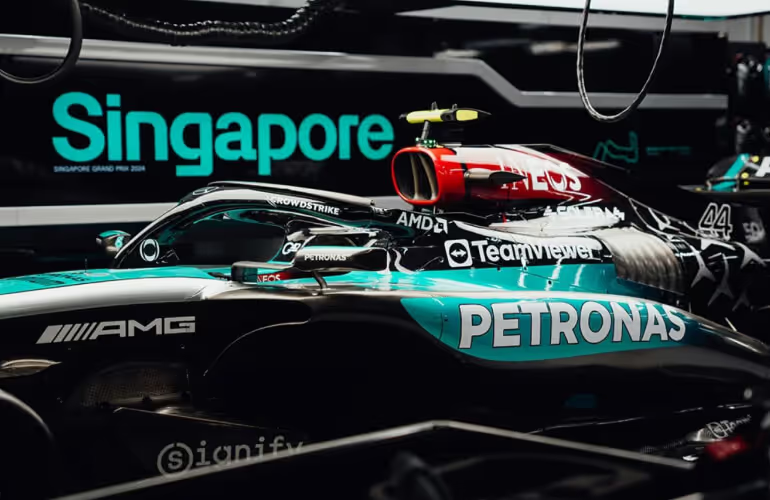
In 2026, these 11 teams will battle for supremacy:
Most teams are based in "Motorsport Valley" around Oxfordshire, England. Ferrari is the notable exception, building everything in Maranello, Italy—because tradition matters when you're Ferrari.
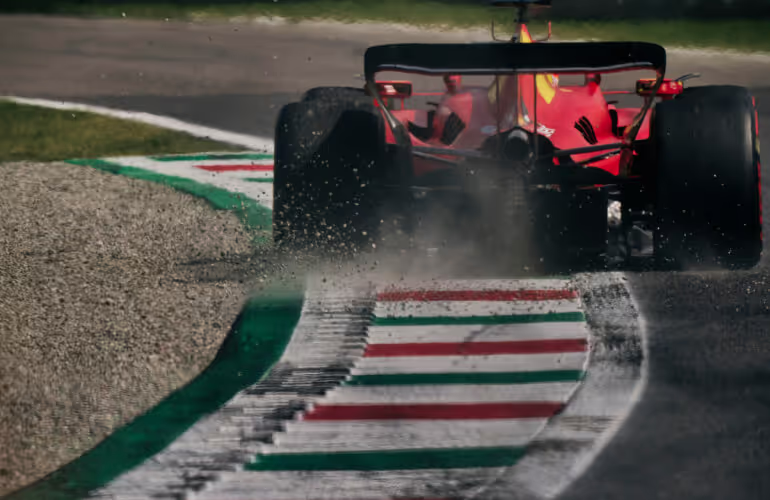
Modern F1 cars are absolutely insane pieces of technology. They're custom-built, open-wheel, single-seat machines designed for one purpose: making humans question the laws of physics.
An F1 weekend is a carefully choreographed spectacle running over three days (Friday to Sunday).
Friday: Practice Makes Perfect Two free practice sessions (FP1 and FP2) let teams dial in their cars and test new parts. Mechanics work furiously, data scientists analyze telemetry, and drivers get familiar with the track. Some weekends feature young or reserve drivers for extra running.
Saturday: Qualifying & Sprint Races Qualifying is a three-part knockout session:
Since 2021, some races include Sprint races—short 100 km races that award points and add extra drama.
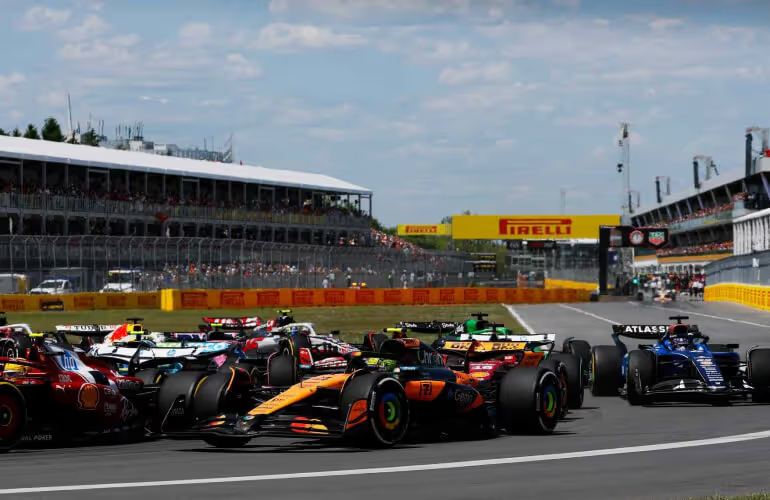
Sunday: The Main Event The Grand Prix race is the culmination of all the preparation. Drivers cover approximately 305 km (190 miles) in 1.5-2 hours, making strategic pit stops for tire changes (usually 2-3 stops). Modern pit crews can change all four tires in under two seconds. Yes, under TWO seconds.
The top 10 finishers score points each race:
For sprint races, only the top 8 score.
At season's end, two championships are awarded:
The Constructors' Championship is huge—it brings prestige, prize money, and bragging rights.
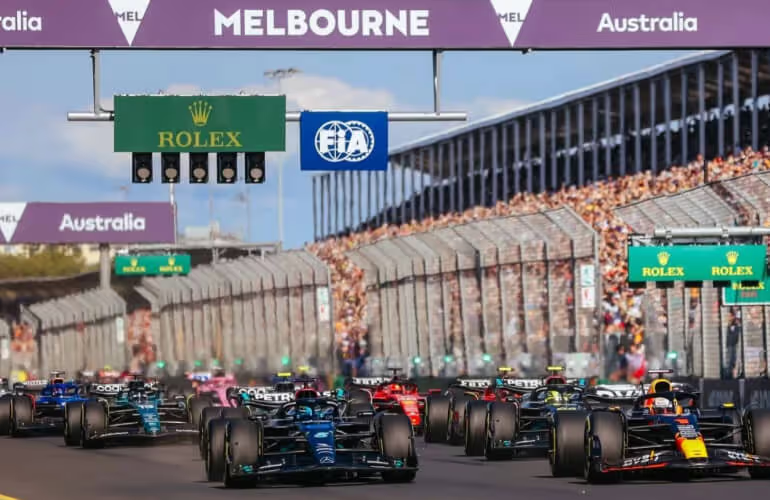
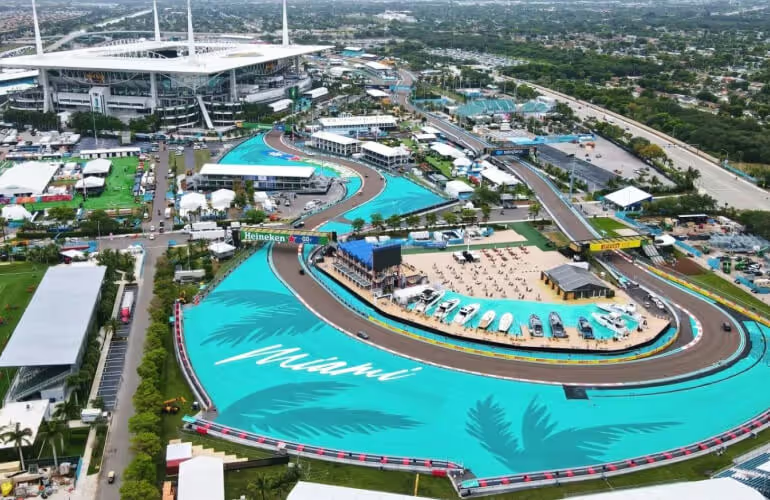
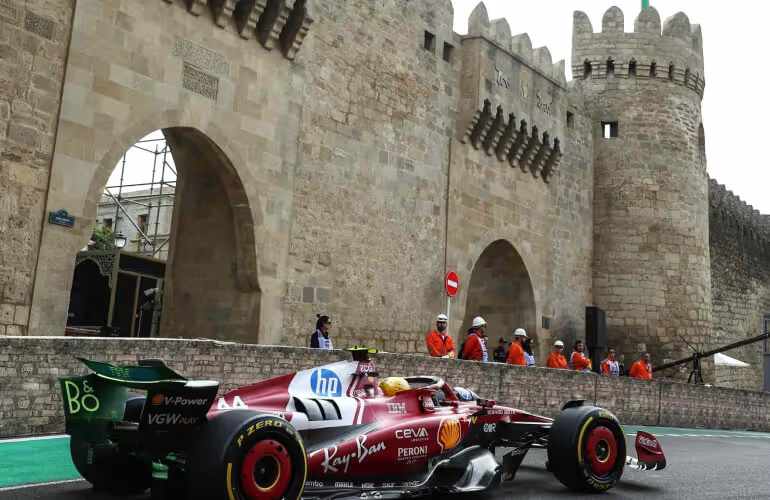
F1 travels to incredible locations worldwide. In 2025, there are 24 races planned, showcasing the sport's global reach.
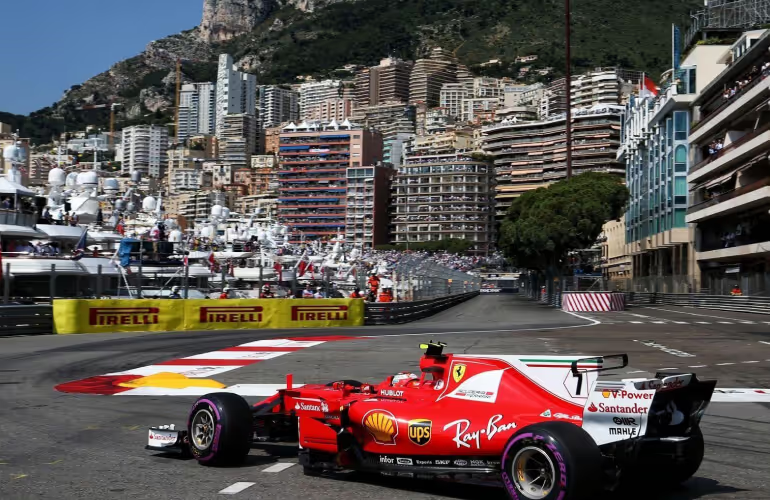
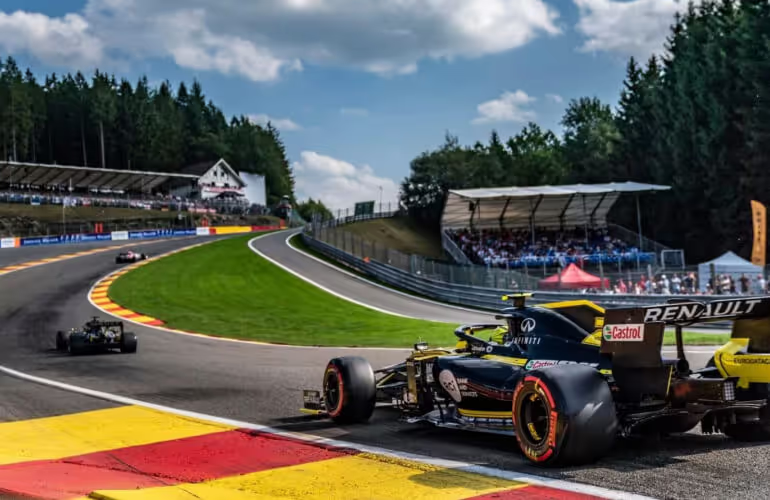
Iconic Tracks:
The FIA maintains contracts with many venues stretching decades into the future, keeping F1 fresh and globally expansive.
F1 vs. NASCAR:
F1 vs. IndyCar:
F1 vs. Formula E:
Let's be honest: F1 has treated India like a love interest who ghosted after three dates. But there are compelling reasons to stay invested:
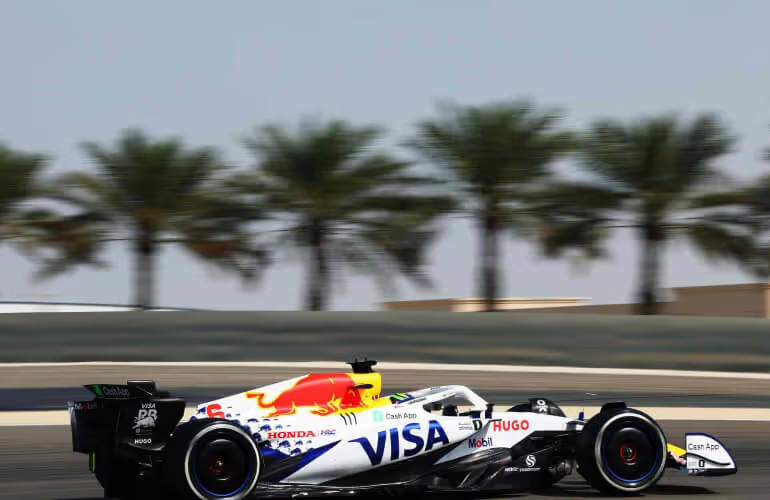
Epic day-night race having secured its spot early in the F1 season


Formula 1 is complex, yes—but it's also the most thrilling motorsport on Earth. It combines engineering brilliance, athletic prowess, split-second strategy, and nail-biting drama into a sport that captures hearts across 24 countries.
Whether you watch for the technology, the competition, the drivers, or just the sheer spectacle, F1 offers something for everyone. And for Indian fans, there's an added layer of hope—hope that one day soon, India will reclaim its place on the Grand Prix calendar.
Until then, catch the races online, root for Mahindra in Formula E, and keep tabs on Kush Maini's journey. The dream of an Indian Grand Prix isn't dead. It's just... in a very long pit stop.
Now go forth and impress your friends with your newfound F1 knowledge. You're welcome.


Travel to the most popular locations on the calendar to experience an F1 race





Leave a Comment