

Listen, if you've ever wondered why F1 drivers look perpetually stressed, just wait until you hear how much their cars cost. Spoiler alert: it's more than your entire house, your car, and probably your life savings combined.
So, here's the real talk: a modern Formula 1 car costs between £10-16 million (approximately ₹100-160 crore) to build, with some estimates pushing it up to ₹200 crore when R&D is included. To put that in perspective, that's enough money to buy around 200-300 brand new luxury cars in India. Or, you know, a decent apartment in Mumbai's posh suburbs.
The thing is, this figure varies wildly depending on the team's budget, design philosophy, and how many times their drivers have crashed into walls (spoiler: it happens more often than you'd think).
Remember the good old days when billionaires just threw unlimited money at F1 cars, consequences be damned? Yeah, those days are gone. And honestly, we're better off for it.
In 2021, Formula 1 introduced budget caps to finally bring some sense to this madness. For the 2025 season, the budget cap sits at $140.4 million (roughly ₹1,165 crore) for a 21-race calendar, with additional allowances for each extra race.
But here's where it gets interesting: before 2021, top teams were spending a jaw-dropping $320-400 million annually—basically throwing obscene amounts of money at everything. Mercedes and Red Bull had wind tunnel programs so expensive they could fund small countries. Now? They have to be smart about it. Revolutionary concept, right?
What does this budget actually cover? Pretty much everything related to car performance and development—R&D costs, manufacturing, race operations, and most personnel salaries. What doesn't it cover? Driver salaries (because of course mega-millions for drivers aren't included), marketing, and your team principal's daily coffee budget.
Let's talk specifics, because this is where things get absolutely bonkers.
1. The Heart of the Beast: The Power Unit (₹50-150 Crore)
The engine alone accounts for a staggering 90% of your F1 car's total cost. We're talking ₹50-150 crore just for this one component. Insane, right?
This isn't just your regular V6 engine that you'd find in a fancy sports car. This is a 1.6-liter V6 turbocharged hybrid system that produces over 1,000 horsepower—more power than some early planes had! It combines:
The materials alone? Titanium alloys, gold, and rare elements that cost a fortune just to source. To give you an idea, regulations require engine suppliers to charge a maximum of €12 million (₹100+ crore) for customer engines—and they're still taking a loss.
Fun fact: For 2026, F1 is ditching the MGU-H system to simplify things (and reduce costs). Finally, a bit of sanity!
2. The Skeleton: Carbon Fiber Chassis and Safety (₹15-25 Crore)
The monocoque chassis is built from multiple layers of carbon fiber—twice as strong as steel but five times lighter. It's engineering poetry, really. Cost? Around ₹15-25 crore.
This is where all your aerodynamic bits get bolted on, and it's designed to keep the driver safe while maintaining structural rigidity. The Halo (that protective device around the cockpit that looks like a spaceship entrance) costs about $17,000 (₹14 lakh) but has literally saved lives.
Remember Romain Grosjean's fiery crash at Bahrain in 2020? That Halo saved him. Money well spent.
3. Wings: The Downforce Dealers (₹15-25 Lakh)
Those elegant front and rear wings you see? They're responsible for generating downforce that literally glues the car to the track. Unlike airplane wings that create lift, F1 wings do the opposite—they suck the car down.
A complete front and rear wing set-up costs ₹15-25 lakh (or about $250,000). And here's the kicker: teams often replace these every few races because aerodynamics change with track conditions, and engineers are obsessed with shaving off milliseconds.
For reference, a Marussia front wing from a few years back cost about ₹2.5 lakh, but modern designs? They're so complicated they could probably predict the weather.
4. The Transmission: Shifting Gears Like a Boss (₹35-80 Lakh)
The gearbox is basically a precision instrument that can shift gears in microseconds. Cost? ₹35-80 lakh. That's more expensive than most luxury cars in India!
F1 drivers are allowed only five gearboxes per season, and any additional units mean grid penalties. So when they break one, it's a team-wide crisis. Adding to the drama, the gearbox is also a "stress member" of the chassis, meaning it contributes to the car's structural integrity. Multitasker much?
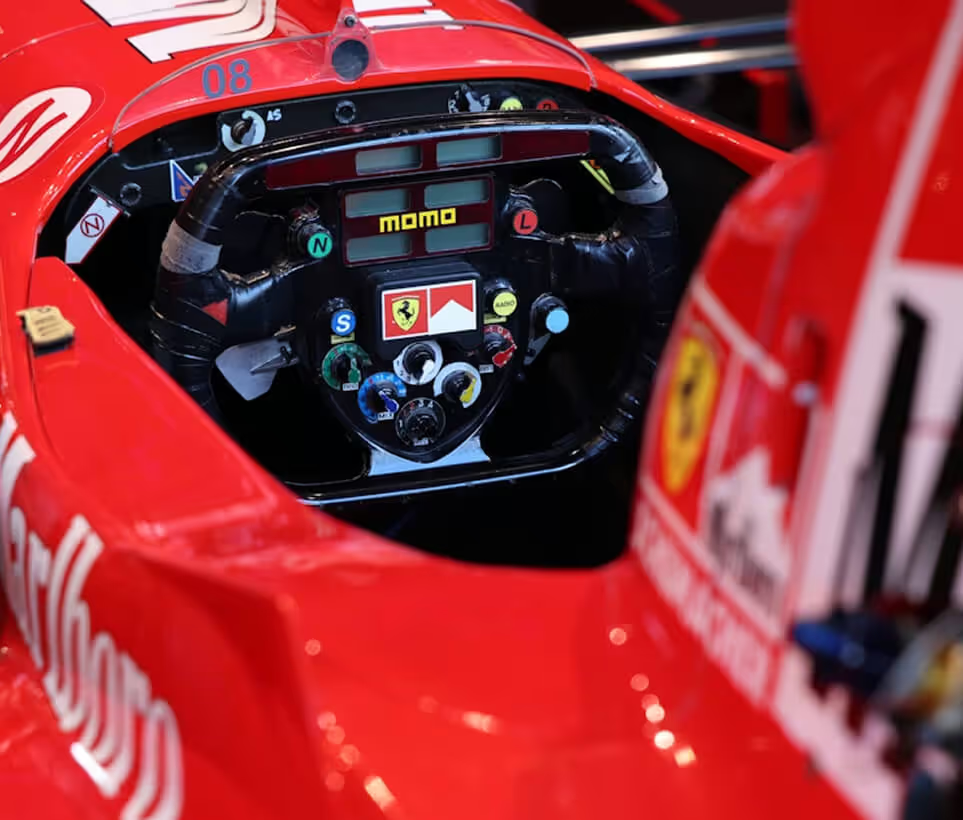
5. Electronics & The Steering Wheel: The High-Tech Hub (₹30-80 Lakh)
Your steering wheel isn't just for steering (shocking, we know). It's basically a computer console with 20+ buttons, knobs, and switches that let drivers adjust:
Cost for this technological marvel? ₹30-80 lakh. The electronics and sensors throughout the car add another ₹60-100 lakh to the bill.
6. Suspension, Brakes & Other Bits (₹20-50 Lakh)
Suspension systems, high-performance brakes, hydraulics, and other components add another ₹20-50 lakh. Every single element is engineered for maximum performance while staying within weight and cost constraints.
Here's the real secret: the manufacturing cost is just the tip of the iceberg. Teams spend astronomical amounts on research and development that don't show up in the per-car price.
We're talking:
If you include all this, the real investment in an F1 car easily reaches ₹100-200 crore annually per team.
Here's something that'll make you wince: expensive accidents happen, and under the budget cap, they hit hard.
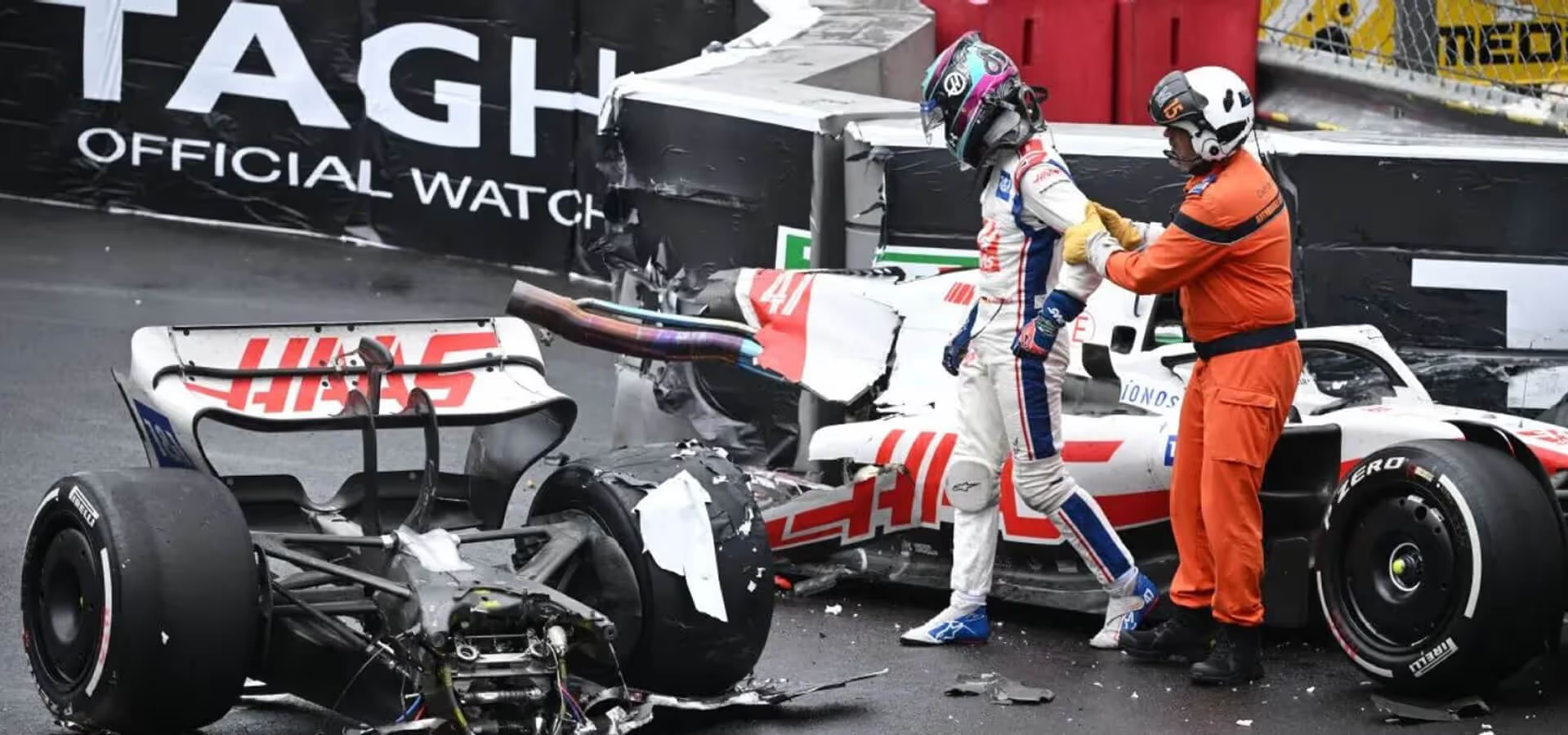
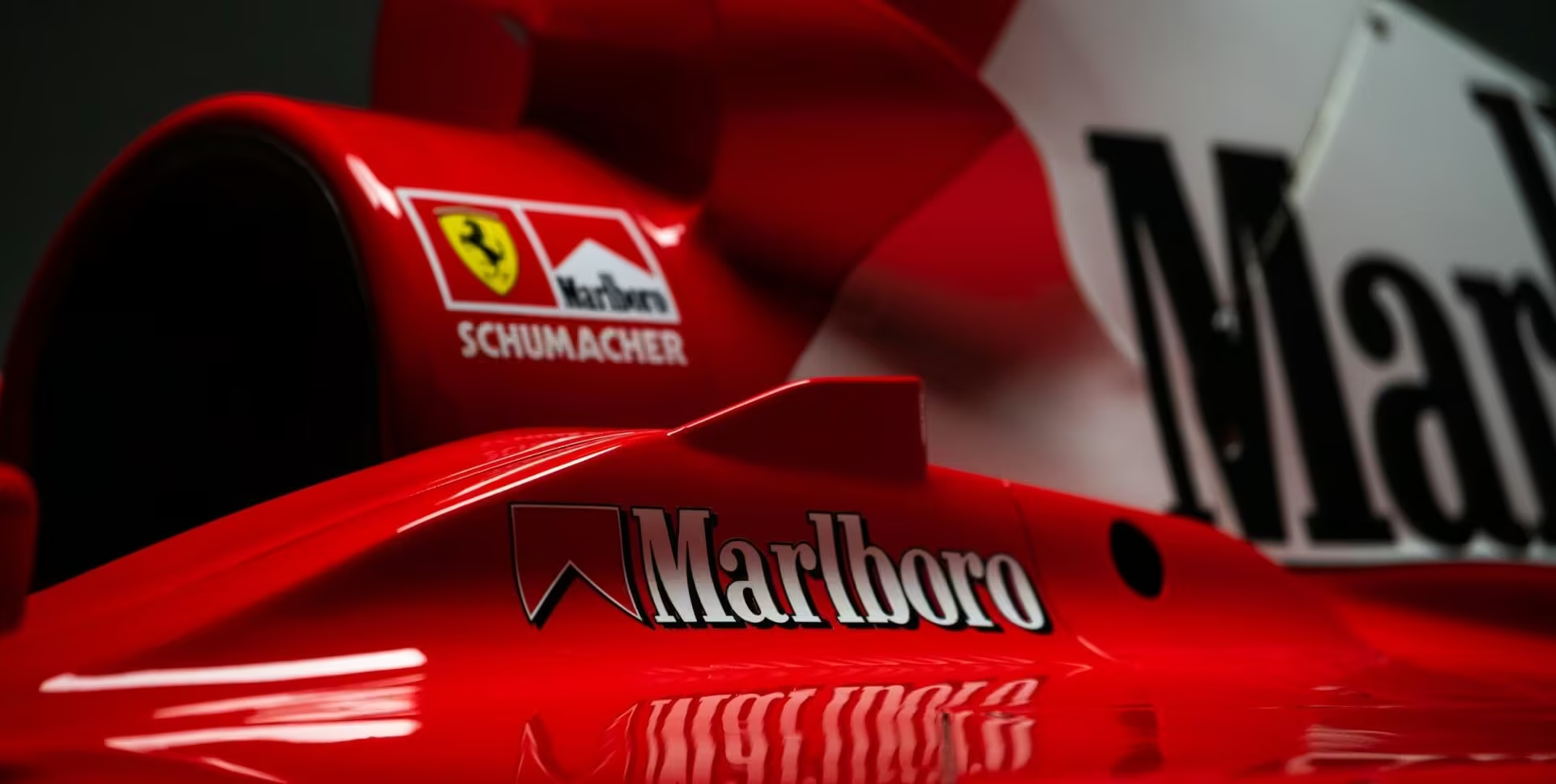
Remember Logan Sargeant's repeated crashes in 2023-24? Williams lost millions from their development budget fixing his mistakes. Mick Schumacher's single 2022 crash in Saudi Arabia cost Haas $1 million. George Russell's 2024 damage bill? Over ₹2 crore for his team.
Brazil 2024 set a record with over €5 million (₹40+ crore) in total crash damage across the grid, with Williams alone losing over ₹25 crore. That's why accident management is now a strategic concern for teams.
Before the budget cap, it was absolute madness. Some teams spent ₹300+ crore annually while others barely scraped together ₹50 crore. It was a complete arms race where the richer teams literally just bought championships.
Now? There's still a skill and efficiency gap, but it's far more balanced. Top teams still find ways to maximize their budgets better than mid-field teams (smarter engineering = more performance per rupee), but the disparity has shrunk dramatically.
If you're sitting at home thinking "I have money, can I just buy one?"—technically yes, but with important caveats:
Show Cars: You can buy retired F1 cars from F1 Authentics. Prices range from ₹1-3 crore for older models. They're beautiful display pieces but have no engines or transmissions.
The RB17: Red Bull announced they'd sell 50 road-legal versions of their RB17 at £5 million (₹50 crore) each, excluding taxes. Yes, ₹50 crore for a car you can drive on the road. Maximum flex.
Actual race cars? Those aren't for sale—they're the crown jewels of their respective teams.
The FIA just announced that in 2026, the budget cap is increasing to $215 million (₹1,775 crore)—a 30% jump. Why? Because new technical regulations are coming, including:
Teams need those extra resources to develop completely new power units, which is expensive as hell even with simpler architecture. It's a necessary evil to keep the sport technologically relevant while being environmentally conscious.
When you break it down:
It's basically the pinnacle of automotive engineering, and you don't achieve that through budget-friendly compromises.
The budget cap has been revolutionary for F1, making the sport more sustainable while still pushing the boundaries of what's technologically possible. Teams can no longer just outspend competitors into oblivion—they need innovation, strategy, and smart resource allocation.
Will an F1 car ever be cheap to build? Absolutely not. But at least now we're not watching a pure spending arms race where only the richest teams can compete.
And honestly? That's probably good news for motorsport fans who want racing to be about engineering excellence and driver skill, not just who has the deepest pockets.
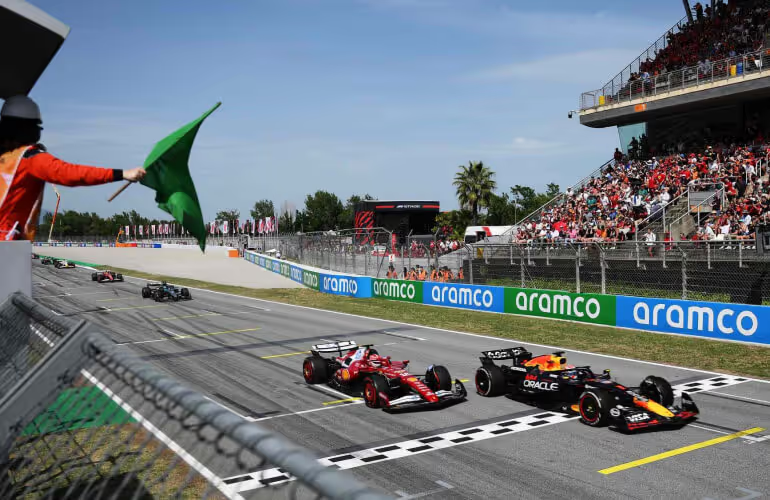
Beachfront city with nightlife, a beach, and an epic race


Travel to the most popular locations on the calendar to experience an F1 race






Leave a Comment