


So you've finally decided to witness Formula 1 live instead of shouting at your TV during Sunday evening races.
Whether you're a die-hard Lewis Hamilton fan or just someone who thinks fast cars look cool, attending your first F1 Grand Prix is about to become the most expensive yet absolutely worth-it decision you'll make in 2026.
Let's break down everything you need to know about buying tickets, booking flights, finding accommodation, and actually surviving the trackside experience without melting into your seat (literally – it gets hot).
Thanks to Netflix's Drive to Survive turning F1 into mainstream entertainment (and making us all secretly want to be race engineers), tickets are disappearing faster than your last samosa at a family gathering.
Here's the hard truth: If you wait around thinking you'll "figure it out later," you'll end up:
More than half of the 2026 F1 calendar races already have tickets on sale. The new technical regulations introduced for 2026 have made this season particularly exciting, so don't procrastinate. Seriously. Your bank account will thank you (well, it won't, but it will hurt less).
Choosing your first F1 race is like selecting your first biryani – location matters, and you want to get it right.
The smart play: Attend a race in India, a nearby country, or somewhere you've been wanting to visit anyway. Why? Because combining a holiday with a race weekend is basically genius-level travel planning.
Your 2026 options include:
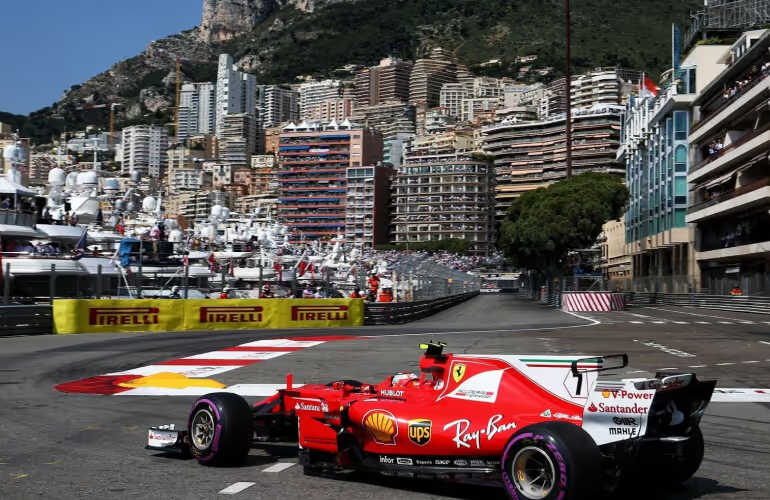
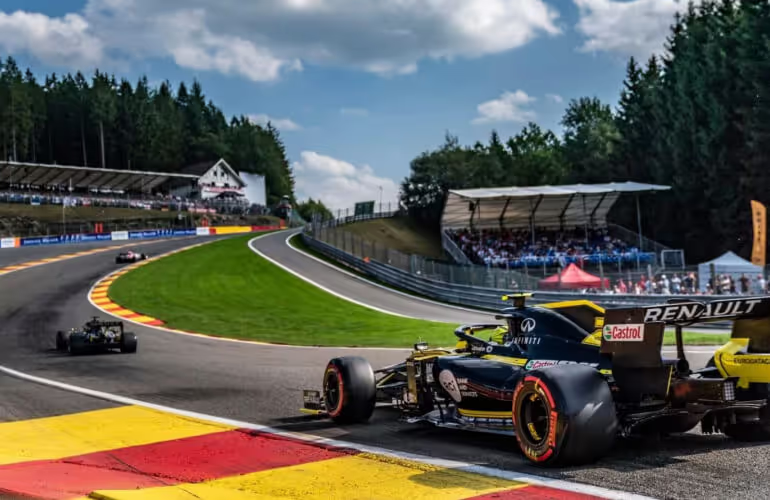
European Classics – Historic circuits in stunning locations like Austria and Belgium where you can pretend you're in a film. Pack your camera and your best Instagram captions.
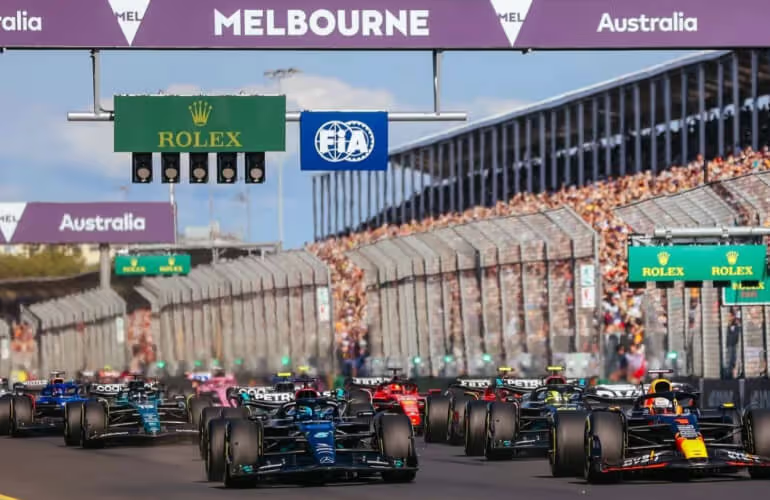
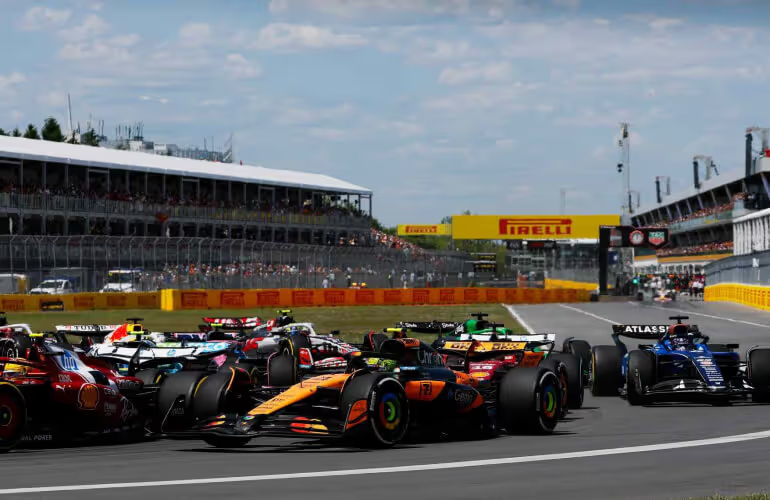
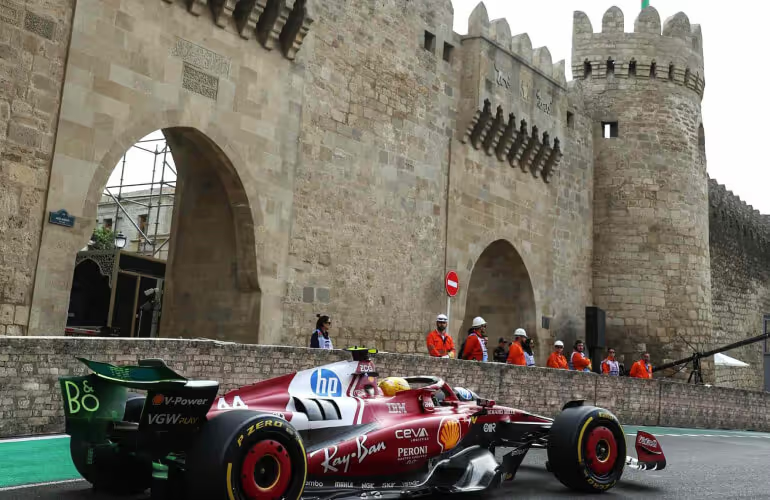
City Track Madness – Melbourne, Montreal, Bakuand Mexico City circuits that go right through the city. These races have that "Formula 1 has taken over our streets" energy that's absolutely electric.
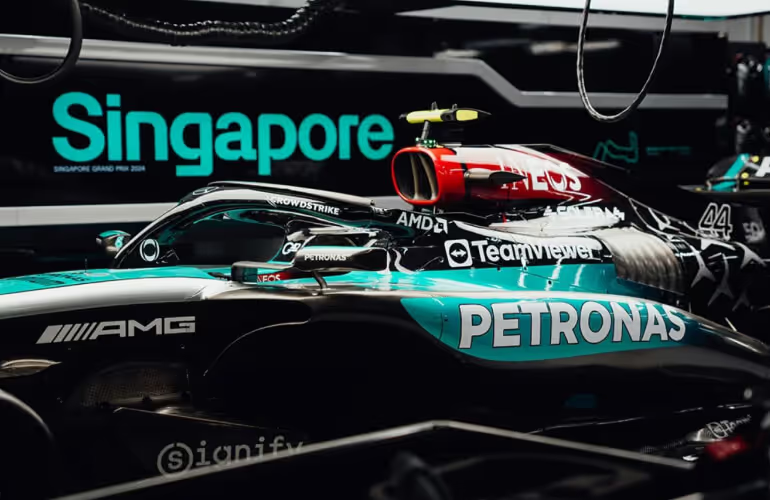
Night Race Spectacles – Singapore and Las Vegas host races under the lights. Singapore is sticky and chaotic; Las Vegas is glamorous and expensive. Choose your chaos accordingly.
Bonus Content – Six races in 2026 feature F1 Sprint weekends, which means even more racing and even less sleep.
Pro Tip: Research beyond just the race. Some circuits have world-class concerts, stunning nearby attractions, or incredible food scenes. Make it a trip, not just a race.
Going with an Organized Tour?
DIY Adventure Mode?
Pro Tip: Formula Racing Tours-Xperiences isn't just about seats – we offer trackside hospitality suites, exclusive activities, and accommodation packages that can genuinely simplify your first race experience.
Here's where many Indians trip up: ticket systems vary wildly depending on which race you attend.
Some circuits handle their own sales directly through their websites. Others use third-party agencies. The quality of customer service ranges from "surprisingly helpful" to "good luck figuring this out."
Your safest bets:
Indian Traveler Tip: Don't assume you need an international agent. Many circuits now have straightforward online booking systems that work fine from India. Just ensure your payment method works (some international cards face issues, so notify your bank in advance).
How Much Will This Actually Cost? The Budget Reality Check
Let's be honest: F1 isn't a "budget holiday" sport. But it's more accessible than you think.
Typical breakdown for a full race weekend (Friday-Sunday):
European races are surprisingly affordable – General admission 3-day tickets often cost under $150 USD, plus cheap campsite options ($20-40 USD per night).
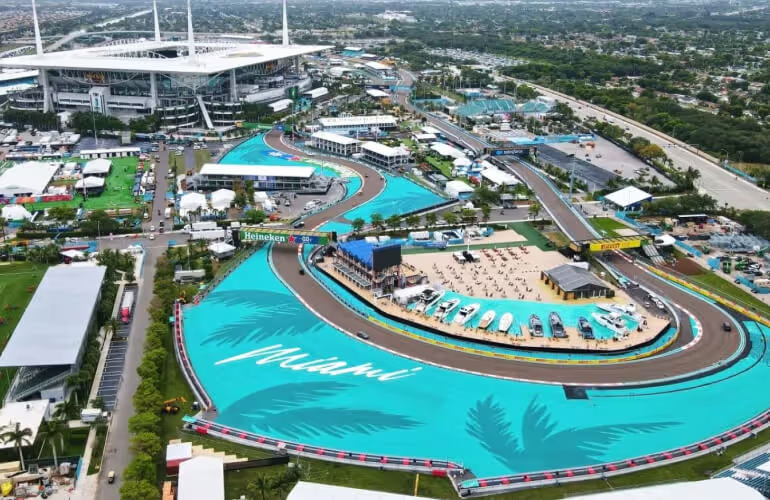
American races (Miami, Austin, Las Vegas)? Yeah, those are pricey. Budget accordingly or look elsewhere.
The Secret: Sometimes flying to Mexico City or Canada for the F1 race costs LESS than attending the American races, even after factoring in international flights. Do the math before assuming your nearest race is your cheapest option.
Booking Hack: Buy early for discounts, better flight options, and wider accommodation choices. Last-minute everything costs more – it's basically a tax on procrastination.
Most F1 circuits are near major cities, which is convenient (but sometimes expensive).
Flight booking strategy:
The often-forgotten option: Europe has amazing train systems. Driving your own car is possible. Some fans even take ferries. These alternatives can be cheaper and more scenic than flying.
Indian Traveler Tip: Factor in a longer journey time. You might have a connecting flight, so leave extra time for airport delays and layovers.
Camping – The Backpacker's Dream
Budget Hostels – The Compromise
Budget Hotels – The Social Butterfly Option
Mid-Range & Luxury – The Comfort Zone
The Essential Trackside Backpack:
Don't pack: Heavy luggage, fancy shoes you haven't broken in, unrealistic expectations that it won't be uncomfortable sometimes. Leave space for: F1 merchandise, because you WILL buy something ridiculous.
Before You Arrive: The Pre-Race Checklist
✓ Travel insurance – Comprehensive coverage for your stay ✓ Visa requirements – Some countries need advance visa arrangements ✓ Local SIM card or data plan – Sort this before you land ✓ Downloaded offline maps – WiFi at circuits is questionable at best ✓ Route planning – Know exactly how to get from hotel to circuit ✓ Full race schedule – Published 4-8 weeks before race weekend ✓ Pit lane walk Thursday – Many circuits offer this free public experience ✓ Printed backup documents – Yes, really. Phones die.
Before leaving your hotel each day, pack:
Inside the circuit:
The best part – Track Invasion: After the race ends, fans get to walk down the pit straight and watch podium celebrations live. It's surreal. Get close to the finish line before the final lap if you want a good view.
The boring but important part: Public transport home gets absolutely rammed after the race. If you don't mind missing a few minutes of analysis, delay your exit by 20 minutes and avoid being packed like sardines on the train.
Well-organized circuits (Australia, Austria, Netherlands, Singapore) run like Swiss watches. Everything works smoothly. Facilities are decent. Staff are helpful.
Chaotic circuits (Spain, Italy) are... an experience. Long queues. Confusing signage. The same energy as navigating Delhi during rush hour, but with more expensive beer.
High-attendance races (Australia, Britain, USA, Mexico City) = serious queuing and patience required.
Sparsely attended races (Bahrain, Saudi Arabia, Azerbaijan, Qatar) = relaxed, less crowded, sometimes feels like you're at a private event.
The absolute truth: Organization varies wildly. Go with the flow, embrace the chaos, and remember why you're there.
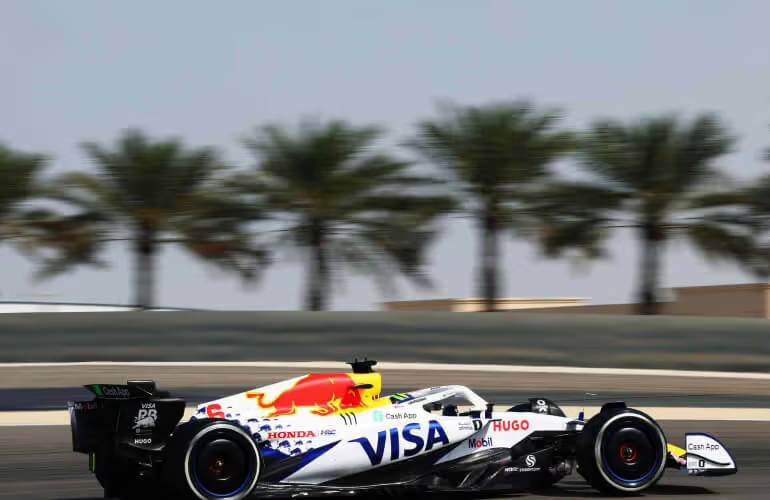
Epic day-night race having secured its spot early in the F1 season


Hundreds of millions watch F1 on TV. Only a few million experience it live.
Your first race will be hot, crowded, uncomfortable at times, and absolutely incredible. You'll experience sensations no broadcast can capture – the actual roar of the engines, the smell of fuel and rubber, the electric energy of tens of thousands of fans united by their passion.
You'll meet people from everywhere. You'll likely eat something overpriced. You might lose your voice screaming. Your feet will hurt. Your wallet will weep.
And you'll book your next race before you even leave the circuit.
So what are you waiting for? Start planning now. Your first F1 race in 2026 awaits.
Now go forth and make some memories. And please, for the 100th time remember to bring that power bank.
Follow us for the latest updates on the 2026 Formula 1 Season, racing packages, mega deals, events, tickets, hotels, and insider tips!


Travel to the most popular locations on the calendar to experience an F1 race





Leave a Comment