All You Ever Need to Know About F1

Latest stories about drivers, teams, strategies, circuits, car developments, and much more

Thank you! Your submission has been received!
Oops! Something went wrong while submitting the form.
Blog Image
February 7, 2026
3
min read
Race Circuits

The 2026 season will see the 15th edition of the US GP at the COTA circuit in Austin, Texas with the track a popular one for drivers and fans alike.

A track known for overtaking and very good racing, both local and travelling fans make for a great atmosphere all weekend long. Whether it was Kimi Raikkonen’s final win in F1 or the heated teammate battle in 2015 between Lewis Hamilton and Nico Rosberg, there have been plenty of highlights over the years.

A particular highlight of the circuit is the 133m rise from the main straight into turn 1. Thanks to a USA driver being on the grid for the first time since 2015 in Logan Sargeant, the atmosphere is set to step up in 2023.

  • Circuit Length – 5.51km
  • Number of Laps - 56
  • Race Distance – 308.41km
  • Max Speed – 325km/h
  • Average Temperature in October – 28c
  • Currency – USD
  • Closest Airport – Austin-Bergstrom International Airport
  • Language – English

CIRCUIT OF THE AMERICAS: HISTORY AND CONSTRUCTION

The Circuit of the Americas (COTA) was the first Formula One circuit specifically designed and purpose-built in the United States. The project was conceived in 2010 by promoter Tavo Hellmund and World Motorcycle Champion Kevin Schwantz, with design assistance from renowned German architect Hermann Tilke.

Construction began on 31 December 2010 and the circuit officially opened on 21 October 2012, just 21 months later.

The circuit was constructed on approximately 900 acres of undeveloped land in southeast Travis County near Austin, Texas, about 10 miles southeast of Austin city centre with backing from Texas billionaire Red McCombs.

The project cost over $300 million, utilizing GPS-based 3D paving equipment and specialized pacing machinery to meet FIA specifications. The first layer of asphalt was completed on 3 August 2012, with the final layer finished on 21 September 2012.

The inaugural Formula One United States Grand Prix took place on 18 November 2012, marking F1's return to the United States after a five-year absence, won by Lewis Hamilton driving for McLaren-Mercedes.

Watch How The COTA Circuit Was Built

(Video Courtesy - Everything Explained)

RACING AT CIRCUIT OF THE AMERICAS: F1 CARS AND DRIVING EXPERIENCE

The Circuit of the Americas is a 3.426-mile (5.514 km) permanent circuit featuring 20 turns with dramatic elevation changes totaling 133 feet (41 meters). The circuit is known for its demanding uphill Turn 1, a sharp blind left-hander at the crest of the steepest climb, which has become one of the most distinctive and photographed corners in modern Formula One.

The track features a mix of high-speed corners inspired by legendary circuits worldwide, including Silverstone's Maggotts-Becketts-Chapel complex at Turns 3-5, Suzuka's Esses, and Nürburgring-style sections.

The 0.62-mile back straight provides excellent overtaking opportunities through the DRS zone, with cars reaching speeds over 200 mph (322 km/h).

Counter-clockwise layout and technical corners demand precise driving and setup optimization, testing car balance and driver commitment. The bumpy track surface, created by the soft soil beneath the circuit, has been a persistent characteristic requiring drivers to adapt their driving style.

LEGENDARY DRIVERS AT CIRCUIT OF THE AMERICAS

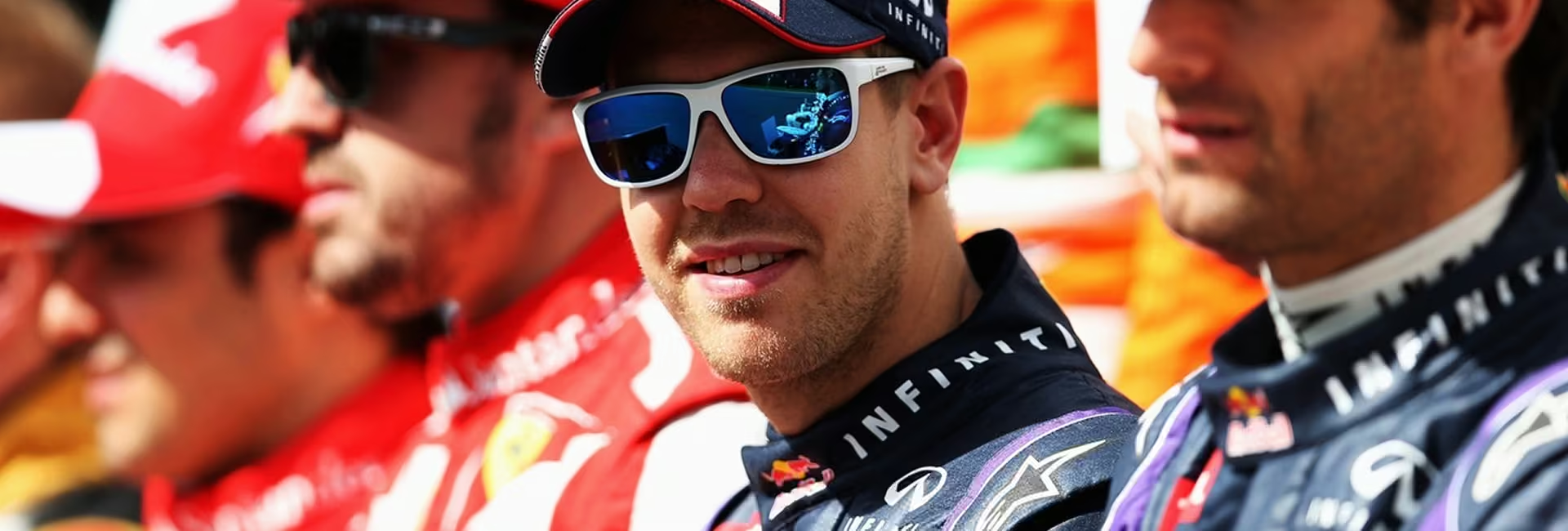
Formula One legends who have raced at COTA include Sebastian Vettel, who won the inaugural 2013 race, Fernando Alonso, Kimi Räikkönen, Valtteri Bottas, and Nico Rosberg. The circuit has hosted many historic driver battles and championship-deciding moments throughout its history.
US GRAND PRIX: MOST WINS RECORD

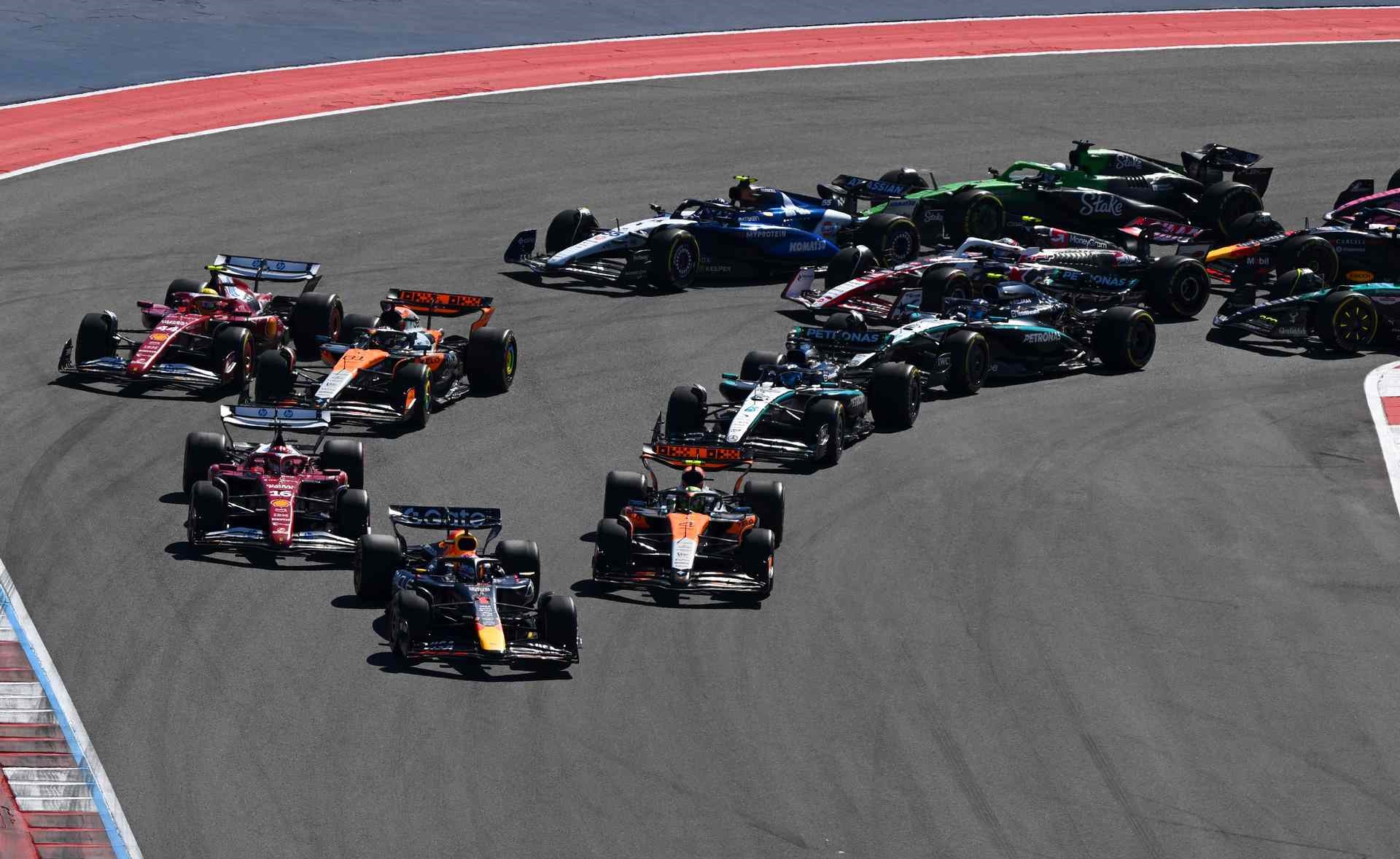
Lewis Hamilton holds the record for most wins at Circuit of the Americas with five victories (2012, 2014, 2015, 2017, 2019), including four consecutive wins from 2014 to 2017. Hamilton clinched the drivers' championship twice at COTA, in 2015 and 2019, cementing his status as the circuit's most successful driver.

Max Verstappen has won three times at COTA, while Charles Leclerc claimed his first COTA victory in 2024. Kimi Räikkönen won in 2018 after a 114-race winless streak dating back to 2013.

MOST FAMOUS US GRAND PRIX RACES AND MEMORABLE MOMENTS

The inaugural 2012 race saw Lewis Hamilton snatch victory from Sebastian Vettel in the final stages, establishing the circuit's reputation for thrilling racing. The 2015 US Grand Prix was a championship decider, with rain-soaked conditions and Hamilton's brilliant start from Turn 1 securing his third world title.

The 2018 US Grand Prix was highlighted by Kimi Räikkönen's emotional comeback victory after a 2,044-day gap since his last win, the longest drought between victories in F1 history.

The 2021 race featured an intense battle between title contenders Max Verstappen and Lewis Hamilton, with Verstappen's pole position and superior start setting the tone for a dominant performance.

Nico Rosberg's 2016 victory and Valtteri Bottas' 2019 win added to the circuit's roll of honour, showcasing competitive racing across multiple eras and team configurations.

WHY DRIVERS LOVE CIRCUIT OF THE AMERICAS

Drivers appreciate COTA for its challenging blend of high-speed flowing sections and technical corners that reward smooth, committed driving.

The dramatic elevation changes create unique racing characteristics not found on many circuits, with the uphill Turn 1 providing spectacular overtaking opportunities.

The circuit's design draws inspiration from iconic corners worldwide, creating a technically interesting and engaging lap that tests all aspects of driver skill and car performance.

US GRAND PRIX FAN EXPERIENCE AT CIRCUIT OF THE AMERICAS

The circuit offers impressive spectator amenities including multiple stadium grandstands and spectator mounds with sightlines of the majority of the track. A striking 251-foot (77-meter) tall observation tower provides 360-degree views of the entire circuit and Austin skyline.

Attendance figures have consistently exceeded 220,000 spectators per weekend, with record attendance reaching 269,889 in 2016.

The festival atmosphere combines world-class motorsport with the vibrant culture of Austin, featuring concerts, entertainment, and off-track activities throughout the Grand Prix weekend.

The circuit has a confirmed contract to host the US Grand Prix through at least 2026, ensuring its long-term presence on the Formula One calendar.

SURROUNDING AREAS AND AUSTIN ATTRACTIONS

Circuit of the Americas is located approximately 10 miles southeast of Austin city centre, about 2 miles from Austin Bergstrom International Airport, with easy accessibility from downtown Austin. The venue sits within scenic parkland with views of the Austin skyline and downtown area.

Austin is known as a vibrant cultural and tech hub offering world-class attractions including live music venues on 6th Street, Lady Bird Lake waterfront activities, tech company headquarters, and innovative dining experiences.

The city's reputation for exceptional food trucks, craft breweries, and nightlife makes it an ideal destination for combining Formula One racing with a broader Austin experience.

The surrounding Texas Hill Country offers scenic natural attractions, outdoor recreation, and cultural heritage within short driving distance of the circuit.

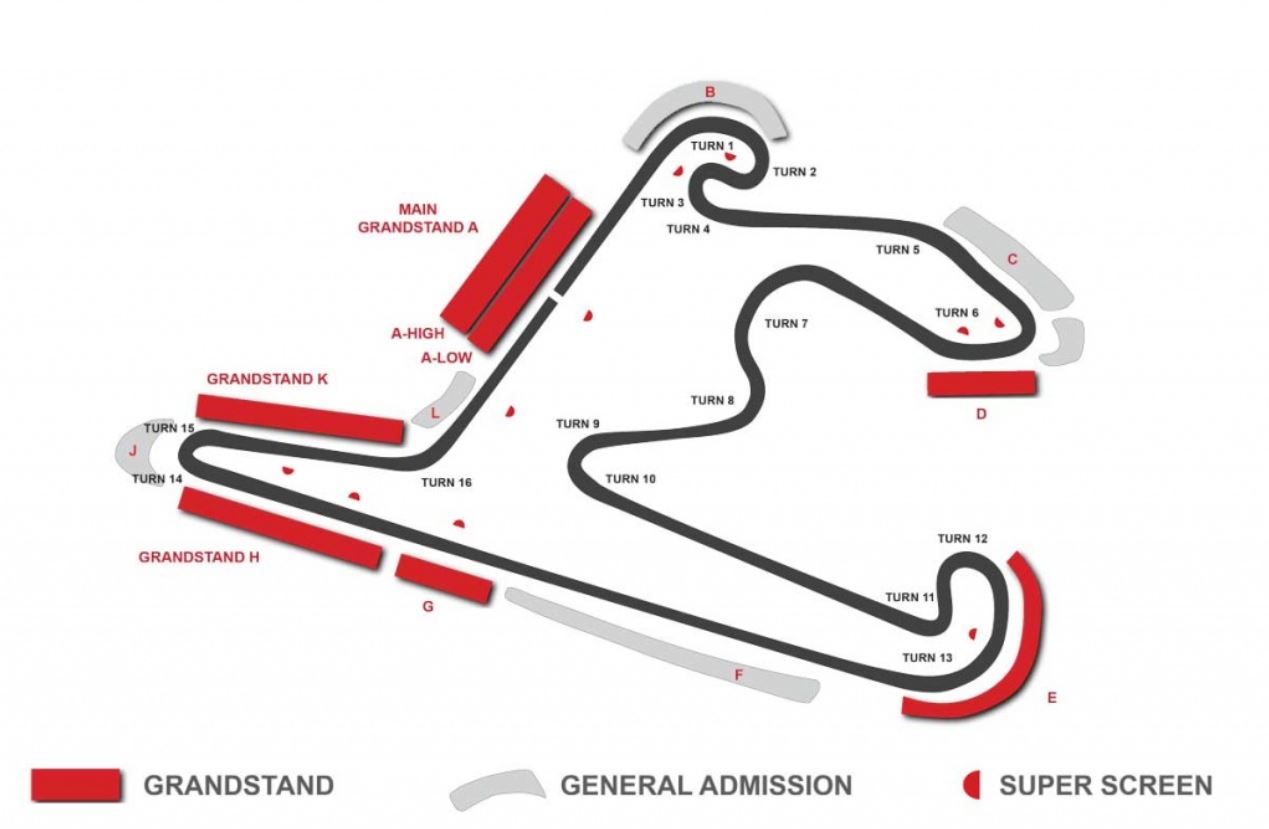
GRANDSTANDS SEATING
MAIN

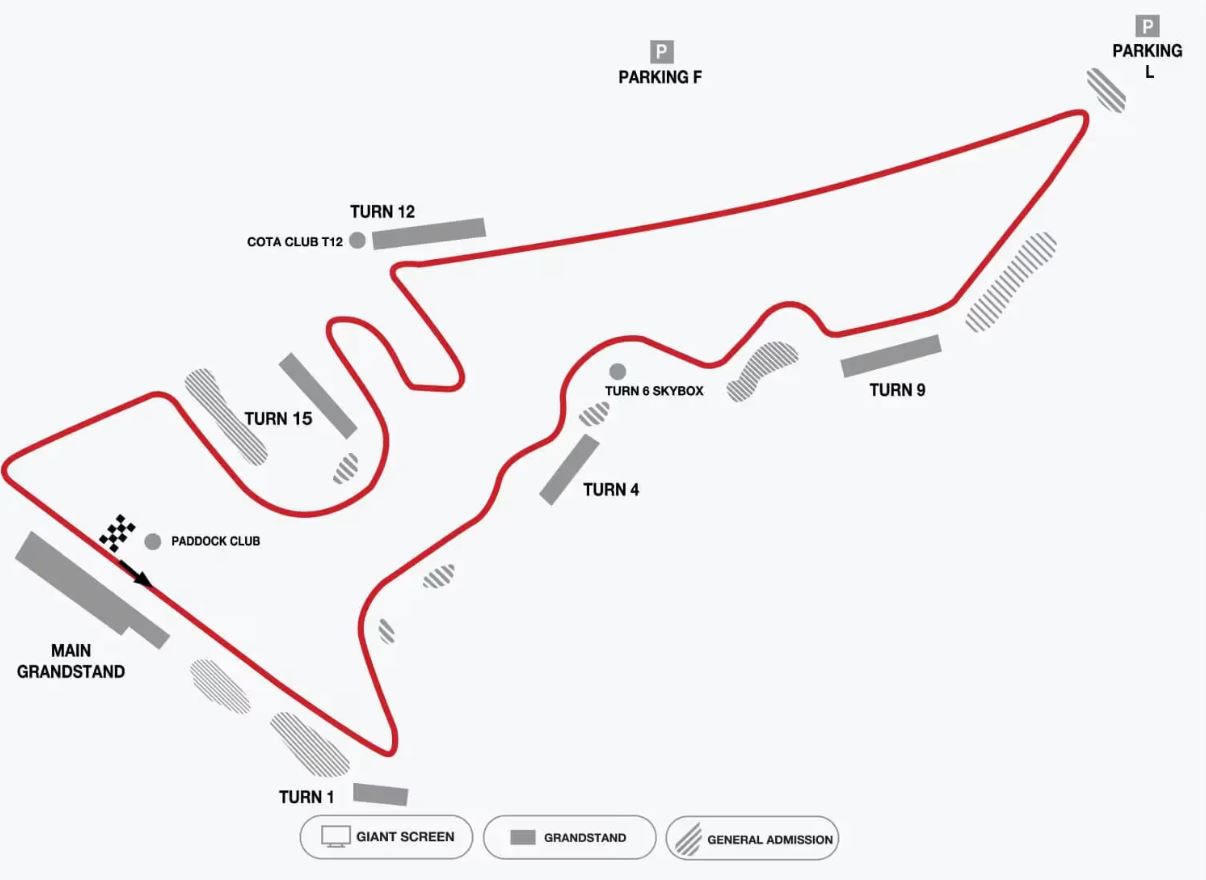
Situated on the start/finish straight, the main grandstand will give you views of the pitlane, all the pre-race build up on the grid as well as the post-race podium celebrations. Being central to the action, everything you need facility-wise is situated directly behind these stands, with the food options in particular being a highlight if grilled meat is your choice.

Giant screens are located all along the straight, meaning you won’t miss any of the other action across the rest of the track.

TURN 1

View-wise, it is hard to go past the Turn 1 Grandstand thanks to the unique steep climb from the start/finish straight to the first corner. This is the place to be for the start of the race, witnessing all 20 cars fight for position at the 90-degree Turn 1, all while climbing a 133-metre rise.

You will have front-on view of the starting grid and the main straight, while also being able to see cars exit pitlane into the apex of the first corner. The seats at Turn 1 come with backs and cupholders.

TURN 4

A smaller and more budget-friendly stand, Turn 4 is situated in the fast and twisty section of turns toward the end of the first sector. While you won’t see many overtakes, Turn 4 stand will still have plenty of photo opportunities, with the famous observation tower close by as well as the Stars & Stripes run-off at these corners.

You will have three large screens visible from the seats, meaning you can keep track of the weekend proceedings.

TURN 6

The newest stand at the COTA and the sole grandstand on the infield section, Turn 6 Grandstand will give you a fantastic view of the esses. While in a similar position to Turn 4 Grandstand, Turn 6 will give you a front-on view of the cars coming through this fast section of track which is modelled after the famous Maggots and Becketts section at Silverstone.

TURN 9

Sat on the outside of the track, the elevated Turn 9 Grandstand gives you a vast view of multiple corners. From these seats, you will be able to see cars exit Turn 7 and descend into the next few corners before entering the Turn 11 hairpin and onto the back straight. There is a giant screen directly in front of the Turn 9 Grandstand.

TURN 12

One of the most popular stands at COTA, Turn 12 is perched right at the end of the long back straight. Thanks to the nature of the circuit, you can see the majority of the track from this grandstand, particularly if you are seated in the higher rows.

Here you will have views of overtakes into Turn 12 and this stand is only a short 5-10 minute walk from the F1 Fanzone where you will have plenty of activities to keep you entertained between sessions.

TURN 15

Along with Turn 12, the Turn 15 Grandstand will also give you views of a large amount of the circuit, albeit from a distance. Closest to your seats, you will be able to see overtakes into Turn 12 as well as the following three corners which is often the site of on-track battles and incidents.

Like Turn 12, Turn 15 has a giant screen and is a short walk from the main Fanzone.

TURN 19

A relatively new stand added in recent years, Turn 19 Grandstand’s seating comes with backs and cupholders. Here you will see the cars come downhill on the exit of Turn 18 and take the flat-out left hander before entering the final corner on the main straight.

Turn 19 Grandstand is also located close to the F1 Fanzone so you are never far away from anything you need refreshment or activity-wise.

Circuit of the Americas - USA

All you ever wanted to know about Circuit of the Americas
Blog Image
February 7, 2026
3
min read
Race Circuits

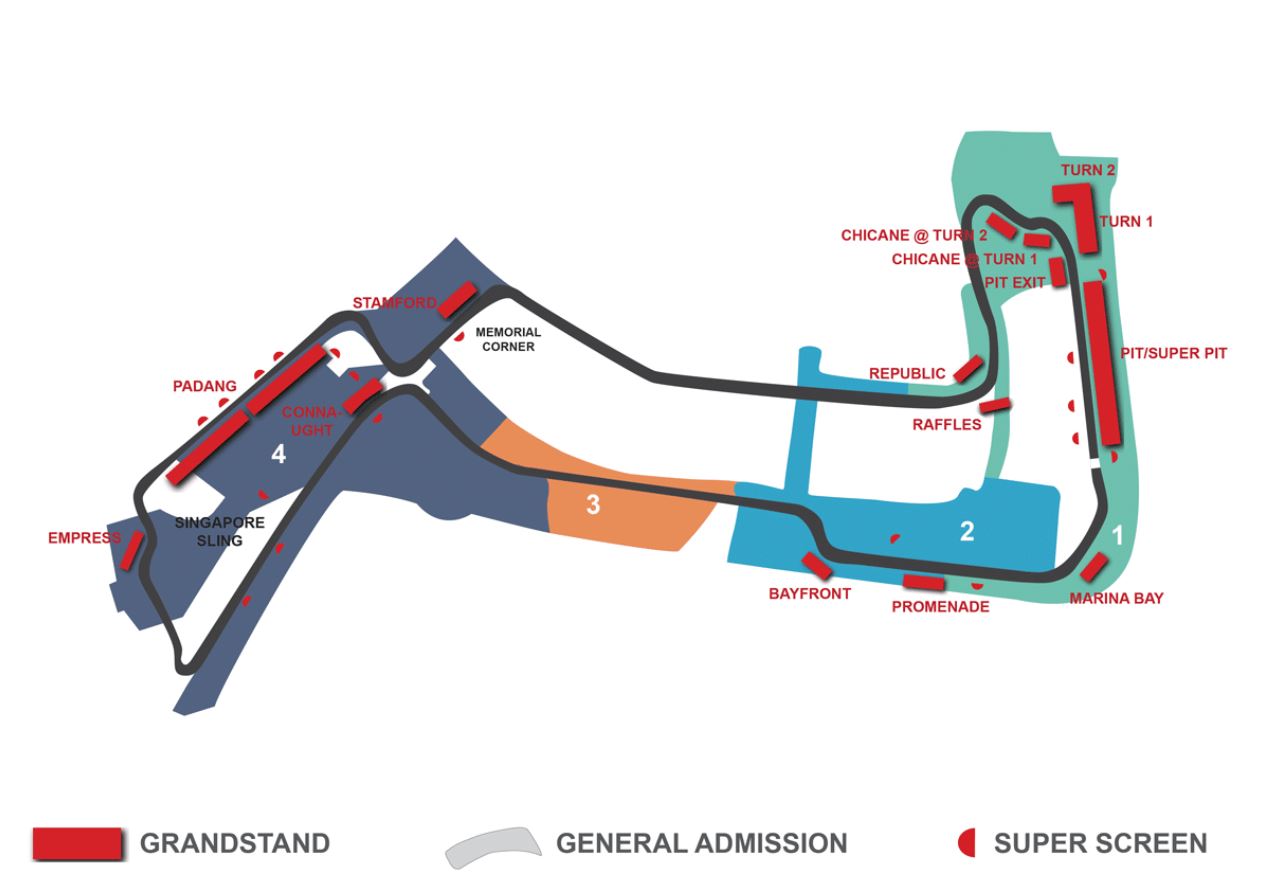
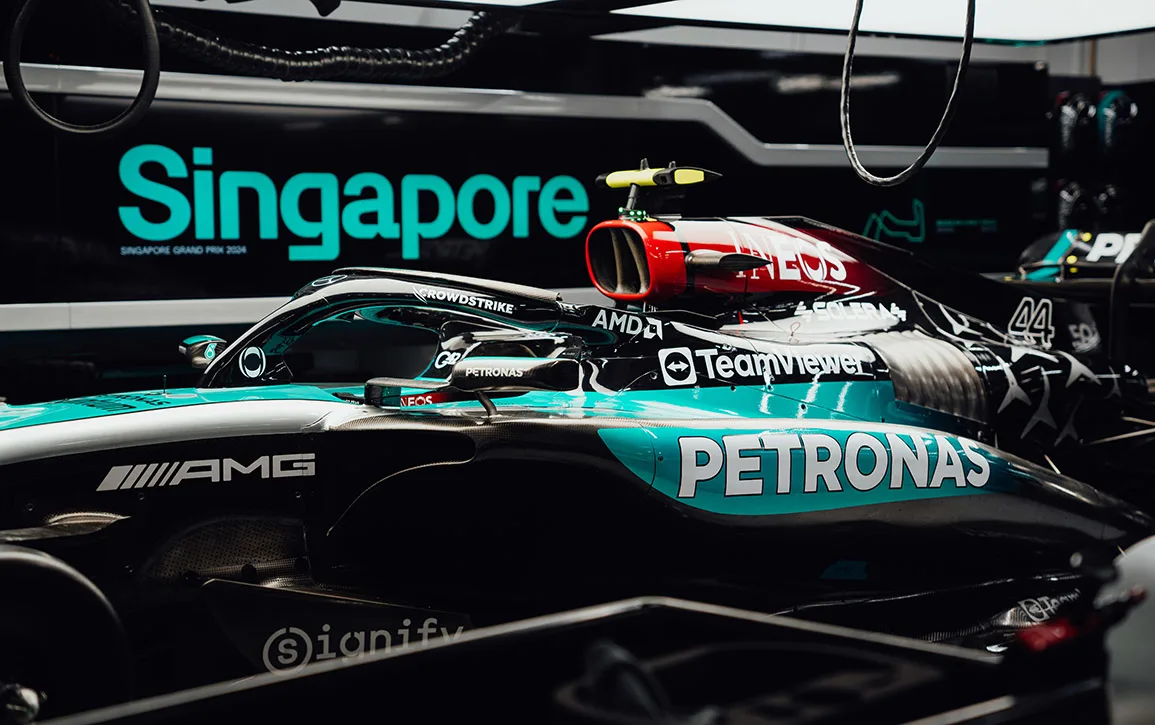
Sitting on the Marina Bay of Singapore, the Singapore Grand Prix has been a mainstay of the F1 calendar since its inception in 2008. The Singapore Grand Prix has become an instant icon, making many headlines in its 13-race history – none less than being the inaugural Formula One race at night.

Due to the climate, this track is a true test of a driver’s skill and concentration, with cockpit temperatures climbing to as high as 60ºC - despite the race being at night. The track itself is set for some changes for the 2023 race which will reduce the overall lap time by around 20 seconds.

This also means that there will be one fewer grandstand available in 2023, with the Bay Grandstand unavailable for use. No grandstands at the Marina Bay circuit are covered, so bring a poncho – but you will have giant screens viewable from every seated position on the track.

  • Circuit Length – 4.92km
  • Number of Laps – 63
  • Race Distance – 310.46km
  • Max Speed – 323km/h
  • Average Temperature in September – 25-31c
  • Currency – SGD (Singapore Dollar)
  • Closest Airport – Changi International Airport
  • Language – English, Malay, Mandarin, Tamil

MARINA BAY CIRCUIT: HISTORY AND CONSTRUCTION

The Marina Bay Street Circuit was designed by legendary circuit architect Hermann Tilke and refined by KBR Inc., with construction beginning in August 2007.

Construction of the pit complex and track sections began in mid-2007, with the circuit opening on August 31, 2008, following approximately S$ 333 million in construction costs.

The inaugural Singapore Grand Prix at Marina Bay took place on 28 September 2008, marking the 15th round of the 2008 Formula One World Championship. Singapore became the first Formula One venue to host a night-time race in F1 history, with the race held entirely after sunset under floodlights.

The circuit is 4.927 km (3.061 mi) long, featuring a harbourside location similar in style to the Circuit de Monaco and Valencia Street Circuit. The circuit is a hybrid design, with approximately 25% of the circuit being custom-built and the other 75% utilizing public city streets.

Watch How The Singapore F1 Track Was Built

(Video Courtesy -Everything Explained)

RACING AT MARINA BAY: F1 CARS AND DRIVING EXPERIENCE

The Marina Bay Circuit is one of the most physically demanding on the calendar, with its bumpy street surface coupled with humid conditions, causing drivers to lose as much as 3kg in body weight over the course of a race.

The circuit features 19 turns (following the 2023 layout change from the original 23), with tight corners and long straights requiring precision and control at high speeds.

The street circuit is narrow, and stray too far from the racing line and you can find yourself in the wall, requiring exceptional precision driving.

Singapore's humidity is rarely below 70%, with the risk of heavy rain a persistent threat, combining with the track layout and bumpy surface to create one of the most physically challenging circuits.

LEGENDARY DRIVERS AT MARINA BAY CIRCUIT

Numerous Formula One legends have raced at the Singapore Grand Prix since 2008. Sebastian Vettel dominated the early years of the Singapore Grand Prix, winning multiple times and leading the drivers' championship by over 100 points in 2011.

Other legendary drivers including Ayrton Senna, Lewis Hamilton, Fernando Alonso, and Michael Schumacher have all left their mark at Marina Bay.

SINGAPORE GRAND PRIX: MOST WINS RECORD

Sebastian Vettel has the most wins at the Singapore Grand Prix, with five victories. Lewis Hamilton follows with multiple wins at the venue, including a memorable 2014 victory when he passed Nico Rosberg on the final lap.

MOST FAMOUS SINGAPORE GRAND PRIX RACES AND MEMORABLE MOMENTS

The first race in 2008 was won by Fernando Alonso driving for Renault, though that result has since been tarnished by controversy when Renault were found to have ordered Nelson Piquet Jr. to crash, as the ensuing safety car would strongly benefit Alonso.

In 2011, Sebastian Vettel won from his 11th pole of the season, demonstrating his dominance that year. Lewis Hamilton's 2014 victory is notable when he passed Nico Rosberg on the final lap to take the checkered flag.

The 2023 Singapore Grand Prix was praised widely and awarded titles such as 'Best Race' by international media, with Carlos Sainz taking victory.

WHY DRIVERS LOVE MARINA BAY CIRCUIT

The track passes several local landmarks including the Singapore Flyer, Supreme Court, and Parliament, creating a spectacular backdrop for racing. The combination of night racing under floodlights, challenging street circuit characteristics, and exciting race conditions makes Marina Bay a unique Formula One venue.

The circuit's unique night-time format, spectacular city backdrop, and exciting racing conditions create an electrifying atmosphere that drivers enjoy competing at.

UNIQUE SAFETY CAR RECORD

The circuit held a unique record of having at least one safety car appearance in every Grand Prix until the 2024 race, with a total of 24 safety car deployments in 16 races. This unusual streak highlights the demanding and unpredictable nature of the Singapore Grand Prix.

SINGAPORE GRAND PRIX FAN EXPERIENCE

The first race in 2008 was a resounding success, receiving widespread acclaim from teams, drivers, and fans alike for its organisation, challenging circuit, and overall spectacle.

The Marina Bay Circuit offers various viewing areas including multiple grandstands with excellent sightlines of the racing action. The circuit features about 1/2 km of straight with grandstands between the track and river, and a large pit/media building.

In 2023, energy-efficient LED lights replaced the existing lighting around the track, reducing energy consumption by around 30%, whilst providing adequate light levels for night racing.

SURROUNDING AREAS AND SINGAPORE ATTRACTIONS

The Marina Bay Street Circuit is centrally located in Singapore's Downtown Core and Kallang areas, providing easy access to world-class attractions. The circuit passes beneath one of the spectator grandstands in the latter stages of the lap, creating a unique architectural experience.

Singapore offers vibrant attractions including the iconic Singapore Flyer, world-class shopping districts, Michelin-starred restaurants, and diverse cultural attractions.

The city-state's modern architecture, tropical setting, and cosmopolitan culture make it an ideal destination for Formula One fans combining the Grand Prix with a wider Singapore experience.

GRANDSTANDS SEATING

PIT

The Pit Grandstand at Singapore is one of the longer and more extravagant grandstands on the F1 calendar. Being a long grandstand, the pit grandstand has a full view of the start/finish straight.

Encapsulating a DRS zone, you are guaranteed to see action, and with the short run to turn 1 there is always the chance of a start line incident such as Raikkonen, Vettel and Verstappen’s in 2018. You will be able to soak in the atmosphere building up pre-race, as well as the podium celebrations.

SUPER PIT

Sitting just above the pit grandstand is the luxurious Super Pit Grandstand. Here you will enjoy all the fantastic views that the pit grandstand with the benefits of sitting in a higher position. The Super Pit Grandstand also provides you with priority access, and a more comfortable padded seat.

TURN 2

Semi-attached to the Turn 1 Grandstand is the Turn 2 Grandstand, here you will have a front-on view of the main straight and first three corners. While Turn 2 Grandstand feels slightly more set back from the track than its sister grandstand, the views provided well and truly make up for it.

Turn 2 Grandstand provides unrivalled views of the race start, as you watch all 20 cars shoot off the line looking to gain positions into the first three corners.

STAMFORD

At the end of the longest straight on the track is the Stamford Grandstand. Here you will have a high chance of seeing plenty of overtakes throughout the race – not only is the Turn 7 section of the track at the end of a long DRS zone, but there is also a large run off at the 90-degree corner which allows the drivers more options to try an overtake.

You will have plenty of photo and video opportunities in the Stamford Grandstand.

PADANG A & B

On the short straight between turns 9 and 10 are the Padang A & B grandstands. Here you will see cars accelerating through this section in order to get the best entry into the Turn 10 chicane.

The Padang Grandstands are a unique section of the circuit, sat between the main concert stage means the atmosphere is electric all weekend long. You will find many food and drink options conveniently located around the Padang Grandstands.

CONNAUGHT

The final grandstand before the main straight – the Connaught Grandstand – is another option to see wheel-to-wheel action and incidents. You will be sitting on the inside of Turn 14 which is a tight right-hander at the end of another DRS Zone.

There has been plenty of action at this section of track over the years. Photo opportunities abound, here you will have a great chance to see the iconic sparks of an F1 car under the lights as they fly down the back straight. Food, drinks, amenities and souvenirs sit right behind the Connaught Grandstand for your convenience.

EMPRESS

While the Empress (or Orange @ Empress) Grandstand is the smallest one in Singapore, it well and truly makes up for it with how close to the track you will feel. The Empress Grandstand is sat between the Turn 11 and 12 section and is located right in front of the picturesque Victoria Theatre.

Here you will see F1 cars at the peak of their braking ability, as they cross the iconic Anderson Bridge.

BAY

A sight to behold, the Bay Grandstand is one of the largest grandstands on the entire Formula One calendar with 27,000 seats. The Bay Grandstand has a fantastic view of Marina Bay and is hugely popular with spectators.

Located just before the final set of corners of the lap, here you will see the cars shoot down a short straight and drive directly under the grandstand. The corner itself under the grandstand is a tight left hander with walls on either side, always a tricky proposition for the drivers to navigate.

Marina Bay Circuit- Singapore

All you ever wanted to know about the Marina Bay Circuit

Blog Image
February 7, 2026
3
min read
Race Circuits

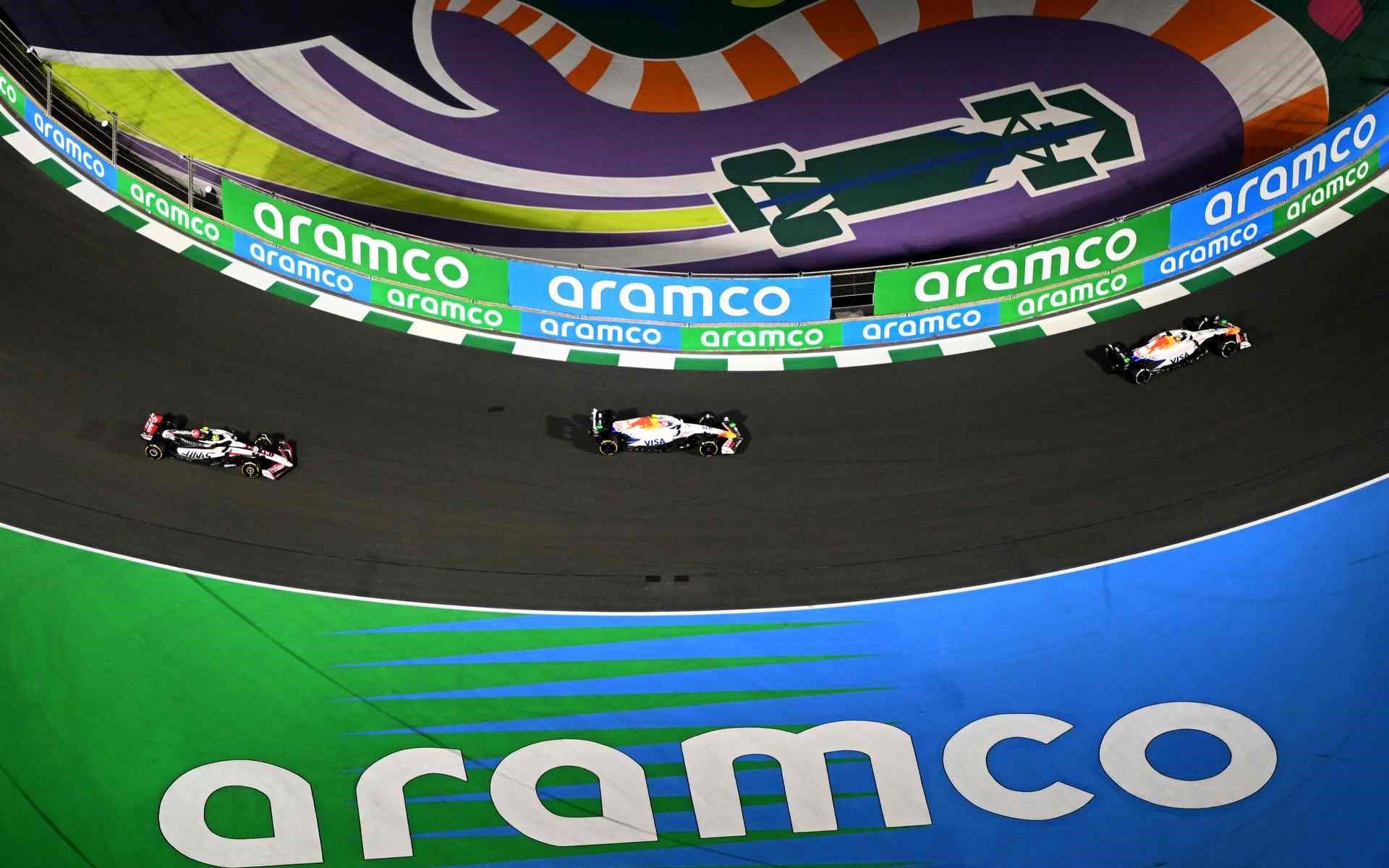
Another in the selection of new F1 tracks on the calendar, Jeddah became the fifth Formula One night race from 2021.

It was the scene of an epic World Championship showdown between Max Verstappen and Lewis Hamilton in its first edition in November 2021, with the 2022 race also providing plenty of highlights at the start of the season.

A street circuit with the Jeddah Corniche on one side and the city on the other, the Jeddah circuit is the second longest track on the calendar behind Spa; as well as being on average the second fastest circuit behind Monza.

With two eventful races in its short history already, the Saudi Arabian Grand Prix is sure to provide much entertainment over the coming years.

  • Circuit Length – 6.17km
  • Number of Laps -50
  • Race Distance – 308.45km
  • Max Speed – 322km/h
  • Average Temperature in October – 32c
  • Currency – Saudi Riyal (SAR)
  • Closest Airport – King Abdulaziz International Airport (JED)
  • Language – Arabic, English

JEDDAH CORNICHE CIRCUIT: HISTORY AND CONSTRUCTION

The Jeddah Corniche Circuit is a motor racing street circuit in Jeddah, Saudi Arabia, designed by Carsten Tilke, son of the famed circuit designer Hermann Tilke.

Construction began in April 2021, just over eight months before the inaugural race was scheduled, requiring 37,000 tons of asphalt, 600,000 tons of cement, 30,000 square metres of bricks and 1,400 tons of glass.

The circuit staged the inaugural Saudi Arabian Grand Prix on 5 December 2021 as the penultimate race on the 2021 Formula One season calendar. The circuit is located on the Jeddah Corniche adjoining the Red Sea, approximately 12 km north of the city centre.

The Formula One track has a length of 6.174 km (3.836 mi), the third longest on the Formula One calendar after Spa-Francorchamps and Las Vegas.

It is also the fastest street course, with a record average speed of 254.6 km (158.2 mi) for the 2025 pole position.

Watch How the Saudi Arabia F1 Track Was Built

(Video Courtesy -Everything Explained)

RACING AT JEDDAH CORNICHE: F1 CARS AND DRIVING EXPERIENCE

Named as the "fastest street track" on the Formula 1 calendar, drivers can average around 250km/h (160mph). The circuit features 27 turns and 3 potential DRS detection zones, providing plenty of opportunities for drivers to gain an advantage and overtake their rivals.

Top speeds at Jeddah reach 322km/h, with the hairpin at Turn 13 featuring twelve degrees of banking. The circuit's narrow confines combined with high speeds make it one of the most challenging and crash-prone venues on the Formula One calendar.

The circuit skirts the Red Sea and encircles a lagoon, producing spectacular racing under floodlights. From 2022 to 2024, the race was held in March, the weekend before Ramadan, and since 2025, the race is held in April, after Ramadan.

EXCITING MOMENTS AT THE SAUDI ARABIAN GRAND PRIX

The inaugural 2021 Saudi Arabian Grand Prix was a historic event in Formula One history. The inaugural Saudi Arabian Grand Prix, held on December 5, 2021, was a dramatic event filled with multiple crashes and intense battles, particularly between Lewis Hamilton and Max Verstappen, who were contending for the championship.

In the championship battle, Max Verstappen and Lewis Hamilton were separated by just eight points before arriving in Jeddah with two races remaining.

The race at Jeddah was laced with toxicity, controversy and acrimony, with the officials struggling to retain control of the situation, with Verstappen twice going wide into Turn 1 and missing Turn 2 to hold position.

SAUDI ARABIAN GRAND PRIX: MOST WINS RECORD

Since Lewis Hamilton won the first Saudi Arabian Grand Prix, Red Bull have won all three editions since, with one-two finishes in 2023 and 2024. Max Verstappen has won multiple times at Jeddah, including his ninth consecutive race win at the 2024 Saudi Arabian Grand Prix.

MOST FAMOUS SAUDI ARABIAN GRAND PRIX RACES

Hamilton's 2021 victory at Jeddah was one of his hardest-fought, with both he and Verstappen looking utterly drained after the grueling race that featured dramatic moments and multiple penalties.

In 2022, the final 10 laps saw a battle for the ages between Verstappen and Charles Leclerc, with each lap seeing changes in the race lead, as both drivers realised a trick to manipulate the DRS detection points.

In 2024, Oliver Bearman made a Ferrari debut at just 18 years and 305 days old, becoming one of the youngest drivers to debut in Formula One after Carlos Sainz was sidelined by appendicitis.

WHY DRIVERS LOVE JEDDAH CORNICHE CIRCUIT

Current F1 drivers have described Jeddah as 'really quick', 'pretty insane', 'crazy' and offering excellent racing opportunities. The unique combination of high-speed straights, technical corners, and the stunning coastal setting along the Red Sea creates an exhilarating racing experience.

Drivers appreciate the fast, flowing nature of the wide boulevards built during Jeddah's development, offering a beautiful track despite its demanding characteristics.

SAUDI ARABIAN GRAND PRIX FAN EXPERIENCE

The Saudi Arabian Grand Prix is held as a full-night race on the Formula One calendar, joining the likes of Singapore and Bahrain.

The grandstands along the main straight provide an excellent view of the start/finish line and pit lane action, while the grandstands near Turn 13, a sweeping banked corner, offer a fantastic vantage point for the high-speed drama.

The circuit is set to host the Saudi Arabian Grand Prix until at least 2027, after which there are plans to move the race to a new purpose-built facility in Qiddiya.

SURROUNDING AREAS AND JEDDAH ATTRACTIONS

Jeddah is Saudi Arabia's most popular tourist region and is considered the gateway to the religiously important city of Mecca, which is a pilgrimage site for millions of Muslims each year.

The Red Sea coastal location provides a unique setting for Formula One racing, with Jeddah offering rich cultural heritage, traditional architecture, and modern attractions.

The city's waterfront provides stunning views of the Arabian coastline, and visitors can explore the historic old city while experiencing world-class motorsport action.

GRANDSTANDS SEATING

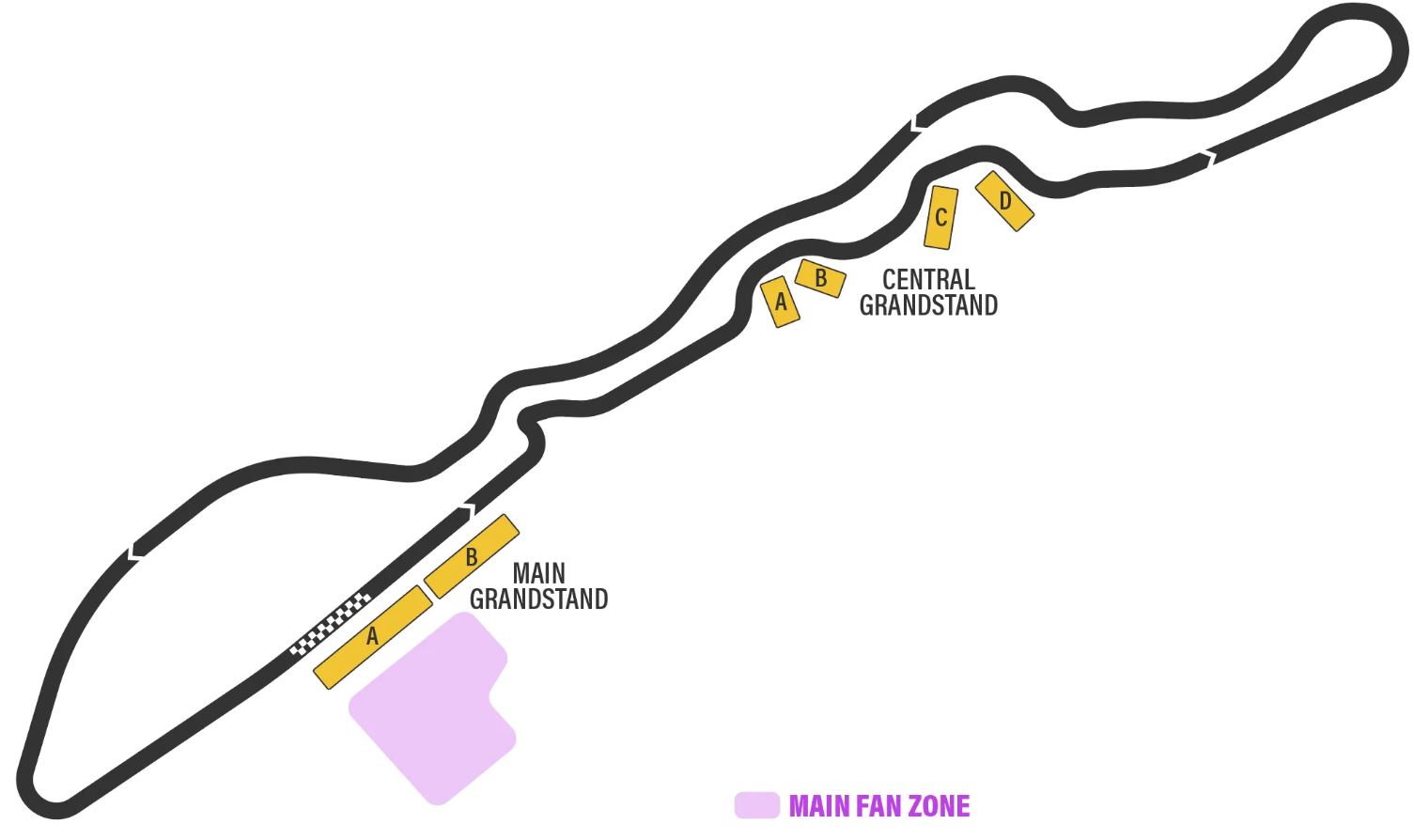
MAIN GRANDSTAND A

A covered Grandstand on the main straight, Main Grandstand A gives you a direct view of the start/finish line and the pit lane. Being a street circuit, you will feel particularly close to the action and will have a chance to get some fantastic photo opportunities of the pit crews working on the cars throughout the weekend. Close to the F1 fanzone, you are never far away from anything you need across the course of the weekend.

MAIN GRANDSTAND B

Thanks to the popularity of the inaugural race in 2021, the Main Grandstand had Grandstand B built for the 2022 race, which is further along the main straight heading into turn 1. Where Grandstand A will give you a close-up experience of the start/finish straight and pitlane, Grandstand B will allow you to catch the cars battle each other into turn 1 and through the twisty first few corners.

Grandstand B is as close as the A to the main Fanzone, and you will also have a view of the podium from your seats here.

CENTRAL GRANDSTANDS

Further down the track through Turns 4-10 sit the Central Grandstands, a set of four stands that are the only other seated options on the track. Similar to the Main Grandstands, the Central Grandstands have extended from two to four.

The action will be never far away from these seats, with this section of track a fast set of corners where, when an F1 car is in full flight, will look like it is driving on rails. Here you will see plenty of action, with these corners the scene of plenty of incidents in both the 2021 and 2022 race weekends.

You can explore the remainder of the track with a bridge in between the four stands allowing you to cross over which will give you a nice view of the waterfront.

Jeddah Corniche Circuit - Saudi Arabia

All you ever wanted to know about the Jeddah Corniche Circuit

Blog Image
February 7, 2026
3
min read
Race Circuits

Opening in 2004 for the MotoGP, the Lusail International Circuit in Qatar has been a popular venue for the two-wheeled event – a night race since 2007.

Due to the cancellation of the Australian race in 2021 during the COVID-19 pandemic, the Lusail circuit was added to the F1 calendar and won by Lewis Hamilton under lights, with Fernando Alonso taking his first podium with Alpine.

Fresh off hosting the 2022 FIFA World Cup, Qatar have signed a 10-year contract to host an F1 race, and is set to join Abu Dhabi, Bahrain, and Saudi Arabia as another popular middle eastern F1 destination.

  • Circuit Length – 5.38km
  • Number of Laps - 57
  • Race Distance – 306.66
  • Max Speed – 362.4km/h
  • Average Temperature in October – 36c (25c at time of race, night)
  • Currency – Qatari Rial (QAR)
  • Closest Airport – Doha Airport (DOH)
  • Language – Arabic

LUSAIL INTERNATIONAL CIRCUIT: HISTORY AND CONSTRUCTION

The Lusail International Circuit was originally constructed in 2004 to host the inaugural Qatar motorcycle Grand Prix, with construction completed in just over one year by approximately 1,000 workers at a cost of $58 million.

Located approximately 30 kilometers north of Doha, the circuit was built on desert terrain with artificial grass surrounding the track to prevent sand from blowing onto the racing surface.

In 2007, permanent outdoor lighting was added, enabling the circuit to host the first night-time MotoGP race in 2008, making Lusail a pioneering venue for night-time motorsport. The circuit hosted occasional car racing through GP2 Asia (2009) and Formula Masters before Formula One's historic debut at the venue.

The inaugural Formula One Qatar Grand Prix took place on November 21, 2021, as a late-season replacement for the cancelled Australian Grand Prix due to COVID-19 pandemic restrictions.

Between the 2021 inaugural race and the 2023 return following the 2022 FIFA World Cup, the circuit underwent extensive renovations including a new pit and paddock complex, with spectator capacity expanded from 8,000 to 52,000. The circuit signed a 10-year deal extending through 2032, cementing Qatar's long-term presence on the Formula One calendar.

Watch Why Qatar’s Grand Prix Is Unlike Anything Else in Formula 1

(Video Courtesy -Circuits Of The Past)

RACING AT LUSAIL INTERNATIONAL CIRCUIT: F1 CARS AND DRIVING EXPERIENCE

The Lusail International Circuit is a 5.419 km clockwise track featuring 16 corners with a distinctly fast and flowing layout dominated by medium- and high-speed corners designed primarily for motorcycle racing.

The main straight extends over 1 kilometer, providing excellent overtaking opportunities into Turn 1, with the circuit characterized by minimal heavy braking zones and sustained momentum through the lap.

Drivers experience relatively flat terrain with the circuit running just 2 kilometers inland from the Persian Gulf. The smooth track surface and flowing nature reward smooth, committed driving.

Night-time racing creates unique challenges with drivers identifying braking points and apexes under floodlights, requiring adaptation and concentration.

The circuit features over 500 kilometers of wiring creating one of the world's most sophisticated permanent lighting systems, enabling spectacular night racing viewing conditions.

LEGENDARY DRIVERS AT LUSAIL INTERNATIONAL CIRCUIT

Lewis Hamilton secured victory in the inaugural 2021 Qatar Grand Prix, with Fernando Alonso completing the podium. The circuit also hosted Formula Masters legend Nigel Mansell, who won in the Grand Prix Masters series in 2006. Nico Hülkenberg set circuit records during GP2 Asia competition in 2009.

QATAR GRAND PRIX: MOST WINS RECORD

Max Verstappen holds the record for most Qatar Grand Prix victories, winning both the 2023 and 2024 races. Verstappen clinched his third drivers' championship during the 2023 Sprint race, becoming the first driver in nearly 40 years to secure a title on Saturday rather than Sunday.

Lewis Hamilton's 2021 inaugural victory established his early dominance at the venue before Verstappen's subsequent dominance.

MOST FAMOUS QATAR GRAND PRIX RACES AND MEMORABLE MOMENTS

The inaugural 2021 Qatar Grand Prix was a frenetic affair featuring an intense battle between eventual winner Lewis Hamilton and Max Verstappen, with the two championship contenders engaged in gripping wheel-to-wheel racing.

Hamilton's victory was achieved despite Verstappen's competitive challenge, showcasing exceptional racing.

The 2023 Qatar Grand Prix became historic when Max Verstappen clinched his third drivers' championship during the Saturday Sprint race, marking the first time in nearly 40 years that a driver secured the title outside Sunday's main race.

The 2024 race saw McLaren set a Guinness World Record with the fastest pit stop of 1.80 seconds when Lando Norris's car was serviced during the Qatar Grand Prix.

WHY DRIVERS LOVE LUSAIL INTERNATIONAL CIRCUIT

Drivers appreciate the fast, flowing circuit layout that rewards smooth, committed driving. The fast and flowing nature of the circuit, combined with the lack of traditional tight hairpins found on modern circuits, creates an engaging technical challenge. The unique night-time setting with spectacular floodlighting creates an electric atmosphere.

The long main straight provides genuine overtaking opportunities, and the fast corners require precision and bravery. The smooth track surface and flowing design make it a circuit that drivers genuinely enjoy racing at compared to street circuits.

QATAR GRAND PRIX FAN EXPERIENCE AT LUSAIL

The circuit expanded spectator capacity to 52,000 with upgraded main grandstands overlooking the pit straight, providing panoramic views of the start-finish area and team garages. The T2 Grandstand offers outstanding vantage points through the circuit's opening corners, while Lusail Hill provides new spectator seating set in green space accessible to General Admission ticket holders.

Attendance figures have grown significantly, with weekend attendance reaching approximately 155,000 spectators in 2024, demonstrating the venue's popularity.

The 2023 race sold out, with attendance growing by 40,000 from the inaugural race and another 35,000 in 2024.

The circuit is easily accessible from Doha, approximately 30 kilometers south, with the journey taking approximately one hour from Hamad International Airport.

SURROUNDING AREAS AND QATAR ATTRACTIONS

Lusail International Circuit is located in the newly developed city of Lusail, north of Qatar's capital Doha. The circuit sits within a planned metropolis featuring modern architecture, shopping, and entertainment facilities.

Qatar offers unique attractions including the Museum of Islamic Art, the historic Doha Corniche waterfront, traditional souks, and luxury shopping districts.

The desert location provides opportunities for outdoor activities including sandboarding, camel riding, and 4x4 excursions into the Arabian desert.

With average temperatures around 28 degrees Celsius in November, Qatar provides an appealing escape to warmer climates for racing fans during the late-season Grand Prix weekend.

GRANDSTAND SEATINGS

MAIN

The Main Grandstand at Lusail International Circuit is located directly on the Main Straight immediately facing the pit garages right at the heart of both the circuit and the F1 action.

From a prime location immediately opposite of the F1 pit building, the Main Grandstand gives a fantastic panoramic view of main straight, the pit lane and the F1 team garages.

Ticket holders will have a view over the the starting line, grid ceremony, pit-stops during the race, the finishing line and depending on the exact location, visibility of the winner’s podium ceremony and trophy presentation after the race.

MAIN - ZONE A/B

The seating area is located on the far-right hand side of the Main Grandstand, facing the track. Ticket holders will have a view of the pit entry, pit stops and podium ceremony.

MAIN - ZONES C/D

This zone is located right in the immediate center of the Main Grandstand. Ticket holders will have a view of the pit stops as well as the pre-race grid and podium ceremonies.

MAIN - ZONES E/F

This zone is located on the far left-hand side of the Main Grandstand when facing the track. Ticket holders will have a view of the pre-race grid and starting ceremonies.

NORTH

The North Grandstand at the Lusail International Circuit is located on the Main Straight immediately to the left-hand side of the Main Grandstand.

Ticket holders will have envious views of the very first movement of the F1 cars leaving the starting grid as the lights go green and as they head away from the grid heading towards the all-important Turn 1.

T2

The T2 Grandstand at the Lusail International Circuit, as its name refers, is located on the inside of Turn 2.

As a brand-new seating area for 2023, this grandstand will offer outstanding views across one of the best sections of the track.

Ticket holders will have a direct view of Turn 2 and a view of the action coming from Turn 1 or Turn 3, depending on the exact seating location within the grandstand.

T3

The T3 Grandstand at the Lusail International Circuit, as its name refers, is located overlooking Turn 3.

As a brand-new seating area for 2023, this grandstand will be an exciting venue for the fans with outstanding views on one of the best sections of the track.

Ticket holders will have a direct view of the action on Turn 3 and a superb view of all the action coming from Turn 2.

T16

The T16 Grandstand at the Lusail International Circuit as its name refers, is located overlooking Turn 16.

As a brand-new seating area for 2023, this will be an exciting venue for the fans with superb views of the F1 cars as they battle at high-speed in the final sector of the track.

Ticket holders will have a direct view of all the action at Turn 16, where fans will have visibility of the cars breaking from high-speed into this last turn before entering the main straight.

Lusail International Circuit - Qatar

All you ever wanted to know about the Lusail International Circuit

Blog Image
February 7, 2026
3
min read
Race Circuits

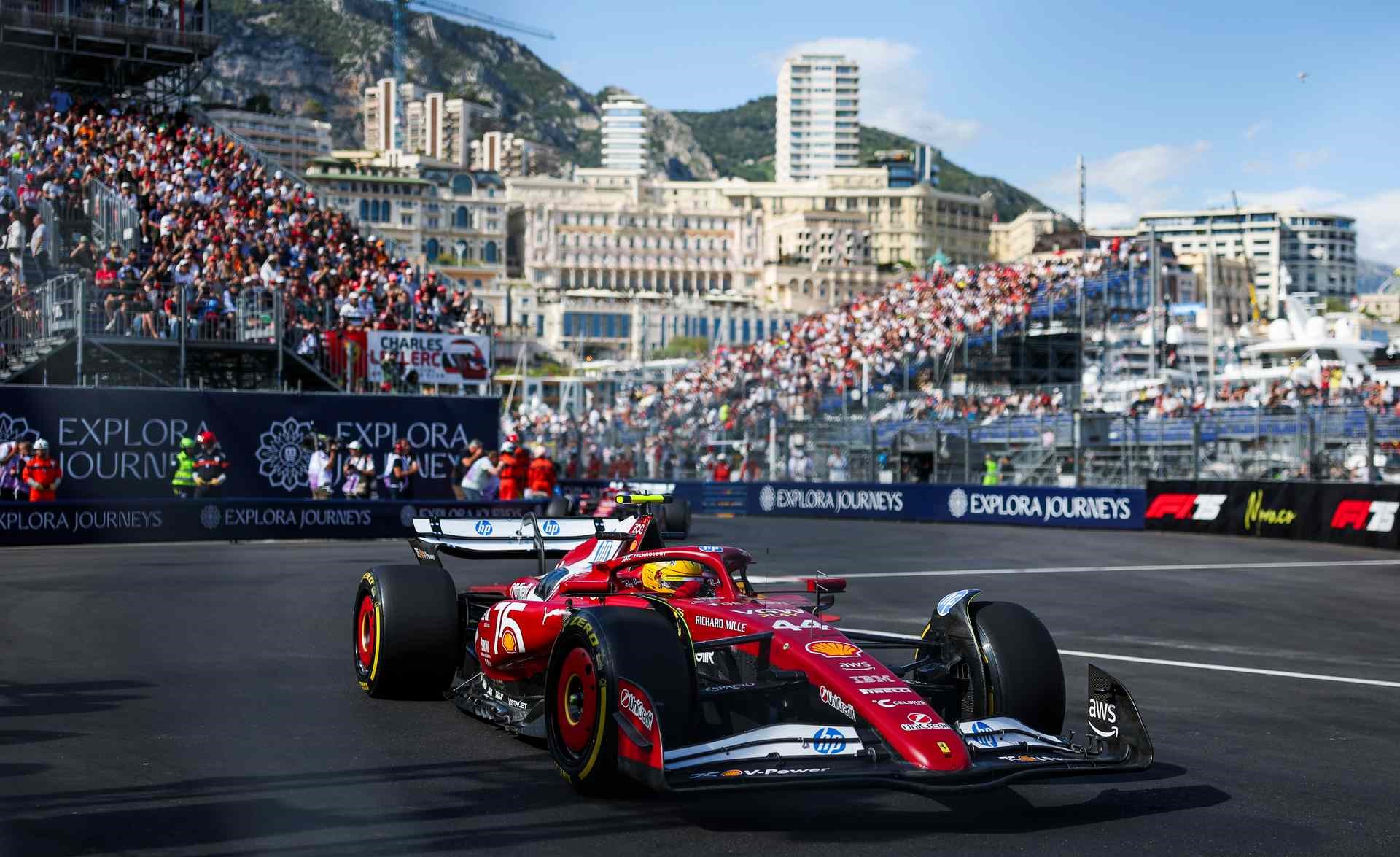
Monaco is THE race. Full stop. Established in 1929, it's the most glamorous, most prestigious, most legendary event on the calendar.

The Principality's Belle Époque architecture, royal attendance, and yacht-lined harbor create an atmosphere nothing else matches. Monte Carlo streets are basically Monaco's daily commute, and once F1 rolls in, everything changes.

The Grand Prix de Monaco is impossibly tight—literally, there's zero margin for error. Barriers define your racing line, and one wrong apex ends your race instantly.

Drivers dream about winning here; championships are decided here; legends are made here.

The prestige, the history, the pure difficulty—Monaco remains motorsport's holy grail.

  • Circuit Length – 3.337km
  • Number of Laps - 78
  • Race Distance – 260km
  • Max Speed – 300km/h
  • Average Temperature in May – 22c
  • Currency – EUR
  • Closest Airport – Nice International Airport (NCE)
  • Language – French

CIRCUIT DE MONACO: HISTORY AND CONSTRUCTION

The Circuit de Monaco has a rich history beginning with its first race in 1929, organized by Antony Noghès and supported by Prince Louis II through the Automobile Club de Monaco. The inaugural race was held on 14 April 1929, won by William Grover-Williams in a Bugatti 35B after 100 laps and almost four hours of racing.

Monaco became part of the Formula 1 World Championship in 1950 when Juan Manuel Fangio secured his first World Championship victory on the streets of Monte Carlo.

Since 1955, the race has been a constant fixture on the Formula 1 calendar, and the circuit has remained remarkably similar to its original layout since its inception in 1929.

The circuit takes six weeks to set up and an additional three weeks to dismantle, with infrastructure and stands requiring significant construction and removal efforts due to the circuit's unique characteristics as a street circuit.

Watch How The Monaco F1 Track Was Built

(Video Courtesy - Everything Explained)

RACING AT CIRCUIT DE MONACO: F1 CARS AND DRIVING EXPERIENCE

The circuit is narrow, with many elevation shifts and tight corners, making it perhaps the most demanding track in Formula One racing. The circuit features both the slowest corner in Formula One (the Fairmont Hairpin, taken at just 48 km/h or 30 mph) and one of the quickest (the flat out kink in the tunnel, taken at 260 km/h or 160 mph).

Due to the tight and twisty nature of the circuit, it favours the skill of the drivers over the power of the cars, with very little overtaking as the course is so narrow and dangerous.

Memorably described by Nelson Piquet as "like riding a bicycle around your living room", the street circuit may not always provide the best racing, but it certainly has lots of spectacle.

LEGENDARY DRIVERS AT CIRCUIT DE MONACO

During the 1960s and 1970s, drivers like Graham Hill, nicknamed "Mr Monaco," and Ayrton Senna, who holds the record for most wins at Monaco with six victories, dominated the event. Graham Hill secured five victories at Monaco, with his 1965 win particularly memorable when after an off-track excursion, he rejoined in fifth, surged through the field, and reclaimed the lead to win.

A notable moment was the 1984 race, where Ayrton Senna showcased his skill in wet conditions driving a less competitive Toleman car, marking a significant point in his career.

MONACO GRAND PRIX: MOST WINS RECORD

Ayrton Senna holds the record for most wins at Monaco with six victories. Michael Schumacher equalled Graham Hill's five wins, while Lewis Hamilton has won three times at the principality.

MOST FAMOUS MONACO GRAND PRIX RACES AND MEMORABLE MOMENTS

In 1933, Monaco earned the status of Grande Épreuve, placing it alongside the French, Belgian, Italian, and Spanish Grands Prix as one of the premier events. In 1996, Olivier Panis secured a surprising victory in a Ligier, one of the most unexpected wins in F1 history, as only three cars finished the race.

The 2006 Monaco Grand Prix saw one of the most suspicious manoeuvres in recent Formula One history when Michael Schumacher appeared to deliberately stop his car during qualifying at La Rascasse to prevent Fernando Alonso and Mark Webber from out-qualifying him.

In recent years, Charles Leclerc secured pole positions in 2021 and 2022, though strategic missteps denied him victory.

WHY DRIVERS LOVE CIRCUIT DE MONACO

The Monaco circuit is widely considered to be one of the most important and prestigious automobile races in the world, and is one of the races—along with the Indianapolis 500 and the 24 Hours of Le Mans—that form the Triple Crown of Motorsport.

Monaco remains one of the last circuits where the talent of the pilot can still make the difference, with drivers often touching the track walls to achieve a fast lap time.

A win at Monaco is considered one of the highest achievements in Formula One, regarded as one of the most important and prestigious victories in motorsport.

MONACO GRAND PRIX FAN EXPERIENCE

The Monaco Grand Prix is more than just a race; it is a major social event where the rich and famous gather on yachts and in luxury hotels to witness the spectacle. The event features world-class hospitality, with glamorous venues overlooking the Mediterranean Sea and Monaco's famous harbor.

The race is held on a narrow course laid out in the streets of Monaco, with many elevation changes and tight corners as well as the tunnel, making it one of the most demanding circuits in Formula One.

Spectators enjoy viewing from grandstands positioned throughout the circuit with excellent sightlines of the racing action.

SURROUNDING AREAS AND MONACO ATTRACTIONS

The Grand Prix takes place on the Circuit de Monaco which traverses the narrow city streets of Monte Carlo and La Condamine alongside Monaco's harbour, Port Hercules. Located in the Principality of Monaco, the circuit's stunning backdrop of the Mediterranean Sea enhances its charm and beauty.

Monaco is a tax haven and home to many millionaires, including several Formula One drivers, with its warm climate and famous casino attracting tourists from around the world.

The principality offers luxury shopping, Michelin-starred restaurants, beaches, and world-class entertainment. Because of the small size of the principality and the circuit's location, visitors can easily access Monaco's attractions, casinos, and nightlife during Grand Prix weekend.

GRANDSTANDS SEATING

A1: Sainte Devote

If you want to see all the action of the run down to the start, Sainte Devote is the place to be. A tricky uphill right-hander that heads towards the winding, flat out run up to Massenet before the cars arrive at Casino Square.

The entry to, and exit from, Sainte Devote make it one of the few genuine overtaking spots on the Monaco F1 circuit. Romain Grosjean and Max Verstappen have both ended up on top of the barriers here, and Fernando Alonso go it so wrong at Massenet in practice that he required a new chassis to be flown in from Maranello.

B: Casino Square

There are few places as quintessentially “Monaco” as the Casino Square Grandstand. With views over the Monte Carlo Casino and the Café de Paris, if you’re lucky enough to be sitting here then you’re in for a treat.

Located at the exit of Massenet, Casino Square might as well be a chicane. With only one racing-line through, you’re unlikely to see much overtaking, but you will be treated to stunning views at this high speed section of the circuit.

Grandstand B is also located very close to the train station, making access to-and-from Nice very simple.

C: Portier

If you want to see F1 cars disappearing into a tunnel, then Portier is the place to be. While it may be a slower section of the Monaco GP Track, Portier makes up for that with the aural assault that follows.

Overtaking is not unheard of, but when Jenson Button last tried it here, poor Pascal Wehrlein wound up shiny-side down. It is also the location of Ayrton Senna's crash while leading by a country mile.

Portier is a small and intimate grandstand, and is ideal if you prefer a less crowded location.

K: Bureau de Tabac

‘Tabac’ asks the age-old question – does size matter? Well, if you like incredible atmosphere, harbour views, and one of the best views of the Monaco F1 Track, then Tabac is the place to be.

The Monaco harbourfront is one of the most iconic views in world sport, and from Tabac you can see almost all of it.

Located at the run down from the tunnel, the left hander entering the harbourfront is one of the fastest parts of the circuit, and also one of the best overtaking areas. This is why it’s one of our favourite places to be.

L, M, N, O, P: Piscine/Swimming Pool

The Swimming Pool may not have the stunning harbour views, but it makes up for that in terms of the action it delivers.

As the cars and drivers exit Tabac they are then faced with two very tricky chicanes. They might not be fast, but the demand a lot from the drivers, and have caught many of them out.

Charles Leclerc crashed here in 2021 during qualifying (after already securing pole), and Max Verstappen did the same thing in 2017 and 2018!

The Swimming Pool Grandstands are larger than most, meaning a fantastic atmosphere is almost assured.

T: Rascasse

For anyone lucky enough to know Monaco in the off-season, The Rascasse is the place where live music plays, rose wine flows, and you’re almost guaranteed to wake up the next day with a sore head. However, if you’re here at Grand Prix weekend, you’ll mostly care about the racing.

Grandstand T is located at the exit of the swimming pool complex, curving left as the cars head towards the tight double-right-hander that the actual Rascasse overlooks. From the upper section you get a fantastic view of the cars approaching from the swimming pool.

The lower section gives you the perfect position to get as close to the track as is possible. Not only that, but Grandstand T is also the best vantage point to see what’s going on in the pits.

V: Anthony Noghes

Given the direct views over the Rascasse Bar’s upper terrace, you might be forgiven for thinking this grandstand is the Rascasse Grandstand. But it’s not. It’s Anthony Noghes. Names after the famous Monegasque that founded the Grand Prix.

Aside from high-spirited evenings, this corner is infamous for a variety of other reasons. Michael Schumacher parked his Ferrari here in 2006 in an attempt to stop Fernando Alonso getting pole position.

Its has also been the scene of dozens of failed over-takes as drivers ambition turns out to be bigger than the gap they try to get their cars through.

A smaller grandstand, it is not short of action!

X1/2: The Main Straight

For those that are desperate to see the start-line action, Grandstands X1 & X2 are as close as you can get. This is also a fantastic spot for seeing the teams and drivers prepare for the race, as well as seeing the post-race celebrations.

Circuit de Monaco- Monaco

All you ever wanted to know about Circuit de Monaco

Blog Image
February 7, 2026
3
min read
Race Circuits

A popular track for celebrities since its inception in 2022, the Miami circuit wraps around the famous Hard Rock Stadium – home of the Miami Dolphins NFL football team.

Purpose-built for Formula One, the Miami circuit has a fast street-circuit feel to it and was won by Max Verstappen from Charles Leclerc in the inaugural race.

With a tropical, sunny climate and a party-like atmosphere, expect this race to increase in popularity in coming years

  • Circuit Length – 5.41km
  • Number of Laps - 57
  • Race Distance – 308.32km
  • Max Speed – 320km/h
  • Average Temperature in May – 32c
  • Currency – USD
  • Closest Airport – Miami International Airport
  • Language – English

MIAMI INTERNATIONAL AUTODROME: HISTORY AND CONSTRUCTION

The Miami International Autodrome is a purpose-built temporary circuit around Hard Rock Stadium in Miami Gardens, Florida, marking Formula One's return to Miami after decades of failed negotiations.

The circuit was proposed as early as October 2019, with up to 75 circuit designs considered and 36 being simulated before the final layout was agreed. The inaugural Formula One race at Miami took place in May 2022.

Construction began in April 2021 and took just over 12 months to complete, with 24,000 tons of asphalt and 1,130 tons of concrete used to create the track, grandstands, fan zones and corporate areas. The track was designed by Formula One track designer Apex Circuit Design specifically for the Miami Grand Prix, which was added to the Formula One calendar for the 2022 World Championship.

The inaugural F1 Crypto.com Miami Grand Prix, held on May 6-8, 2022, was a sell-out success with 242,955 spectators visiting the Miami International Autodrome over the three days, making it the most attended event in the history of Hard Rock Stadium.

Watch How The Miami F1 Track Was Built

(Video Courtesy - Everything Explained)

RACING AT MIAMI INTERNATIONAL AUTODROME: F1 CARS AND DRIVING EXPERIENCE

The Miami International Autodrome is a 3.363 miles (5.412 km) semi-permanent street circuit featuring 19 corners with a unique blend of high-speed straights and demanding chicanes. The track features 19 corners with an average speed in a Formula One car of around 139 mph (224 km/h) in qualifying.

The circuit combines long straights where cars exceed 320 km/h with tight hairpins and technical chicanes requiring precision and commitment from drivers.

The highest speeds reached on the Miami Grand Prix circuit are just over 200mph / 320kph, achieved on the long back 'straight' just before the cars hit the brakes for the tight Turn 11.

The layout emphasizes overtaking opportunities, with multiple DRS activation zones designed to promote wheel-to-wheel racing. The circuit's lack of elevation change makes it technically straightforward but physically challenging due to the heat and humidity characteristic of Miami in May.

LEGENDARY MOMENTS AND MEMORABLE RACES

The inaugural 2022 Miami Grand Prix saw Max Verstappen take victory, establishing early dominance at the venue. Most wins at Miami: Verstappen with two (2022-2023), with Norris (2024) being the only other winner.

In 2024, McLaren's Lando Norris claimed his maiden Formula One victory at the Miami Grand Prix after 110 races, with Norris scoring a brilliant maiden victory in front of a sell-out crowd, beating Max Verstappen and Charles Leclerc, attracting a three-day attendance of 275,799 spectators.

In 2025, Oscar Piastri came from fourth on the grid to claim his third successive Grand Prix victory, with Lando Norris recovering from first-lap drama to seal a McLaren one-two, demonstrating the competitive nature of modern Miami Grand Prix racing.

WHY DRIVERS LOVE MIAMI INTERNATIONAL AUTODROME

Despite initially receiving mixed reactions from drivers regarding its design, the Miami International Autodrome has grown in appreciation for its unique characteristics and entertainment value. The circuit's location at a world-class stadium complex surrounded by the vibrant city of Miami creates an electric atmosphere different from traditional Formula One venues.

Drivers appreciate the multiple overtaking opportunities created by the long straights and tight corners, making Miami a venue where race strategy and driving precision are equally important.

The unique setting combining motorsport with celebrity entertainment and luxury hospitality makes the event special for participants.

US MIAMI GRAND PRIX FAN EXPERIENCE

The first Miami Grand Prix featured a spectacular opening party where drivers, team bosses and special guests made appearances on the podium, followed by DJ performances, with world-class off-track entertainment including music from award-winning DJs and renowned artists.

The 2024 Miami Grand Prix attracted a record-breaking 275,799 spectators over the three-day weekend, with the race featuring the sprint format for the first time, adding extra excitement to the event.

The circuit's location at Hard Rock Stadium provides unique amenities and hospitality options for fans, with the venue featuring world-class facilities. The Miami International Autodrome is located in Miami Gardens, a suburb of Miami located 16 miles (26 km) north of downtown Miami.

SURROUNDING AREAS AND MIAMI ATTRACTIONS

Miami is known as one of America's most vibrant cities, offering world-class attractions, dining, shopping, and nightlife. The city combines tropical beaches, Latin American culture, and cosmopolitan charm, making it an ideal destination for Formula One fans combining the Grand Prix with a wider Miami experience.

Downtown Miami offers historic architecture, art galleries, and waterfront attractions. The city is a hub for international cuisine reflecting its diverse population.

Miami's famous beaches, nightclubs, and entertainment venues make the Grand Prix weekend part of a larger celebration of the city's culture and lifestyle.

The Easy accessibility to the circuit from Miami's international airport (approximately 26 km from the circuit) and proximity to downtown Miami (16 miles) make it convenient for fans traveling from across North America and internationally.

The circuit's deal has confirmed the race will remain a round of the FIA Formula 1 World Championship until 2041, ensuring Miami's long-term presence on the Formula One calendar.

GRANDSTANDS SEATING

START/FINISH

Aptly named, the start/finish Grandstand is where you want to be if you are looking to be at the centre of the action for the weekend. Here you will have views of the starting grid and pitlane, as well as the post-race podium celebrations.

Directly across from the stand is the famous Hard Rock Stadium, which is easily accessed by the nearby bridge at the final corner (turn 19). There are plenty of food and drink options available directly behind the grandstand.

The top rows of the Start/Finish grandstand are also covered, and there are plenty of giant screens visible.

TURN 1

Located on the outside of Turn 1, this grandstand puts you in a prime viewing position to catch all the action that the opening corner provides.

At the end of a DRS zone, wheel-to-wheel racing is a high likelihood. The Turn 1 Grandstand also gives you a view of the pit exit.

As with the start/finish grandstand, the upper rows are covered from the warm Miami sun and food, drink, toilet and merchandise options are all conveniently located close by.

MARINA

The Marina Grandstands are on the twisty Turns 6 and 7, and are sat a little further back from the track itself. While you won’t see the cars at full speed here, you can appreciate the aerodynamic efficiency of a Formula One car as they navigate this still-quick section of track.

Atmosphere-wise, these seats are located next to all the entertainment options on the circuit, with the yacht club directly opposite and accessed via a bridge.

The McLaren and Aston Martin team fan clubs are also at the Marina Grandstands, and the Miami city itself is most easily accessed from this stand also.

THE BEACH SOUTH

Whether you want to be sat on the infield or outside the track will define which of the Beach Grandstands you choose, with Beach South sitting on the outside of Turn 11 and a smaller stand than Beach North.

At the end of a long straight and DRS zone, Turns 11 and 12 provide an overtaking opportunity, which you will be able to witness from Beach South.

THE BEACH NORTH

Directly opposite Beach South is the Beach North stand, which is on the inside of Turn 12. The first edition of the Miami GP had a lively atmosphere, most notably on the infield section of the track, so if a party atmosphere all weekend long is what you are seeking, Beach North is a very good choice.

The Red Bull Energy Station is located just next to the Beach North, and from an on-track perspective, overtaking is always a chance between Turns 11-13.

TURN 18

Located at the penultimate corner, Turn 18 Grandstand gives you excellent views of the final section of track, as well as pit-entry. Seats higher in this stand will give you views of the back straight prior to the approach to this corner, which will be another popular overtaking spot during the race.

Behind grandstand are plenty of food and drink options, which is one of the strengths of the Miami circuit. The Mercedes and Ferrari fan clubs are found at the Turn 18 Grandstand, and you are a short walk from the main Fanzone.

Miami International Autodrome - USA

All you ever wanted to know about Miami International Autodrome

Blog Image
February 6, 2026
3
min read
Race Circuits

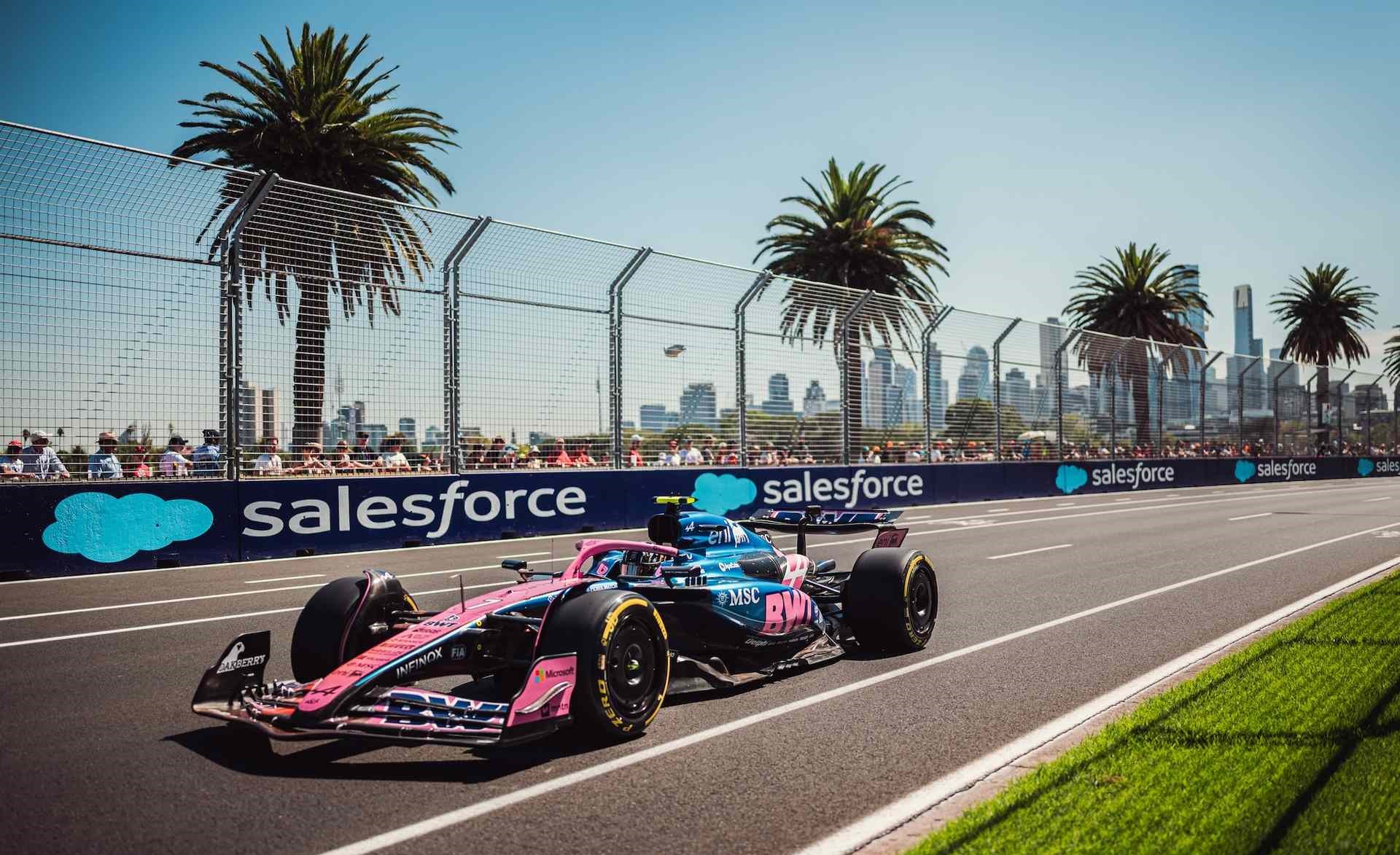
Sat around the picturesque Albert Park lake and right on the doorstep of the Melbourne city, the Albert Park circuit is a popular part of the F1 calendar since its first race in 1996.

Taking over from the Adelaide street circuit, Melbourne’s Grand Prix offers plenty for the travelling spectator.

The race has provided some memorable moments over the years, most iconic being local hero Mark Webber’s5th place on his 2002 debut. Despite Daniel Ricciardo departing the grid, Australian fans will undoubtedly put their full support behind Melbourne local Oscar Piastri.

The partisan crowd are passionate and knowledgeable, and sell-out crowds ensure an amazing atmosphere all weekend long. An exciting addition for 2023 is the F2 and F3 coming down under for the first time, ensuring crowds will have plenty of racing to enjoy over the weekend.

Whether it is the race weekend itself, exploring the colourful streets of Melbourne or trying the diverse range of food, there is something for everyone.

  • Circuit Length – 5.27km
  • Number of Laps - 58
  • Race Distance – 306.12km
  • Max Speed – 330km/h
  • Average Temperature in April – 21c
  • Currency– Australian Dollar (AUD)
  • Closest Airport – Melbourne Airport
  • Language– English

Watch How the Albert Park F1 Circuit Was Built

(Video Courtesy - Everything Explained)  

HISTORY AND CONSTRUCTION

Albert Park first hosted racing in 1953 when the Light Car Club of Australia secured use of the circuit for that year's Australian Grand Prix. After decades of silence due to local opposition, Melbourne businessman Ron Walker worked to bring the Australian Grand Prix back in 1996, with the decision announced in December 1993. For the modern F1 era, the road sections used for the circuit were rebuilt before the inaugural event in 1996 to ensure consistency and smoothness, making it comparatively smoother than other street circuits.

The circuit was built utilizing a combination of public roads and a car park within the park. Construction began in 1995, with the circuit design carefully planned to minimize disruption to the park's existing ecosystem. Today, the circuit uses public roads for the majority of its length, save for a small section which runs through what is usually a parking area.

THE RACING EXPERIENCE FOR F1 DRIVERS

The course is considered to be quite fast and relatively easy to drive, with drivers commenting that the consistent placement of corners allows them to easily learn the circuit and achieve competitive times. Drivers appreciate the smooth surface and the circuit's fast, flowing nature, though the proximity of barriers demands precision and skill. Drivers frequently praise Albert Park for being fun yet demanding, requiring precision and adaptability to master its high-speed sections and tricky braking zones.

However, the flat terrain around the lake, coupled with a track design that features few true straights, means that the track is not conducive to overtaking or easy spectating unless in possession of a grandstand seat. This led to major layout changes made to the circuit ahead of the 2021 season to improve overtaking opportunities.

MOST SUCCESSFUL DRIVER AT ALBERT PARK

Michael Schumacher holds the record with 4 wins at Albert Park (2000, 2001, 2002, 2004), followed by Sebastian Vettel with 3 victories.

ICONIC MOMENTS AND MEMORABLE RACES

Martin Brundle's 1996 barrel-roll on the opening lap of Albert Park's first F1 race lasted less than two minutes, but nearly three decades later, the memories of that shunt still burn bright. Brundle raced for just 1 minute 56 seconds before launching off the back of Johnny Herbert's Sauber at Turn 3, his Jordan becoming a disintegrating mass of twisted metal. After escaping uninjured and obtaining medical clearance, Brundle returned for the restart in the spare car.

Another dramatic moment came in 2002 when a dramatic first-lap crash eliminated eight of the 22 cars, with Ralf Schumacher's Williams launching over the rear of Rubens Barrichello's Ferrari and triggering a Turn 1 pile-up. Despite these incidents, the 2009 race saw Jenson Button win for Brawn GP in their first-ever race, marking a fairy-tale start for the underdog team.

WHY DRIVERS LOVE THIS TRACK

Albert Park is a well-liked circuit among drivers for its fast flowing layout. Turns 11 and 12 are the fastest corners on the circuit and the two that the drivers enjoy the most, with cars experiencing g-forces of up to 4.5g. The combination of smooth tarmac, flowing corners, and technical challenges creates an engaging driving experience that tests both skill and car control.

FAN EXPERIENCE AND SURROUNDING ACTIVITIES

The Australian Grand Prix attracts around 450,000 spectators over four days each year, with the event held early in the season in March. For 2025, race organisers introduced four new precincts: Melbourne Junction (food and hospitality), Lakeside (Crown Lakeside Festival with live music and fan forums), Pit Stop Park (family-friendly fan zone), and Motorsport Straight (paddock access for support races).

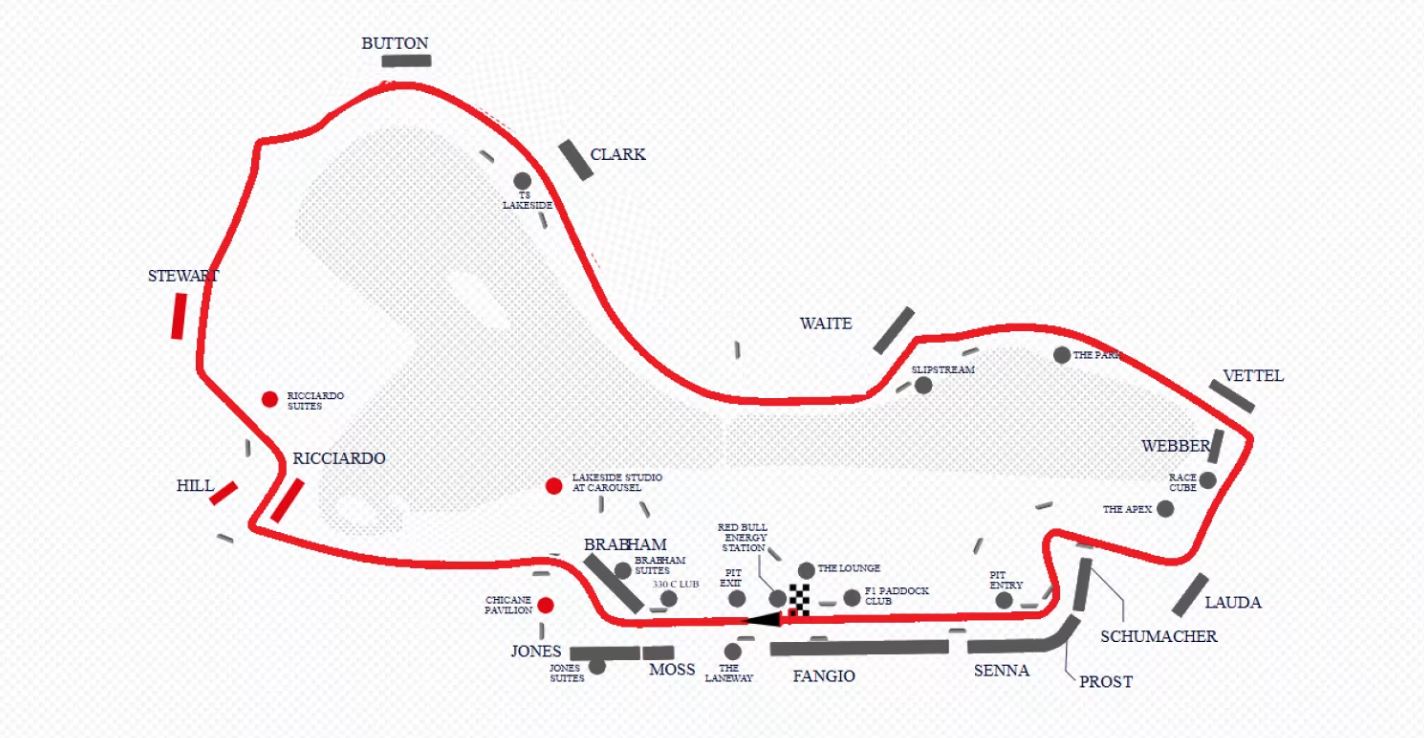
The Button and Clark grandstands offer fans a rare chance to see F1 cars at speed with a magnificent backdrop of Albert Park Lake. The Melbourne Walk offers access to drivers as they enter and exit the circuit, and is now open to all ticket holders including general admission.

Beyond the circuit, Melbourne offers world-class entertainment. Lygon Street in Carlton is a popular café strip where local cafes and pizzerias fly the flag for Ferrari during Grand Prix weekend.

Chapel Street in South Yarra near Albert Park is known for upmarket shopping, restaurants, and nightlife, with many of Melbourne's best clubs located on the street.

Melbourne is also renowned for its multicultural dining scene with Italian, Greek, Middle Eastern, and Asian cuisines available throughout the city.

Attendees are encouraged to use public transport due to limited parking, with trains, trams, and buses offering connectivity to the circuit and surrounding areas. Free tram services run from Southern Cross Station and Flinders Street Station to the circuit.

GRANDSTANDS SEATING

FANGIO

The biggest grandstand on track, the Fangio Grandstand is perched right on the grid meaning you won’t miss a second of the pre-race action. Depending on exactly where your seats are will mean which team’s pit box you will have the best view of the weekend, but rest assured you will be able to see the whole pit-lane from your seats.

As spectators are allowed on track for the post-race celebrations, sitting in the Fangio stand ensures you will be in the best spot to either enter the track and watch the podium, or witness the champagne-spraying from your seats themselves. The Fangio stand is in the main section of grandstands on the circuit, meaning all amenities are always close by.

MOSS

Just past the pit building is the Moss Grandstand, where you will enjoy views of the pre-race buildup on the grid, the podium and the all-important run into turn 1. One of the four slated DRS zones at Albert Park, turn 1 is where a large amount of the on-track action and overtaking happens.

With multiple giant screens spread across the start/finish straight, you will never miss a moment of the action – and being a street circuit – you feel right on top of the cars from your seats along this section of track. There are plenty of food and drink options directly behind the stands on the main straight.

JONES

Along with the Brabham Grandstand, the Jones Grandstand at Turns 1 and 2 is one of the most highly sought-after tickets. Sitting just on the outside of corner entry, the Jones stand is arguably the place where the spectators will see the most action.

Here you will witness cars race wheel-to-wheel at one of the most common overtaking spots on the track, cars exit pit lane into turn 1 and the all-important first lap. At the end of the straight, you will also have easy access to enter the track to witness the podium celebrations.

BRABHAM

Opposite the Jones grandstand on the inside of the circuit, the Brabham stand also provides excellent views of the opening two corners. You will have many photo opportunities, such as the cars side-by-side through Turns 1 and 2 as well as slow speed close-ups of the cars flicking through the corners.

You will also have a great position to see the cars accelerate out of turn 2 and into the short straight and second DRS zone. Just to the stand’s right is the highly popular general admission hill where the atmosphere all weekend long is electric. On the inside of the circuit, you will also have a chance to explore and walk around the Albert Park lake between sessions.

STEWART

Located on the exit of turn 5, the Stewart Grandstand is one of the closest stands to the track. With a large screen opposite, here you will see the cars take turn 5 almost flat, giving you a great view of the modern F1 machinery at their aerodynamic best.

Depending on where you are seated in the Stewart Grandstand, you can also see the cars brake for Turn 6. The closest entry gate to the Stewart Grandstand is Gate 3 with a few food, drink and merchandise options a short walk away.

BUTTON

The sheer popularity of the race has seen the need to have multiple new stands added around the track, the Button stand being one of these new additions. Sitting on the outside of the long back straight, the Button stand provides views of the cars coming out of Turn 8 as they head into the third of four DRS zones on the track.

Accessible by Gate 5, a giant screen is easily visible from this stand with multiple food, merchandise and drink options close by.

CLARK

A little further down from the Button Grandstand and situated on the outside of Turns 8 and 9 you will find the Clark Grandstand. Similar to the Button Grandstand, you will see the cars at full throttle as they blast down the back straight before activating DRS, as well as picturesque views of the Albert Park lake.

This stand also is closest to the bridges both across the track and across the lake which provides access to the music stages and many food and drink options. A giant screen is visible from this stand.

HILL

Further along the first sector and at the exit of turn 3, the Hill Grandstand will give you a front-on view as the cars come down this short yet fast straight into an almost 90-degree corner.

Another overtaking spot – gravel on the exit of the corner adds another element for the drivers to factor in. Lap 1 action is never far away at this corner, and the Kids Zone is a short walk from your seats.

RICCIARDO

Similar to the Jones/Brabham grandstand setups, the Ricciardo stand sits on the inside of Turns 3 & 4, meaning you will have more of a view of corner exit rather than front-on corner entry. With substantial run off in the car park section of Turn 4, you will have views of the cars both attacking and defending overtakes after turn 3.

A giant screen is opposite, and with the Albert Park lake directly behind your seats, a photo opportunity of the local landscape is never far away.

WAITE

At the fastest section of track, the Waite Grandstand is perched at this exciting double corner. What was once a fast and challenging set of corners is now even faster with the chicane a few corners earlier removed for the 2022 race.

F1 cars now are flat out from turn 6 through to braking at corner entry – right in front of your seats. With the Melbourne skyline directly behind you and the lake right in front of you, the Waite grandstand is one of the most popular stands at the Melbourne GP.

VETTEL

Situated outside of Turn 11 and opposite the Webber grandstand, here you will be in a good position for overtakes.

While it is one of the smallest grandstands on the track, the difference between the Vettel and Webber stand is that the Vettel stand will provide you a front on view of the cars exiting the 4th and final DRS zone of the track.

There is a large screen visible from any seat in this stand also, ensuring that you don’t miss any of the action elsewhere.

WEBBER

The Webber grandstand now provides views of a more likely overtaking spot than previous thanks to the corner being widened and re-profiled for the 2022 race.

At the end of the second-longest straight on the track, this stand on the inside of Turn 11 makes you feel right on top of the cars.

With the lake directly behind and a short walk to plenty of food, drink and merchandise stalls, the Webber grandstand is a good option for the budget conscious.

LAUDA

On the outside of Turn 12 and sitting behind (but not obstructed by) the Schumacher stand is the Lauda grandstand. Here you will see the cars at a decent speed into the final section of corners before the main straight.

Your major view here is Turn 12 itself, as the cars navigate the quick right hander before the slower Turn 13.

While not a traditional overtaking spot, the convenience of the Lauda stand being that it is one of the closest to the entry/exits (Gate 10) and is a short walk to the main Fanzone.

SCHUMACHER

At the final two corners of the track, the Schumacher stand gives you a prime view of the cars at slow speed which means a spectacular photo opportunity is always available from your seats. Here you will also be able to see the cars enter pit-lane as well as accelerating out of the final corner and onto the start/finish straight.

Situated in the largest section of grandstands, the Fanzone and all drink, food, toilet and merchandise options are right on the doorstep of your seats.

PROST/SENNA

Much like the F1 heroes these stands are named after, the Prost and Senna grandstands are a set of two stands not able to be separated on the track.

Next to each other on the exit of the last turn and start of the main straight, here you will have views of the cars flying through the tricky but fast final corner and accelerate onto the start/finish straight.

Racing here is as close as anywhere else on track, with these seats giving you a prime view of the first DRS zone on the track. You will also have clear views of the pit lane and many giant screens means you can keep on top of the action all weekend long.

Watch F1 Drivers Who Made Their Careers From The Albert Park Circuit

(Video Courtesy - The Australian Grand Prix)  
Albert Park Circuit - Australia

All you ever wanted to know about the Albert Park Circuit

Blog Image
February 6, 2026
3
min read
Race Circuits

Located about 30 minutes west of downtown Abu Dhabi, the man-made Yas Island hosts the Abu Dhabi GP at the Yas Marina circuit.

As part of their contract with Formula One, Abu Dhabi now hosts the season finale which has seen some epic title showdowns in recent years, seeing Sebastian Vettel, Nico Rosberg and Max Verstappen all clinch their first ever World Championships in 2010, 2016 and2021.

Another unique aspect of the Abu Dhabi GP is the time of the event. Starting at dusk, you will enjoy the spectacular sunset as the race descends into darkness and the floodlights takeover.

Next door to the circuit is the Ferrari World theme park which has an array of activities and holds the world’s fastest roller-coaster, emulating the acceleration of an F1 car.

  • Circuit Length – 5.28km
  • Number of Laps - 58
  • Race Distance – 306.18km
  • Max Speed – 328.3km/h
  • Average Temperature in November - 31c
  • Currency – AED (Emirati Dirham)
  • Closest Airport – Abu Dhabi International &Dubai International
  • Language – Arabic, English


HISTORY AND CONSTRUCTION

The Yas Marina Circuit is situated on Yas Island, Abu Dhabi, United Arab Emirates, and was designed by Hermann Tilke. The circuit was constructed with a permanent lighting system provided by Musco Lighting, the largest permanent sports venue lighting project in the world.

The diggers rolled into what would become the Yas Marina Circuit in May 2007, with the project completed by October 2009. After two years of intensive planning and construction involving14,000 staff and 35 million construction man-hours, the new facility opened its doors to the world. The circuit is believed to be the most expensive circuit in history, having been constructed at a reputed cost of $1 billion.

The surface of the track is made of gray wacke aggregate, shipped to Abu Dhabi from a Bayston Hill quarry in Shropshire, England. The surface material is highly acclaimed by circuit bosses and Formula One drivers for the high level of grip it offers. 

Watch How the Abu Dhabi Circuit Was Built

(Video Courtesy - Everything Explained)

THE RACING EXPERIENCE FOR F1 DRIVERS

After the first practice sessions at the 2009 Abu Dhabi Grand Prix, the circuit was welcomed by the drivers, with Nico Rosberg commenting that every corner was 'unique', while double World Champion Fernando Alonso echoed his sentiments, stating that it was enjoyable because there was always something to do.

The track is challenging due to its technical layout and precise braking requirements. The circuit's longest straight at 1.2 km is a hotspot for overtaking where vehicles can reach speeds beyond 320 km/h. The track layout comprises 21 turns, including tight hairpins and swift chicanes. The track was reconfigured ahead of the 2021 race in an attempt to increase overtaking opportunities. 

MOST SUCCESSFUL DRIVER AT YAS MARINA

Lewis Hamilton holds the record for the most victories at Yas Marina Circuit, with five wins. 

ICONIC MOMENTS AND MEMORABLE RACES

The 2010 Abu Dhabi Grand Prix remains one of the most memorable title-deciders in F1 history, with Sebastian Vettel taking the win and his first world championship.

The 2016 Abu Dhabi Grand Prix was the stage for a tense championship decider between Mercedes teammates Lewis Hamilton and Nico Rosberg. Rosberg only needed a podium finish to secure his first-ever Formula 1 title.

Hamilton did everything in his power to disrupt Rosberg's race, even slowing down in an attempt to push his teammate into the clutches of Sebastian Vettel and Max Verstappen. Despite the pressure, Rosberg held his nerve and crossed the line in second place, securing the championship.

The 2021 Abu Dhabi Grand Prix saw Max Verstappen win his first world title in a dramatic final lap. In a controversial final lap, Verstappen, who had pitted for fresh tyres, overtook Hamilton and claimed his first world title. 

WHY DRIVERS LOVE THIS TRACK

Fernando Alonso stated that the circuit was enjoyable because there was always something to do, highlighting the variety of corners and challenges. Drivers praise the technical section where they drive under the hotel, describing it as very technical, challenging, and beautiful despite requiring precise kerb management.

The unique day-night format also appeals to drivers, with the race beginning in the late afternoon and transitioning into the evening under floodlights, creating a distinctive racing experience. 

FAN EXPERIENCE AND SURROUNDING ACTIVITIES

The seating capacity of Yas Marina Circuit is 60,000, spread across six major viewing areas. The West Grandstand is a great place to watch all the overtaking action into Turn 8,while the Main Grandstand overlooks the start-finish straight and spectators can enjoy Abu Dhabi's famed pyrotechnics.

All of the grandstands, including the massive hairpin seating area, are covered to protect spectators from the desert sun, while the state-of-the-art pit building boasts 40 air-conditioned garages.

Beyond the circuit, Yas Island offers seven hotels, Ferrari's indoor theme park, a mall, a water park, a golf course, a beach, a concert arena and a nightclub. Warner Bros.

World Abu Dhabi is the world's biggest indoor theme park, split into six exciting zones featuring Batman, Superman and Wonder Woman alongside Bugs Bunny and Fred Flintstone.

Ferrari World Abu Dhabi features a huge range of rides inspired by Ferrari vehicles, including the world's fastest rollercoaster – the Formula Rossa – with speeds of 240 mph in just 4.9seconds.

Abu Dhabi International Airport is adjacent to Yas Island, making the track easily accessible, with a 30-minutedrive to Abu Dhabi city.

GRANDSTANDS SEATING

NORTH

The North Grandstand at Abu Dhabi is one of the biggest grandstands on the F1 calendar. Encapsulating the entire hairpin at turn 5 with another adjacent grandstand on the straight at corner exit, you are spoiled for choice in the North Grandstand.

Remodeled for the 2021 season, the chicane was removed just before the turn 5 hairpin, allowing the cars to run at a higher speed into a wider hairpin. This corner witnessed the world championship-deciding overtake on the final lap of the season and is a popular position for cars to overtake.

If you are sitting in the North Grandstand just next to the hairpin, your views will include the hairpin as well as the start of the first DRS zone, allowing the cars to get close to the car in front.

The North Grandstand has a large choice of food and drink, and from these seats you will enjoy an unforgettable view of the circuit at sunset as well as the colourful Yas Hotel.

SOUTH

The “last” Grandstand of the Abu Dhabi track is the South Grandstand and will give you a prime view of any overtakes at turn 9. Just down the straight from the Marina Grandstand, you will also have photo-friendly stunning views of the Yas Marina, Yas Hotel and many yachts sitting on the water – giving you a real ‘Monaco vibe’.

Following turn 9, you will also see cars navigate the tight section of corners that follow as they get back upto full speed for the all-important final sector of the track.

WEST

Sitting at the end of the first DRS zone is the West Grandstand, which wraps around Turns 6 and 7. This grandstand will give you a front-on view of the cars flying down the long straight in the first sector.

Here you will see F1 cars braking hard for turn 6 with the chance of overtakes, especially in the early laps and at safety car restart. Turns 6 and 7 are a tight chicane and with a panoramic view of the circuit, photo opportunities in the West Grandstand are a must.

Due to the height of the grandstands at Abu Dhabi, you will also enjoy a view of pit entry from your seats, and from some positions you will also have the views of the final two corners and the back end of the starting grid.

MARINA

Aptly named, the Marina Grandstand gives you outstanding views of the man-made marina next to the circuit as you sit on the fast straight in the second DRS zone.

Unforgettably in 2021, this grandstand would have been the perfect spot to see Max Verstappen defend one final time from Lewis Hamilton on the final lap of the season.

From your seats, you will also have a distant view of Turn 9 – one of the most popular overtaking spots on the track.

The Marina Grandstand has a combination of viewing opportunities – Formula One cars at full speed on the second DRS zone, overtaking at turn 9, and the tight infield section of Turns10, 11 and 12.

MAIN

Sitting on the main straight has many benefits at a Formula One race and the main grandstand at Abu Dhabi is no exception. Like all other grandstands at the Yas Marina circuit, the main grandstand is well-raised so expect great views whether high or low in this grandstand. Enjoy the race build up, starting grid and pit stops from your seats – with one very special bonus unique to Abu Dhabi.

As the season finale, you likely have the enjoy the opportunity to see either the World Champion or retiring stars do one final donut in front of their adoring fans on the start/finish straight. Amenities are always close by in the large grandstands at Abu Dhabi and you will be grateful for ease of access for a cool refreshment in the warm weather.

Watch Max Verstappen vs Lewis Hamilton Abu Dhabi GP Controversy Win Explained

(Video Courtesy -The Race)  
Yas Marina Circuit - Abu Dhabi

All you ever wanted to know about the Yas Marina Circuit

Blog Image
January 19, 2026
3
min read
Race Circuits

Formula 1 is entering an exciting new era from 2026 onwards. New circuits are joining the calendar, old favorites are returning, and countries like India are hoping to make a comeback.

Here's everything you need to know about the future of F1 racing.

What's Changing in 2026?

The 2026 season brings major changes. New regulations mean different cars, fresh engine rules, and a revamped grid with two new teams joining. But what about the race locations?

The big question many Indian F1 fans ask: Will the Indian Grand Prix return? While there's no confirmed date yet, discussions are happening behind the scenes at F1's headquarters.

The 24-Race Limit: Why We Can't Get Every New Race

Here's the thing—F1 can't just add unlimited races. The governing body, FIA, along with Formula 1 and team owners, signed a new Concorde Agreement in December 2025. This caps the calendar at 24 races per year, even though there's technically room for 25.

Why? Drivers like Max Verstappen and Lewis Hamilton complained that 24 races is already too much. The current schedule is exhausting—traveling constantly, living out of suitcases, missing family time. So even though countries are lining up to host F1, F1 CEO Stefano Domenicali keeps the limit at 24.

Confirmed: Where F1 Is Racing in 2026-2028

Madrid joins in 2026 – Spain's moving its race from Barcelona to a brand-new street circuit in Madrid. This runs until 2035. Barcelona gets one last hurrah in 2026 as the "Barcelona-Catalunya Grand Prix," then bows out.

Portugal returns in 2027-2028 – The Portimão circuit is coming back for two years. This temporary COVID-era venue (which raced in 2020-2021) has made a comeback with a two-year deal signed in December 2025.

Which Countries Are Pushing for F1 Races?

F1 has interest from countries like Thailand, Rwanda, South Africa, Malaysia, South Korea, and China. Let's break down what's actually happening:

Thailand: A $1.23 Billion Bangkok Street Circuit

Thailand approved a massive $1.23 billion bid in June 2025 for a street race in Bangkok from 2028 onwards. The proposed track would snake between Krung Thep Aphiwat Central Terminal Station and Chatuchak Park, stretching 3.54 miles. No updates since, but this is serious money on the table.

South Africa: Kyalami's Upgrade

South Africa hosted 23 races in F1 history. The Kyalami circuit (which last hosted F1 in 1993) is being upgraded to Grade 1 status—the FIA approved this in June 2025. Once the upgrades finish, F1 could race there. But Domenicali said in May 2025 a deal is still "a long way off."

Rwanda: Controversial Plans

Rwanda had serious talks with F1 in 2024 about hosting a race. Lewis Hamilton even backed the idea, calling it a "huge dream" to race in Africa. But in February 2025, the DR Congo's foreign minister urged F1 to drop Rwanda talks amid regional conflict concerns. F1 is now "monitoring the situation."

Malaysia: Economic Reality Check

Sepang was F1's Malaysian home from 1999 to 2017. Petronas (Mercedes' sponsor back then) wanted it back for 2026, but Malaysia's government said the hosting fee—around $70 million—is just too expensive. Circuit representatives said in November 2025 they'd return if they found the right corporate sponsor, but competition is stiff.

What About India's Return?

This is the big one for Indian fans. The Indian Grand Prix hasn't raced since 2013 at the Buddh International Circuit in Greater Noida, Uttar Pradesh. Sebastian Vettel won all three editions (2011, 2012, 2013), clinching his fourth world title there in 2013.

Why did F1 leave India? A tax dispute. The Uttar Pradesh government classified F1 as "entertainment," not a sport, and levied heavy taxes. This made the event economically unviable. F1 promoters had to pay around $40 million annually just to host, and the tax issue made it unsustainable.

Are there discussions happening now? Yes. The Yamuna Expressway Industrial Development Authority (YEIDA) has confirmed they're in talks with F1 about a potential return. F1 listed India among countries showing interest (along with South Korea, Thailand, China, South Africa, Rwanda, and Malaysia).

The Buddh International Circuit hosted MotoGP in 2023, which was a massive success. MotoGP is returning there in 2026. This shows the venue is world-class and ready. Many believe successful hosting of motorcycle racing could pave the way for F1's return.

The most realistic timeline? 2026 or 2027 at earliest, but only if India's government resolves tax issues and F1 can squeeze India into the 24-race calendar by dropping another venue.

The Challenge: Too Many Countries, Limited Slots

Here's the reality. F1 wants to expand globally—it's more profitable that way. But with only 24 spots and established races like Monaco, Silverstone (Great Britain), Monza (Italy), and Singapore already locked in, new races mean old ones get dropped.

For 2026, Imola (Italian Grand Prix's alternate venue) got axed after their contract wasn't renewed. That freed up one spot, but dozens of countries want it.

A Rotating European Grand Prix Concept

F1 is reviving an old idea—a rotating "European Grand Prix" like they had from 1983-2016. Belgium keeps its race through 2031, but will skip 2028 and 2030. Those missing years could rotate other European circuits like France or Germany back in. This gives flexibility without permanently removing established races.

What This Means for You

If you're an Indian F1 fan, there's hope but no guarantees. F1 CEO Domenicali has repeatedly said the sport is serious about Africa and Asia expansion. India's massive population (over 1 billion) and growing motorsport interest make it an attractive market.

The Buddh International Circuit is still there, still capable, and recently proved it can host world-class racing with MotoGP. The barriers are now political and financial—getting the government on board and settling tax questions.

Keep an eye on 2026-2027. If India resolves its side of the equation, F1 might just come home. For now, it's watch and wait.

Future F1 Race Circuits Are Coming

A peek into where the future F1 racing circuits are coming up

Get Access to Pitlane Gossip

Allow Me Access
Thank you! Your submission has been received!
Oops! Something went wrong while submitting the form.
Doted World Map
Blog Image
January 8, 2026
3
min read
Latest News

You want to understand Formula 1, but the sport feels more complicated than your tax returns? Don't worry—I'll break down the world's most glamorous automotive chaos into digestible pieces. Whether you're catching the latest Grand Prix on your commute or trying to impress someone at a dinner party, this guide will make you sound like an absolute pro.

And yes, India has a spicy history with F1. More on that later!

What Exactly IS Formula 1? (And No, It's Not Your Mom's Racing Series)

Formula 1, or F1, is basically the Olympics of motorsport—except the athletes sit down, the stadium travels to 24 different countries, and a pit stop that takes two seconds can change your entire life. It's the highest level of global motorsport, blending cutting-edge engineering, superhuman fitness, and enough drama to rival your favorite Netflix series.

Think of it as a fast, high-stakes chess game played on tarmac at speeds that would make your highway speed governor weep. F1 uses open-wheel, single-seat cars approved by the Fédération Internationale de l'Automobile (FIA)—basically, the international referee of all things four-wheeled and absurdly fast.

The "formula" isn't some secret sauce locked in a vault. It's simply a clear set of rules that every team must follow. These rules keep racing fair (sort of) while pushing teams to innovate within strict limits, turning engineering creativity into a competitive sport.

Is F1 a Sport or Just Expensive Chaos? (Spoiler: Both)

F1 is absolutely a sport—and a massively respected one at that. Drivers aren't just steers incredibly fast cars; they're elite athletes in peak physical condition. We're talking about handling gravitational forces (G-forces) that would make a fighter jet pilot nod in respect, all while sitting in a cockpit that feels like a microwave set to "volcanic."

F1 drivers undergo rigorous training programs that rival Olympic athletes. They have to:

  • Endure lateral forces of up to 5G while turning (your neck feels like it's made of lead)
  • Work in cockpit temperatures that can exceed 50°C (hotter than a Delhi summer, minus the ceiling fan)
  • Maintain razor-sharp focus for 1.5 to 2 hours straight
  • Make split-second decisions worth millions of rupees

Plus, F1 is a team effort, not just individual heroics. Each team, called a "constructor," invests billions in research and development. They employ engineers, strategists, mechanics, and scientists working together like a finely-tuned (pun intended) machine to eke out tenths of a second.

What's a Grand Prix? (Hint: It's Not Your Grandpa's Race)

An F1 race is called a Grand Prix, French for "Grand Prize"—because the French basically invented racing and decided to give it a fancy name. The term dates back to 1906 (the French Grand Prix at Le Mans), carrying with it decades of prestige and tradition.

Each Grand Prix stands on its own, but also contributes to the season's championship battle—kind of like how each episode of your favorite series matters, but it's the overall season arc that really counts.

When Did Formula 1 Start? (The Indian Connection)

The FIA Formula One World Championship officially kicked off on May 13, 1950, at Silverstone in Britain. The first winner? Italy's Giuseppe Farina, beating his teammate Juan Manuel Fangio, who would go on to become an absolute legend.

But here's where it gets interesting for Indian fans: the rules for F1 were set in 1946 and became official in 1947—years before the championship even began. The sport grew out of the European Grand Prix scene of the 1920s and 1930s, featuring wild open-cockpit cars and endurance driving.

India's Love (and Heartbreak) Affair with Formula 1

If there's one thing that makes Indian F1 fans emotional, it's the story of the Indian Grand Prix.

The Dream: The Buddh International Circuit (2011-2013)

India finally got its Grand Prix in 2011 at the Buddh International Circuit in Greater Noida, about 40 km from Delhi. The circuit was designed by German architect Hermann Tilke and was nothing short of magnificent. It had fast, flowing corners, beautiful elevation changes, and the potential to be a world-class venue.

And oh, did F1 arrive in style! The inaugural race drew 100,000+ passionate Indian fans. The circuit had everything—grandstands, hospitality suites, and that undeniable energy you only get when a global sport finally comes home.

Here's the catch: Sebastian Vettel won all three editions of the Indian Grand Prix (2011, 2012, 2013), making Red Bull absolutely unstoppable. While Vettel celebrated his hattrick, the real story unfolding behind the scenes was turning into a bureaucratic nightmare.

The Tragedy: Why India Lost Its Grand Prix

This is where it gets grimly interesting. The Uttar Pradesh government classified Formula 1 as "entertainment rather than sport," which excluded it from tax exemptions. This single sentence cost India its F1 race.

The circuit was technically in Uttar Pradesh (near Greater Noida), but was branded as "New Delhi." The state government levied entertainment taxes on the event, and the dispute between Jaypee Sports International (the race organizer) and the Uttar Pradesh government led to the race being cancelled.

What followed was a sad carousel:

  • 2014: F1 skipped India
  • 2015: Promised return delayed to 2016
  • 2016: Never happened
  • 2026: Still waiting

The Buddh International Circuit still stands today, a beautiful monument to what could have been. Once awarded Motorsport Facility of the Year in 2011, the circuit remains structurally sound but is far from its former glory.

The Silver Lining: India's Recent Motorsport Resurgence

While F1 abandoned India, the sport didn't entirely forget us:

  • 2023 Hyderabad E-Prix: Hyderabad hosted the inaugural Formula E race on the Hyderabad Street Circuit, which winds through the streets of NTR Gardens along Hussain Sagar Lake. This was India's return to world-championship motorsport after a decade.
  • 2023 MotoGP: The Buddh International Circuit got a second life, hosting the inaugural Indian Motorcycle Grand Prix.
  • Current Hope: Discussions are ongoing about potentially bringing F1 back to India, though nothing is confirmed yet.

How Many F1 Drivers Are There? (And How Can Indians Get in?)

A standard F1 season has exactly 20 drivers, because there are 10 teams and each team runs two cars. These aren't weekend warriors—they're the crème de la crème of motorsport, vetted through countless junior championships and earning an FIA Super Licence (the pinnacle of racing credentials).

India's F1 Drivers: A Tale of Talent vs. Timing

India has produced some remarkable F1 talent, though the grid has been barren of Indian drivers for over a decade.

Narain Karthikeyan (2005-2012) Narain Karthikeyan became India's first Formula One driver when he debuted with Jordan in 2005. Born in Coimbatore, Tamil Nadu, he was an incredibly talented driver who scored points in only his third race at the chaotic 2005 United States Grand Prix (where most teams didn't even show up due to a tire safety dispute).

Karthikeyan later drove for Williams and returned to F1 with HRT in 2011, racing in front of his home crowd at the Indian Grand Prix. Unfortunately, he never had a competitive car in his F1 years. He was awarded the Padma Shri, India's fourth highest civilian honour, in 2010.

Karun Chandhok (2010-2011) Karun Chandhok became India's second F1 driver when he debuted with HRT in 2010, following Karthikeyan by five years. A Chennai native with excellent junior series credentials, Chandhok showed promise but struggled with underpowered machinery.

The tragic timing? He was let go by Team Lotus after the Japanese Grand Prix, meaning he couldn't race at the inaugural Indian Grand Prix three weeks later in India. Talk about Murphy's Law.

Both drivers never scored points or achieved a podium in F1, but they paved the way for future generations and brought Indian motorsport to global attention.

Kush Maini: India's Latest Hope (2025) Fast forward to 2025: Kush Maini, a 24-year-old from Bengaluru, was announced as Alpine's Test and Reserve Driver for the 2025 Formula 1 season, becoming the first Indian to hold such a position in over a decade. While he's not yet a full-time driver, Maini's role is crucial—he gets to drive F1 cars in testing, develop car setups, and potentially race if needed. It's a modern pathway to F1 that his predecessors didn't have.

The 11 F1 Teams: Meet the Gladiators

In 2026, these 11 teams will battle for supremacy:

  1. McLaren Formula 1 - The reigning powerhouses
  2. Oracle Red Bull Racing - Multiple time champions
  3. Scuderia Ferrari HP - The legendary Italian team
  4. Mercedes-AMG PETRONAS - The consistent performer
  5. MoneyGram Haas F1 - The American underdog
  6. Visa Cash App Racing Bulls - The junior Red Bull team
  7. Aston Martin Aramco Formula One - The glamorous team
  8. Stake F1 Team Kick Sauber - Set to become Audi's works team in 2026
  9. BWT Alpine Formula One - The French manufacturer
  10. Atlassian Williams Racing - Rebuilding and ambitious

Most teams are based in "Motorsport Valley" around Oxfordshire, England. Ferrari is the notable exception, building everything in Maranello, Italy—because tradition matters when you're Ferrari.

F1 Cars: Engineering Marvels That Cost Millions

Modern F1 cars are absolutely insane pieces of technology. They're custom-built, open-wheel, single-seat machines designed for one purpose: making humans question the laws of physics.

The Numbers That Matter:

  • Weight: Minimum 800 kg (including the driver, excluding fuel)
  • Engine: Turbocharged 1.6-litre V6 hybrid power units
  • Top Speed: 350+ km/h on long straights (Juan Pablo Montoya hit 372.6 km/h in 2005!)
  • Acceleration: 0-100 km/h in about 2.6 seconds
  • G-Forces: Up to 5G in corners, thanks to downforce

The Technology Behind the Madness:

  • Carbon fibre chassis: Insanely light yet rigid
  • Aerodynamics: Front and rear wings plus ground effect tunnels create downforce equivalent to 2.5x the car's weight
  • Hybrid Power: Electric motors recover energy from braking, making F1 surprisingly eco-conscious
  • Smart Brakes: Carbon disc brakes with thousands of cooling holes
  • 18-inch Wheels: Upgraded from 13 inches in 2022

How F1 Racing Works: The Grand Prix Weekend

An F1 weekend is a carefully choreographed spectacle running over three days (Friday to Sunday).

Friday: Practice Makes Perfect Two free practice sessions (FP1 and FP2) let teams dial in their cars and test new parts. Mechanics work furiously, data scientists analyze telemetry, and drivers get familiar with the track. Some weekends feature young or reserve drivers for extra running.

Saturday: Qualifying & Sprint Races Qualifying is a three-part knockout session:

  • Q1: All 22 cars battle; slowest 6 are eliminated
  • Q2: 15 cars race; slowest 6 are eliminated
  • Q3: Top 10 drivers fight for pole position

Since 2021, some races include Sprint races—short 100 km races that award points and add extra drama.

Sunday: The Main Event The Grand Prix race is the culmination of all the preparation. Drivers cover approximately 305 km (190 miles) in 1.5-2 hours, making strategic pit stops for tire changes (usually 2-3 stops). Modern pit crews can change all four tires in under two seconds. Yes, under TWO seconds.

F1 Points and Championships: The Scoreboard

The top 10 finishers score points each race:

  • 1st place: 25 points
  • 2nd place: 18 points
  • 3rd place: 15 points
  • And so on down to 10th: 1 point

For sprint races, only the top 8 score.

At season's end, two championships are awarded:

  1. Drivers' Championship: The driver with the most points wins
  2. Constructors' Championship: The team with the most combined points from both drivers wins

The Constructors' Championship is huge—it brings prestige, prize money, and bragging rights.

Global F1 Circuits: From Singapore to Saudi Arabia

F1 travels to incredible locations worldwide. In 2025, there are 24 races planned, showcasing the sport's global reach.

Iconic Tracks:

  • Silverstone (British GP): The birthplace of racing
  • Monza (Italian GP): A temple of speed
  • Monaco Grand Prix: Tight, prestigious, and insanely difficult (since 1929!)
  • Circuit of the Americas (Austin): A modern masterpiece
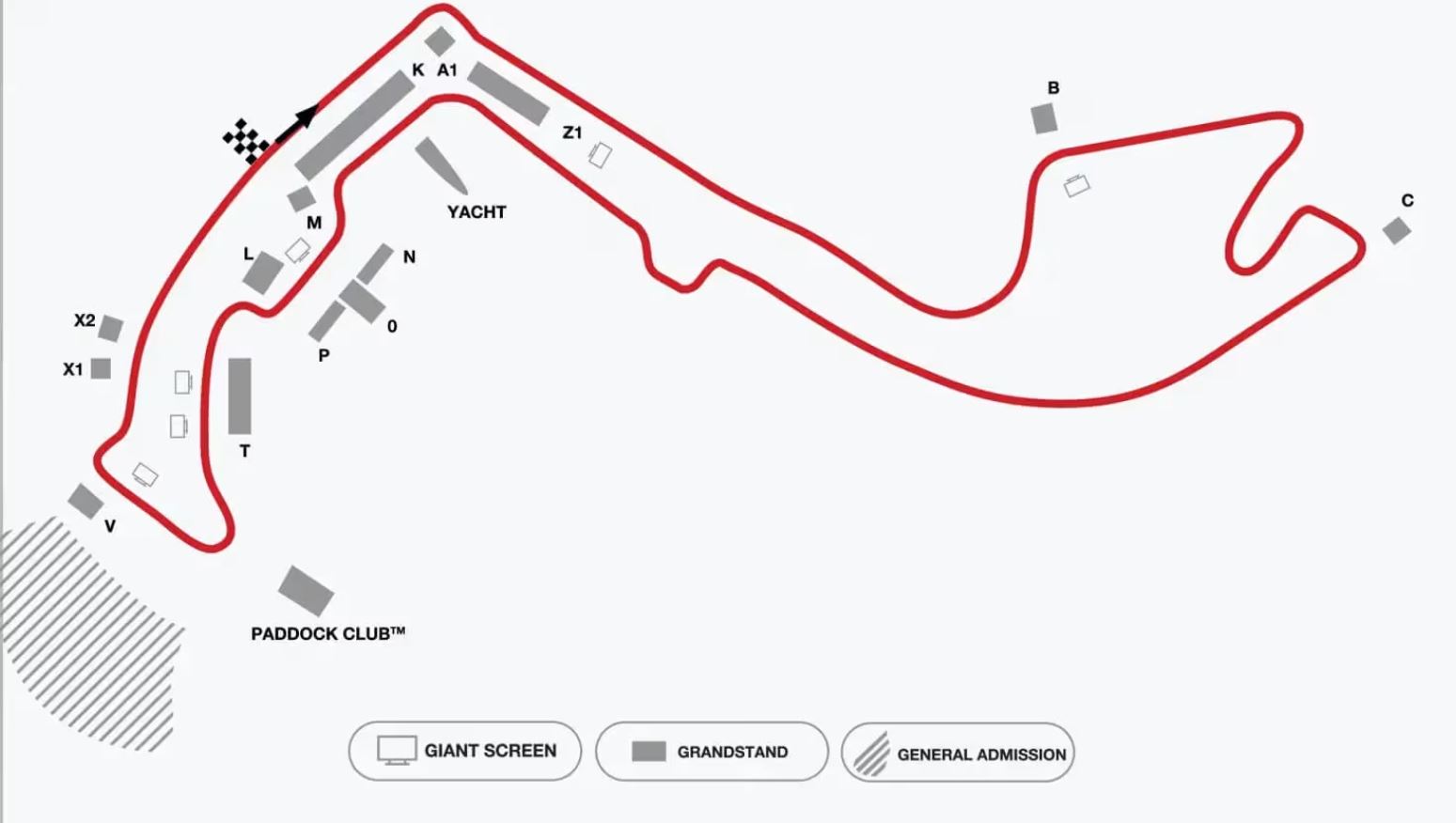
  • Suzuka (Japan): One of the most technically challenging tracks
  • Marina Bay (Singapore): A night race on city streets
  • Las Vegas Strip Circuit: Joined the calendar in 2023

The FIA maintains contracts with many venues stretching decades into the future, keeping F1 fresh and globally expansive.

F1 vs. Other Racing Series: What Sets It Apart

F1 vs. NASCAR:

  • F1 cars are open-wheel with advanced aerodynamics; NASCAR uses closed, stock-bodied cars
  • F1 races on road courses with elevation changes; NASCAR dominates ovals
  • F1 focuses on precision and aero grip; NASCAR emphasizes pack racing and drafting

F1 vs. IndyCar:

  • IndyCar cars are also open-wheel, but teams buy chassis from limited manufacturers (F1 teams build their own since 1981)
  • IndyCar mixes ovals, road courses, and street circuits
  • F1 is the global pinnacle; IndyCar is primarily North American

F1 vs. Formula E:

  • Formula E is all-electric; F1 uses hybrid combustion engines
  • Formula E races on temporary street circuits in major cities; F1 uses permanent and street tracks
  • Both are open-wheel, but F1 is for traditional racing fans; Formula E is for eco-conscious tech enthusiasts

Why Should Indian Fans Care About F1?

Let's be honest: F1 has treated India like a love interest who ghosted after three dates. But there are compelling reasons to stay invested:

  1. 1National Pride: Indian drivers and engineers are making waves. Kush Maini's appointment at Alpine is a big deal.
  2. Engineering Fascination: F1 showcases the cutting edge of automotive technology, something India's booming engineering sector relates to deeply.
  3. Global Entertainment: F1 is accessible on multiple platforms, with race timings often convenient for Indian viewers (European and Middle East races fall during India-friendly hours).
  4. The Hope Factor: The Buddh International Circuit still exists, and there's real talk about F1 returning to India post-2026.
  5. Mahindra Racing: India's own Mahindra team competes in Formula E, bringing electric racing home.
Formula 1 For Dummies For Indian F1 Fans

You want to understand F1, but the sport feels more complicated than your tax returns?

Blog Image
January 6, 2026
3
min read
Latest News

So you've finally decided to witness Formula 1 live instead of shouting at your TV during Sunday evening races.

Whether you're a die-hard Lewis Hamilton fan or just someone who thinks fast cars look cool, attending your first F1 Grand Prix is about to become the most expensive yet absolutely worth-it decision you'll make in 2026.

Let's break down everything you need to know about buying tickets, booking flights, finding accommodation, and actually surviving the trackside experience without melting into your seat (literally – it gets hot).

Should You Book Your F1 Trip in Advance? Short Answer: YES, Yesterday Would've Been Better

Thanks to Netflix's Drive to Survive turning F1 into mainstream entertainment (and making us all secretly want to be race engineers), tickets are disappearing faster than your last samosa at a family gathering.

Here's the hard truth: If you wait around thinking you'll "figure it out later," you'll end up:

  • Paying 3x the original price on black market websites
  • Booking a hotel in a location that requires a 2-hour commute to the circuit
  • Watching the race from the standing area behind a very tall man named Klaus

More than half of the 2026 F1 calendar races already have tickets on sale. The new technical regulations introduced for 2026 have made this season particularly exciting, so don't procrastinate. Seriously. Your bank account will thank you (well, it won't, but it will hurt less).

Which F1 Race Should You Attend?

Choosing your first F1 race is like selecting your first biryani – location matters, and you want to get it right.

The smart play: Attend a race in India, a nearby country, or somewhere you've been wanting to visit anyway. Why? Because combining a holiday with a race weekend is basically genius-level travel planning.

Your 2026 options include:

European Classics – Historic circuits in stunning locations like Austria and Belgium where you can pretend you're in a film. Pack your camera and your best Instagram captions.

City Track Madness – Melbourne, Montreal, Bakuand Mexico City circuits that go right through the city. These races have that "Formula 1 has taken over our streets" energy that's absolutely electric.

Night Race Spectacles – Singapore and Las Vegas host races under the lights. Singapore is sticky and chaotic; Las Vegas is glamorous and expensive. Choose your chaos accordingly.

Bonus Content – Six races in 2026 feature F1 Sprint weekends, which means even more racing and even less sleep.

Pro Tip: Research beyond just the race. Some circuits have world-class concerts, stunning nearby attractions, or incredible food scenes. Make it a trip, not just a race.

Organized Tour vs. DIY

Going with an Organized Tour?

  • Everything is handled for you (flights, hotels, transfers, even breakfast sometimes)
  • You pay a certain price for this convenience and luxury (and yes some behind the scenes action)
  • Best for: People who want to experience the race weekend but limited patience for logistics (that is a big thing by the way!)
  • Official and Authentic Tickets. 100% Refund incase the races gets cancelled. (Bonus – You get Rs. 7500 off on your next race!)

DIY Adventure Mode?

  • You book everything yourself using our guides and local resources
  • You save money and have complete control
  • You occasionally panic at 2 AM wondering if you booked the right hotel
  • Best for: Budget travelers who are comfortable navigating foreign countries solo

Pro Tip: Formula Racing Tours-Xperiences isn't just about seats – we offer trackside hospitality suites, exclusive activities, and accommodation packages that can genuinely simplify your first race experience.

How to Actually Get F1 Tickets (Without Losing Your Mind)

Here's where many Indians trip up: ticket systems vary wildly depending on which race you attend.

Some circuits handle their own sales directly through their websites. Others use third-party agencies. The quality of customer service ranges from "surprisingly helpful" to "good luck figuring this out."

Your safest bets:

  • Official F1 ticket vendor – F1 Experiences supplies tickets to every race on the calendar and has a solid reputation
  • Formula Racing Tours-Xperiences – Official partners of Formula 1 Experiences partner with grandstand seats, VIP packages and hospitality options
  • Local circuit websites – Many have dedicated English sections for international fans

Indian Traveler Tip: Don't assume you need an international agent. Many circuits now have straightforward online booking systems that work fine from India. Just ensure your payment method works (some international cards face issues, so notify your bank in advance).

How Much Will This Actually Cost? The Budget Reality Check

Let's be honest: F1 isn't a "budget holiday" sport. But it's more accessible than you think.

Typical breakdown for a full race weekend (Friday-Sunday):

  • Tickets: $100-500 USD depending on the race
  • Flights from India: $300-800 USD depending on destination
  • Accommodation: $50-200 USD per night (camping to mid-range hotel)
  • Meals & transport: $100-200 USD
  • Total: $500-1,700 USD minimum

European races are surprisingly affordable – General admission 3-day tickets often cost under $150 USD, plus cheap campsite options ($20-40 USD per night).

American races (Miami, Austin, Las Vegas)? Yeah, those are pricey. Budget accordingly or look elsewhere.

The Secret: Sometimes flying to Mexico City or Canada for the F1 race costs LESS than attending the American races, even after factoring in international flights. Do the math before assuming your nearest race is your cheapest option.

Booking Hack: Buy early for discounts, better flight options, and wider accommodation choices. Last-minute everything costs more – it's basically a tax on procrastination.

Flights, Trains, and Everything in Between

Most F1 circuits are near major cities, which is convenient (but sometimes expensive).

Flight booking strategy:

  • Use your local airline booking websites for options, but book directly with the airline (better protection for changes/cancellations)
  • Don't automatically pick the closest airport – other nearby airports often have cheaper flights
  • Budget airlines operate in most F1 regions, so check them out
  • Book well in advance (you already know this by now)

The often-forgotten option: Europe has amazing train systems. Driving your own car is possible. Some fans even take ferries. These alternatives can be cheaper and more scenic than flying.

Indian Traveler Tip: Factor in a longer journey time. You might have a connecting flight, so leave extra time for airport delays and layovers.

From Budget Tents to Luxury Hotels

Camping – The Backpacker's Dream

  • Cheapest option by far ($20-50 USD per night)
  • You're right next to the track action
  • You'll smell like a very expensive campfire
  • Popular in Europe (Austria, Belgium especially)

Budget Hostels – The Compromise

  • Budget-friendly ($40-80 USD per night)
  • Meet other F1 fans and make friends
  • You'll share rooms and showers
  • Questionable bathroom stories

Budget Hotels – The Social Butterfly Option

  • Budget-friendly ($80-120 USD per night)
  • Meet other F1 fans and make friends
  • Hotel bar action and mixers and parties
  • Comfy coach for circuit transfers (individual private transport can be a nightmare and expensive)

Mid-Range & Luxury – The Comfort Zone

  • $150-500+ USD per night
  • Actual comfort, decent breakfasts, reliable WiFi
  • Sometimes staying in the city center and commuting is actually cheaper and better
  • Comfy coach for circuit transfers (individual private transport can be a nightmare and expensive)

Don't Be That Person Carrying Four Suitcases

The Essential Trackside Backpack:

  • Comfortable, broken-in shoes (you'll walk over 7-12 kms kms over the weekend)
  • Weather-appropriate clothing (research the climate at your chosen race)
  • Rain jacket or poncho (circuits don't care about your Instagram photos if you're soaked)
  • Hat and sunscreen (sun + cement grandstands = sunburn to remember)
  • Power bank (your phone will need life support)
  • Basic food and one plastic water bottle (trackside prices are daylight robbery)
  • Camera or good smartphone
  • Spare memory card

Don't pack: Heavy luggage, fancy shoes you haven't broken in, unrealistic expectations that it won't be uncomfortable sometimes. Leave space for: F1 merchandise, because you WILL buy something ridiculous.

Before You Arrive: The Pre-Race Checklist

✓ Travel insurance – Comprehensive coverage for your stay ✓ Visa requirements – Some countries need advance visa arrangements ✓ Local SIM card or data plan – Sort this before you land ✓ Downloaded offline maps – WiFi at circuits is questionable at best ✓ Route planning – Know exactly how to get from hotel to circuit ✓ Full race schedule – Published 4-8 weeks before race weekend ✓ Pit lane walk Thursday – Many circuits offer this free public experience ✓ Printed backup documents – Yes, really. Phones die.

The Real Experience Begins

Before leaving your hotel each day, pack:

  • Your tickets (printed copies AND digital backup)
  • Rain protection (even if it's not forecast – circuits are unpredictable)
  • Power bank (seriously, your phone will die)
  • Small food/water (trackside meals cost more than premium biryani)
  • Comfortable shoes (you already packed these, right?)

Inside the circuit:

  • Find your entry gate and grab a map
  • Get oriented early; circuits are confusing when you're panicking
  • Most circuits allow your own food and ONE plastic water bottle
  • Stay toward the finish line before the race ends to catch the podium celebration

The best part – Track Invasion: After the race ends, fans get to walk down the pit straight and watch podium celebrations live. It's surreal. Get close to the finish line before the final lap if you want a good view.

The boring but important part: Public transport home gets absolutely rammed after the race. If you don't mind missing a few minutes of analysis, delay your exit by 20 minutes and avoid being packed like sardines on the train.

The Trackside Experience

Well-organized circuits (Australia, Austria, Netherlands, Singapore) run like Swiss watches. Everything works smoothly. Facilities are decent. Staff are helpful.

Chaotic circuits (Spain, Italy) are... an experience. Long queues. Confusing signage. The same energy as navigating Delhi during rush hour, but with more expensive beer.

High-attendance races (Australia, Britain, USA, Mexico City) = serious queuing and patience required.

Sparsely attended races (Bahrain, Saudi Arabia, Azerbaijan, Qatar) = relaxed, less crowded, sometimes feels like you're at a private event.

The absolute truth: Organization varies wildly. Go with the flow, embrace the chaos, and remember why you're there.

How To Plan Your First F1 Race In 2026?

So you've finally decided to witness F1 live instead of shouting at your TV during Sunday evening races.

Speak with our F1 Travel Expert.
No commitments.
Just coffee & conversation.

Follow us on Instagram

insta
insta
Close-up of a red Ferrari Formula 1 race car steering wheel inside the cockpit with various buttons and MOMO branding.
insta
insta
cross